Flower Power
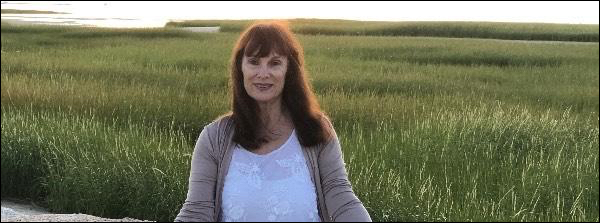
“Speaking of flowers, when I drive by (or join) the protestors these days I’m reminded of the ‘flower power’ years of my youth. In the 60s when it began all we claimed to want was love and peace. Indeed, with nary a thought as to how we would survive financially, I married a man who played his clarinet on Manhattan street corners. I might add that, going on year 50, the gamble did work. But love and peace now seem quaint and woke to many, rather than ideals we should strive for and value.”—Kathryn E. Livingston
Words & Wonder
By Kathryn E. Livingston
“Sometimes, like now, Olive had a sense of just how desperately hard every person in the world was working to get what they needed. For most, it was a sense of safety, in the sea of terror that life increasingly became.”—Elizabeth Strout, from Olive Kitteridge
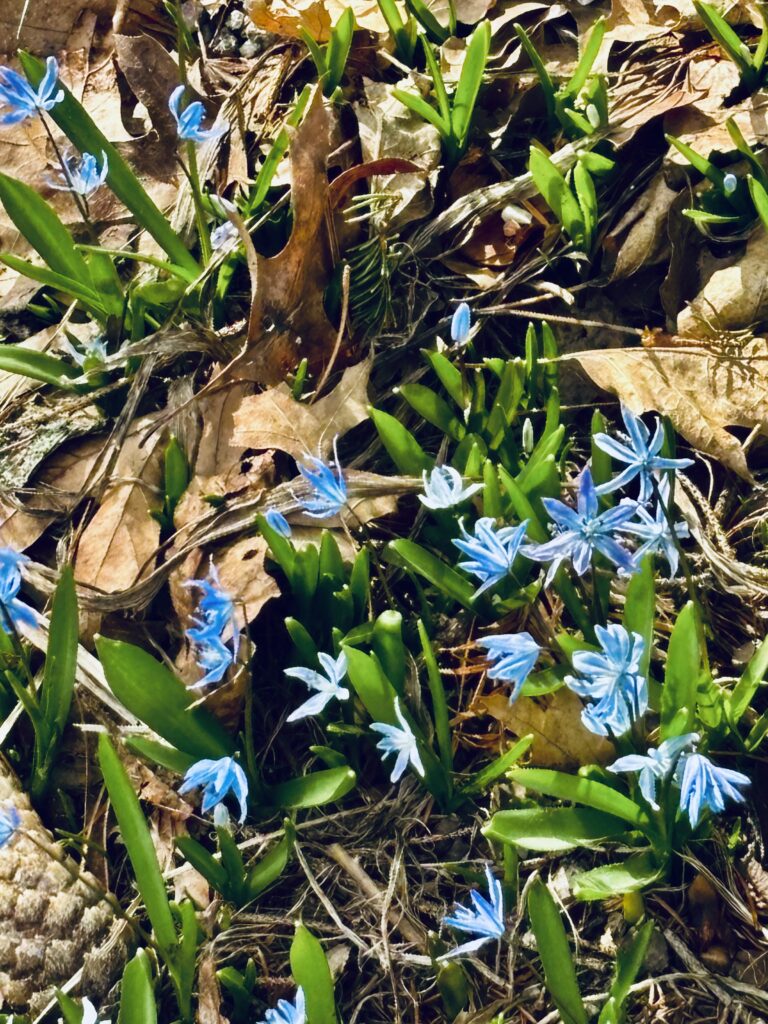
 BOGOTA New Jersey—(Hubris)—May 2026—Every year I eagerly await the appearance of flowers in my backyard. A cluster of brilliant blue Siberian squill is always the first, in late March—I didn’t plant it, and it was years before I figured out what it is—followed by purple and white crocuses and a few jonquils, daffodils, and hyacinths. A little later, in April, the tulips, lilacs, and pear trees blossom. One can’t rush them; they come at their own pace. But it was harder this year to patiently tap my foot in anticipation of these colorful saviors because—despite the welcome light of Spring—the world feels so dark.
Speaking of flowers, when I drive by (or join) the protestors these days I’m reminded of the “flower power” years of my youth. In the 60s when it began all we claimed to want was love and peace. Indeed, with nary a thought as to how we would survive financially, I married a man who played his clarinet on Manhattan street corners. I might add that, going on year 50 now, the gamble did work. But love and peace now seem quaint and woke to many, rather than ideals we should strive for and value.
Famously, many of the young women in those crazy days of yore didn’t wear—and some even burned—bras. (I was reprimanded at my summer waitressing job for going braless and my very conservative dad was not happy though he certainly did not mention that three-letter word even when I failed to don one for college graduation—to which I wore a flowery granny dress, not a robe). As liberated females, we didn’t paint our fingernails or toenails, we didn’t shave our legs or underarms, but here I am waxing nostalgic (certainly we did not wax!) about those bygone times.
In high school and college in upstate New York, my friends and I drank and smoked pot, and sometimes drove under the influence of either or both (which was irresponsible and dangerous and doubly so for me as my father was the Director of Probation and if I had been caught there would have been hell to pay). We mostly survived, though sadly some—and especially those who experimented with harder drugs—did not.
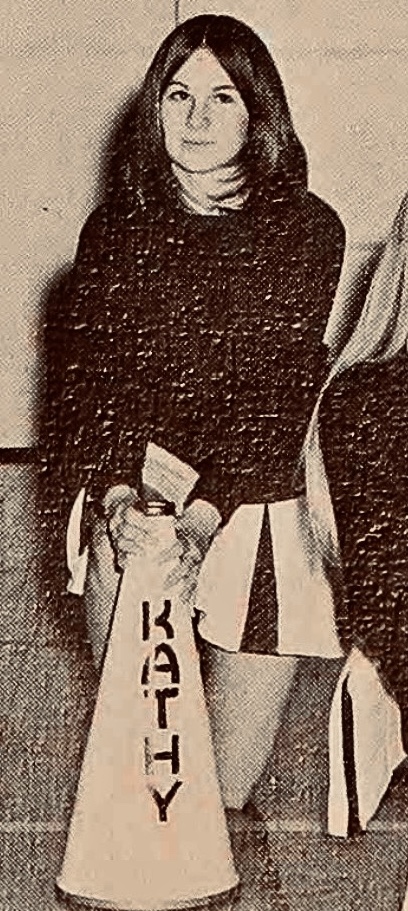
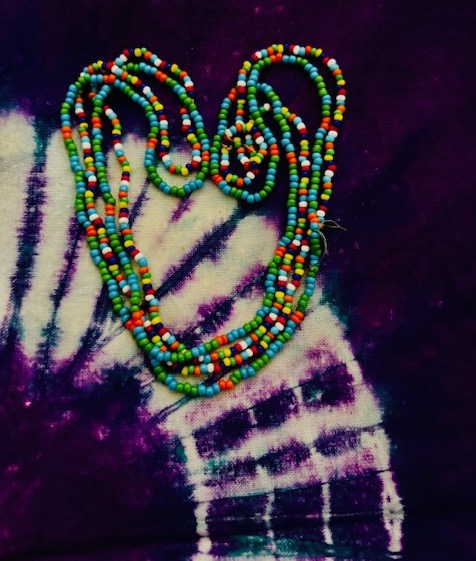
I was a bit too young to attend Woodstock, but I made some love beads anyway. We wore painter pants, bell bottoms, flannel shirts, and construction boots. We danced just as wildly and passionately as the twerking beauties in the Bad Bunny half-time show (who caused such faux right-wing outrage). It seemed that one day I was a cheerleader and a sorority member, and the next I’d quit both and thrown out half my underwear. That’s how swiftly the hippie-ish vibe took over.
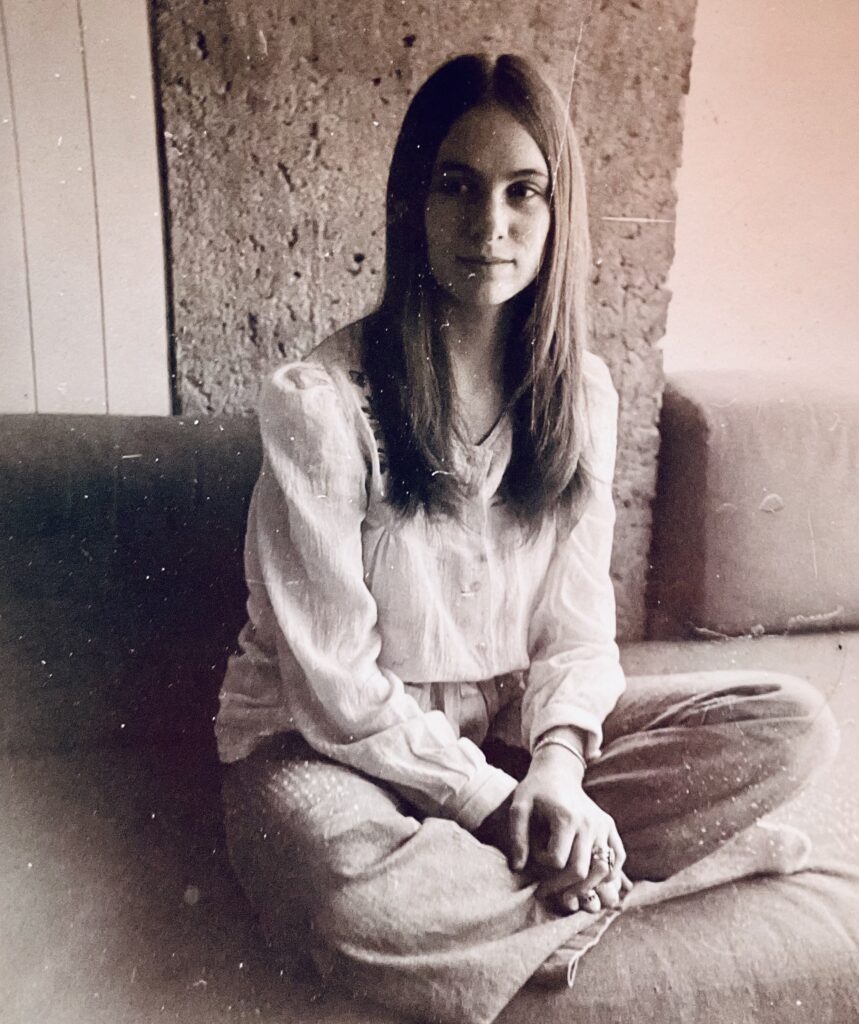
Some of us, ahem, had plenty of sex (there was no AIDS then and the pill was deemed a miracle and well, you know, “free love”). Our hair was long (both boys and girls) and on girls it was parted down the middle—straight, frizzy, and natural. We listened to the Beatles, The Who, Jefferson Airplane, The Stones, the Youngbloods urging, “Come on people, now smile on your brother, everybody get together, try to love one another right now.” We didn’t have cell phones, computers, or the internet. We communicated with our eyes, our bodies, our voices.
A few years into my 20s, I left that all behind; got married, moved to Manhattan, wore bras, nylons and high heels, got an editing job (and my husband left the corner for an orchestra position). My construction boots were thrown out, my painter pants went to Goodwill, and I never again wore love beads. But nor did I destroy them—and I never forgot how it truly felt to be free if only for a season.
As everyone knows, in the flower power years life wasn’t perfect; we also had the draft. My boyfriend at the time had a high draft number (so he was spared), as was the number of the charismatic musician I met in high school who would later become my husband. We had the horrors of Kent State and Vietnam in the years when many of the grey-haired folks standing up to ICE today learned how to protest. Back then, some called the cops “Pigs,” but now many of the men (and women) in blue look like pussycats compared to ICE’s masked militia terrorizing our streets seeking to incarcerate moms and dads, five-year-olds, and adolescent soccer players and mariachi performers (rather than murderers and rapists as “promised”).
One night-—not long after I learned that ICE had been spotted in my neighborhood—I awoke in panic from a disturbing nightmare (for after all, who with a heart and/or soul is not haunted by these visions, now). In my dream, several of the aforementioned masked agents broke into my house and took away my visiting neighbor, who hailed from another country. She was later returned and, in response to my anger and tears, said she understood why they did it. After all, she explained, “I am from a country where this sort of thing is commonplace.” She didn’t know in her bones what liberty was even though she’d fled her homeland because of the lack of it and thought she would be in a safe environment here. Well, dreams, like life, don’t always make sense. But again, sometimes they do. Here in the USA—as my dream reminded me—we value life, liberty, and the pursuit of happiness. But only for some, and for many, not anymore. For far too many, my nightmare is real.
Yes, the planet is in a dark place even though it’s spring, summer’s on the way, and the sun is shining. But I optimistically and perhaps naively await humanity’s rebirth—just as every year I await the inevitable return of the Siberian squill someone else planted. They will rise and bend toward the light; we have to believe that we will, too.

Kathryn Livingston
Kathryn E. Livingston was born in Schenectady, New York and lived there in a stick-style Victorian house until she left for Kirkland College (the short-lived women’s coordinate college of Hamilton College in small-town Clinton, New York). In l975, with her BA in English/Creative Writing, she moved to New Paltz to become first a waitress at an Italian restaurant, and then a community newspaper reporter. A few years later, she married a classical clarinetist she had met in high school and moved to Manhattan (Washington Heights), beginning a job as a trade magazine editor the day after their wedding. A few years later, after picking up an MA in English/Education at Hunter College, she became an editor at the visually stunning American Photographer. Motherhood (three sons) eventually brought her to suburban New Jersey, close enough for her husband to moped home for dinner between rehearsal and performance at the New York City Opera. Between baby diaper changes and boys’ homework assignments, Livingston toiled as a freelance writer on the topic of motherhood for numerous mainstream magazines. She also co-authored several parenting books, several photography books, and eventually wrote a memoir of her anxiety-ridden but charmed life and her path to Yoga: Yin, Yang, Yogini: A Woman’s Quest for Balance, Strength and Inner Peace (Open Road Media, 2014). With the kids now grown, and the husband still playing notes, Kathryn enjoys fiddling with words, writing her blog, puttering in her garden, and teaching the occasional Yoga class. (Author Photo: John Isaac/Author Head Shot Augment: René Laanen.)