The Mercy of Errors

“Your phone dies before you dispatch the brutally honest reply./By morning your anger has lost its passport./You drop the last digit in the number and never reach that door./The catastrophe that waited there remains unemployed./Is there still time? You hear your bus depart like a verdict./In the silence that follows, your breath returns to you by and by./No one will ever prove that these were deletions by an invisible hand./Yet some nights, counting errors like mismatched socks, you feel watched over./Whether by a plan or by a certain clumsy tenderness in things./As if the world kept tripping on purpose so you might keep walking.”—Philip Nikolayev
The Art of Forgetting
By Philip Nikolayev
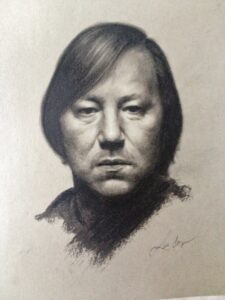
“Perhaps the whisper was born before lips,/And the leaves in treelessness circled and flew,/And those, to whom we impart our experience as bliss,/Acquire their forms before we do.”—from “Octaves,” by Osip Mandelstam (1933/4), transl. by Ian Probstein
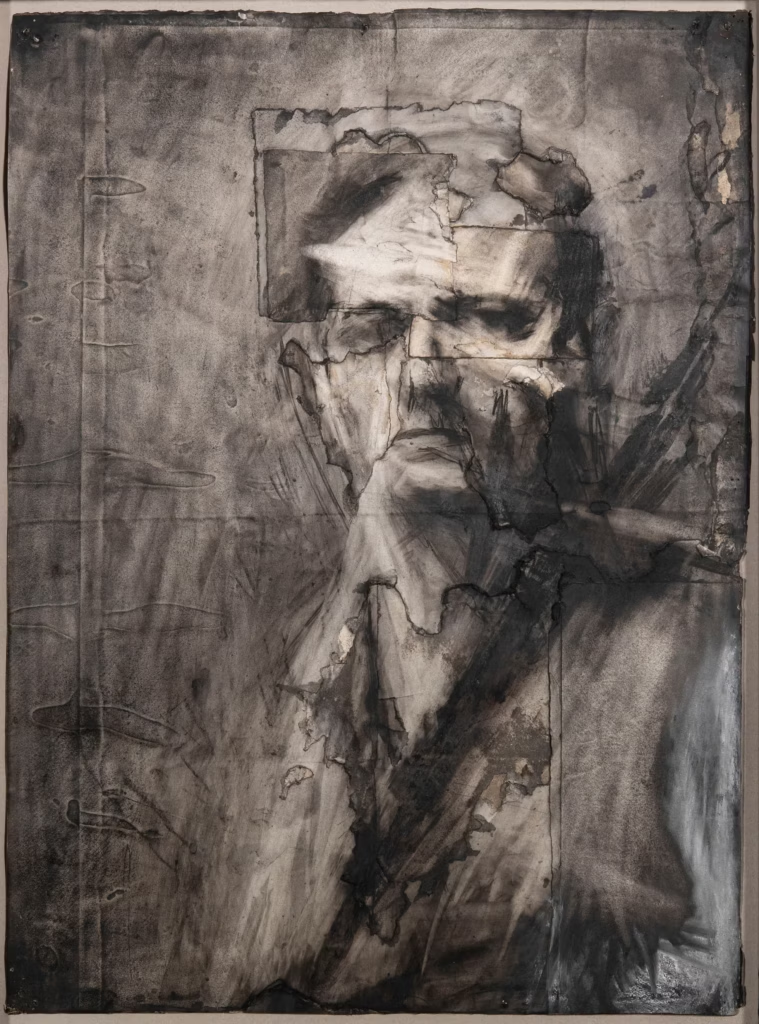
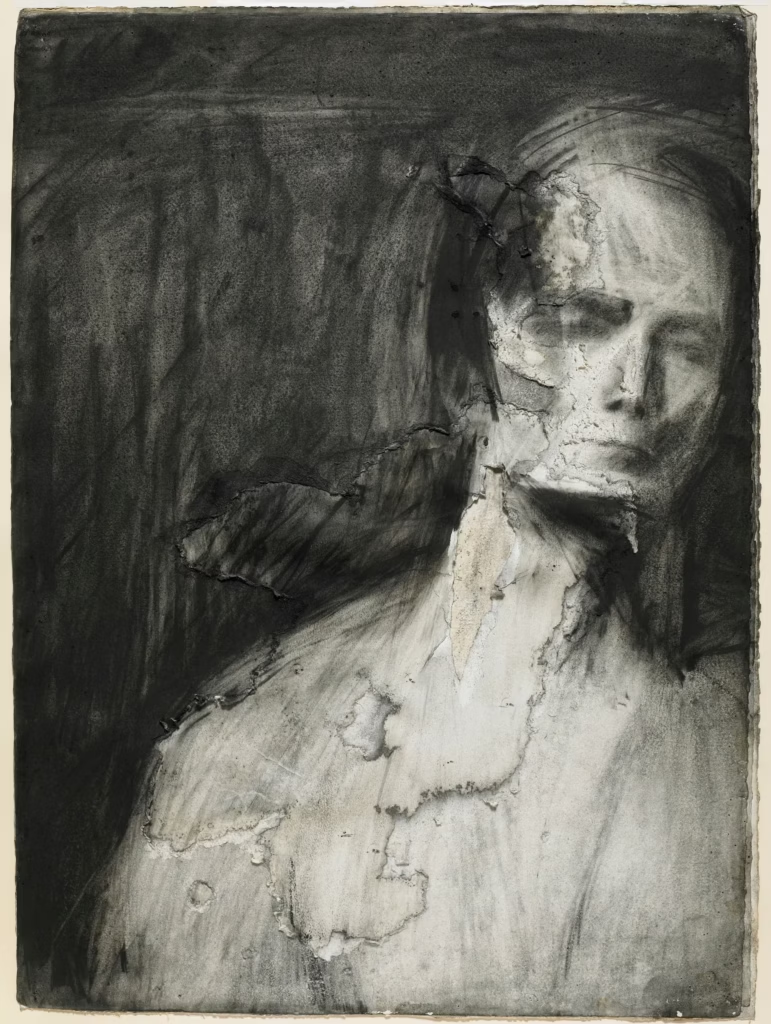
“No painting made 100 years ago is the same today – the colours change, the colours fade. There is a different emphasis on the lines. I’m sure every word in Shakespeare doesn’t carry the same meaning as it did in Shakespeare’s time. But because somebody has invested so much into something, it’s going to maintain its life because so much life has been invested into it, even though all sorts of things have altered about it. The thing about a good painting is that it’s always on a journey.”—Frank Helmuth Auerbach
Editor’s Note: Though Philip Nikolayev has not appeared in the virtual pages of Hubris since 2023 (“On My Immured Sonnets”), he returns to us this month with five poems. Nikolayev is a multilingual, Russia-born poet living in Cambridge, Massachusetts whose collections include Monkey Time (Wave Books, 2003, winner of the 2001 Verse Prize) and Letters from Aldenderry (Salt Publishing, 2006). His translations of Alexander Pushkin’s poetry, The Star of Dazzling Ecstasy, were published in a bilingual edition by Tiptop Street in 2021. With poet-psychologist Anna Halberstadt, he coedited Lyric Resistance: Ukrainian Poetry of War and Hope, the summer 2024 issue of The Café Review. Nikolayev is coeditor-in-chief of Fulcrum: An Annual of Poetry and Aesthetics.
 CAMBRIDGE Massachusetts—(Hubris)—November/December 2026—Since my last appearance in Hubris in 2023, I have learned two new languages to the point of fluency: Ukrainian and Spanish. As a Russian who strongly opposes the Putin regime and Russia’s war of aggression against Ukraine, I felt it was important for me to learn Ukrainian. I have since translated a great deal of contemporary Ukrainian poetry about the war into English and published many of these translations.
Spanish, on the other hand, is a language I had always wanted to learn, and it has now become a major part of my personal and literary life. Among other things, this has led to the publication of my bilingual collection of poems and self-translations, The Mercy of Errors/La misericordia de los errores (Nueva York Poetry Press, 2026). I have recently participated in poetry festivals in Honduras, Costa Rica and Argentina.
I have also ventured into acting, playing myself in Dennis, a forthcoming film about my late friend, the remarkable Russian poet Dennis Novikov (Денис Геннадиевич Новиков). The Russian actor Alexander Gorchilin plays my younger self, while I appear as myself in the present day, toward the end of the film. The film is scheduled for theatrical release by A24 Films LLC at the end of this year.
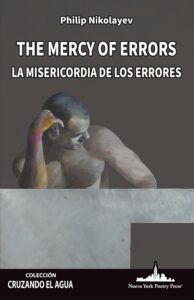
The Mercy of Errors
By Philip Nikolayev
You misread the email and stay home that evening.
The train you meant to catch leaves in a hurry without you.
You hear the insult wrong and answer with a shrug instead of fire.
You take the wrong street, find a bakery, brightly lit at closing.
The baker hands you fine bread he cannot sell and says take, take.
Your phone dies before you dispatch the brutally honest reply.
By morning your anger has lost its passport.
You drop the last digit in the number and never reach that door.
The catastrophe that waited there remains unemployed.
Is there still time? You hear your bus depart like a verdict.
In the silence that follows, your breath returns to you by and by.
No one will ever prove that these were deletions by an invisible hand.
Yet some nights, counting errors like mismatched socks, you feel watched over.
Whether by a plan or by a certain clumsy tenderness in things.
As if the world kept tripping on purpose so you might keep walking.
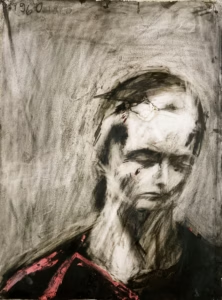
Lullaby for Unborn Languages
By Philip Nikolayev
Come midnight, they rise out of the quiet like breath on a mirror.
It’s not speech you hear, not any words that ever actually were.
One smells of salt and ship tar, a creole refused at the harbor gate.
Another embers like script scratched on bark, burned with the forest.
They crowd this humble study without sound, a parliament of unvowels.
You feel grammar brushing against you like moth wings testing glass.
They ask you nothing, but you keep apologizing, also sounding strange.
History is brutal, you mumble, but they know history’s why they’re wind.
Their surge makes you aware that loss is not only what was taken.
It is also what was never permitted to be clumsy, local, alive.
Sad, you compose a lullaby that no child has ever fallen asleep to.
A call that might have stopped a hand, a joke preventing a war.
Your actual tongue shivers, humbled, one melody among millions.
I’ll remember you, you say, but how does one remember the never born?
As you doze off, you see them as tiny hands learning how to cradle air.
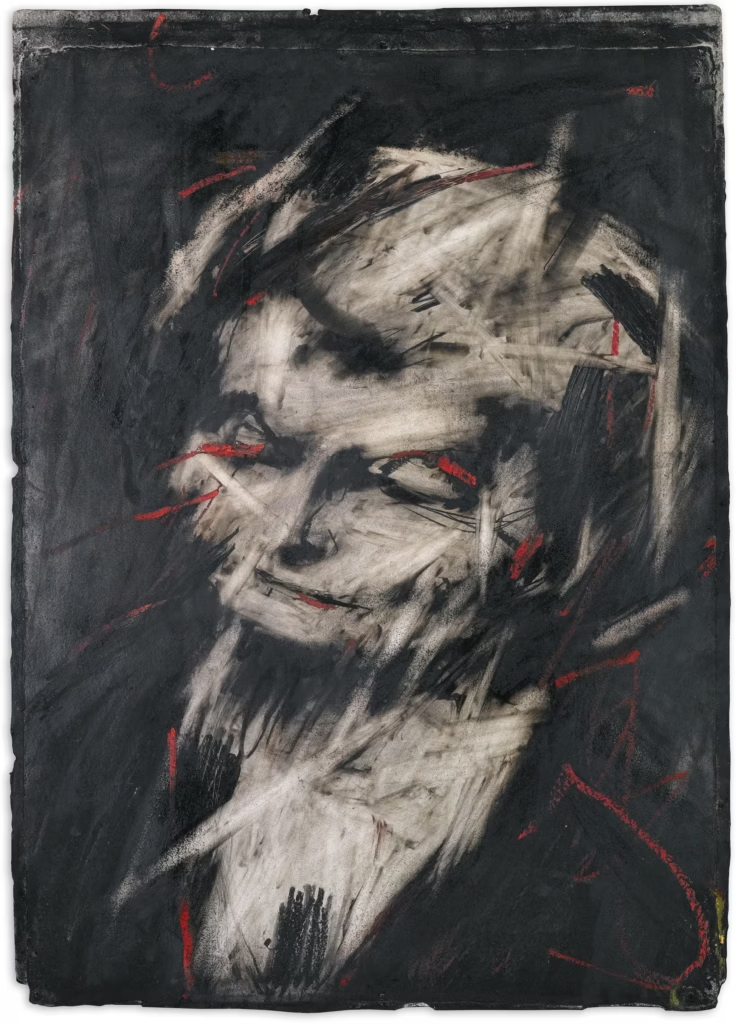
Polite Alibi
By Philip Nikolayev
You can live clean by keeping your heart apart,
loss shut in its drawer,
grief behind the teeth. You pass through folks
as through a hallway,
meaning no harm, mistaking yourself for harmless.
This you call peace,
practicing it daily, yet at peace you are not.
A quarter century
passes, has passed. The world, transformed,
clamors, flashes, shudders,
but deep inside there’s a soundproof chamber
where even thought won’t go,
so unbearable is its silence, so insensately numb
its hollow.
Your mother’s last word was your name.
You were far away,
a remoteness that turns eternal. By now you’ve
learned the self is leaky,
stains its own gloves, and necessity is fear
wearing a polite face.
“What is this untouched life?” you ask emptily.
A hard truth knocks,
you answer with an alibi. Distance leaves fingerprints
on everything. Absence
is negative touch, its trace persistent, permanent.
Archived Selves
By Philip Nikolayev
You stumble upon an archive in your chest.
The discovery shocks you so quietly you almost miss it,
as if someone had built a corridor behind your heartbeat
and forgotten to lock it. You pull the chain, a lonely bulb
hums awake above you. Shelves rise like ribs, stacked with long,
dust-gray boxes that breathe. Each bears your younger
handwriting. Here is the Historian, taped with yellowing timelines,
the Software Engineer, tagged in code and brittle plastic,
the Linguist, heavy with tongues that touched your own.
The Philosopher dwells nearby, dense with questions like packed
snow. The Monk sits shut tight in a stony silence, smiling.
Yet when you touch each lid, your pulse answers from inside,
like someone knocking in another room of your life.
You lift one box, a city you don’t recall heaves a sigh.
Rain on the tramlines raises a faint mist all around you.
Cheap bad coffee, no sugar, a hand with your face waving.
A ghost with your body language pauses at the crossing,
then moves on. For a moment the air remembers the shape
that would have been yours, as if each step you never took
still left its faint nerve in you. You pause briefly, while the boxes
breathe and settle back on their metal shelves. Time per se,
as you now know, is not what files them away, it is only
the fragile treaty that your selves renew each morning, letting
this one life walk the street while the rest go on breathing in the dark.
Practice of Being Fine
By Philip Nikolayev
Bright coins of rain tap out a song
on the thin roof of the afternoon.
You stand there, practicing being fine,
as if it were a language to learn.
The world keeps staging plain marvels,
charges only your breath for admission.
A bus exhales. A window warms.
Someone laughs like it’s still allowed.
You think of what you’ve lost
and how politely it stays lost,
never returning your calls. Even so,
a worm surprised by daylight inches
across the sidewalk, serious, alive.
You don’t get your old life back,
you only get this one, held together
by brave stitches of light along
the imperfect seam under your ribs.

Philip Nikolayev
Russo-American polyglot poet Philip Nikolayev translates poetry from several languages and co-edits Fulcrum: An Annual of Poetry and Aesthetics, a serial anthology of poetry and critical writing. Nikolayev’s poems have appeared in numerous literary periodicals internationally, including Poetry, The Paris Review, Harvard Review, and Grand Street. His verse collections include Monkey Time (Wave Books, 2003, winner of the 2001 Verse Prize) and Letters from Aldenderry (Salt Publishing, 2006). His translations of Alexander Pushkin’s poetry, The Star of Dazzling Ecstasy, were published in a bilingual edition by Tiptop Street in 2021. With poet-psychologist Anna Halberstadt, he coedited Lyric Resistance: Ukrainian Poetry of War and Hope, the summer 2024 issue of The Café Review. His latest book, a bilingual collection of poems and self-translations, is The Mercy of Errors/La misericordia de los errores (Nueva York Poetry Press, 2026). (Author Head Shot Augment: René Laanen.)