Census 2026: Boxing Multilingualism

“That assumption bears little resemblance to the lived experience of multilingual Australia. In my home, for example, my children are fluent in both Greek and Assyrian. They use both languages interchangeably, moving effortlessly between them, often within the same conversation, depending upon who is speaking, what is being discussed, or because one thought finds its natural expression in one language rather than the other. One language carries particular memories; the other, particular histories. One contains expressions that simply cannot be translated without losing something essential, while the other preserves a different inheritance altogether. They are complementary rather than competitive and coexist without requiring a hierarchy.”—Dean Kalimniou
Diatribe/North
By Dean Kalimniou
“Every established order tends to produce (to very different degrees with different means) the naturalization of its own arbitrariness.”—Pierre Bourdieu
 “I propose the following definition of the nation: it is an imagined political community-and imagined as both inherently limited and sovereign. It is imagined because the members of even the smallest nation will never know most of their fellow-members, meet them, or even hear of them, yet in the minds of each lives the image of their communion . . . .”—Benedict Anderson
MELBOURNE Australia—(Hubris)—November/December 2026—Every census tells us as much about the assumptions of the state as it does about the people it seeks to enumerate. The questions it asks, the categories it creates and the answers it permits are never neutral. They are acts of classification, and classification is always an exercise of power. As French sociologist Pierre Bourdieu reminds us, the authority to classify is itself a form of symbolic power, because those who determine the categories also determine the social reality that emerges from them. Michel Foucault would go further still, arguing that systems of knowledge do not merely observe reality but actively produce it. In that sense, a census is far more than an exercise in counting. It is an exercise in imagining the nation, deciding which identities become visible, which relationships matter and which forms of life are worthy of official recognition.
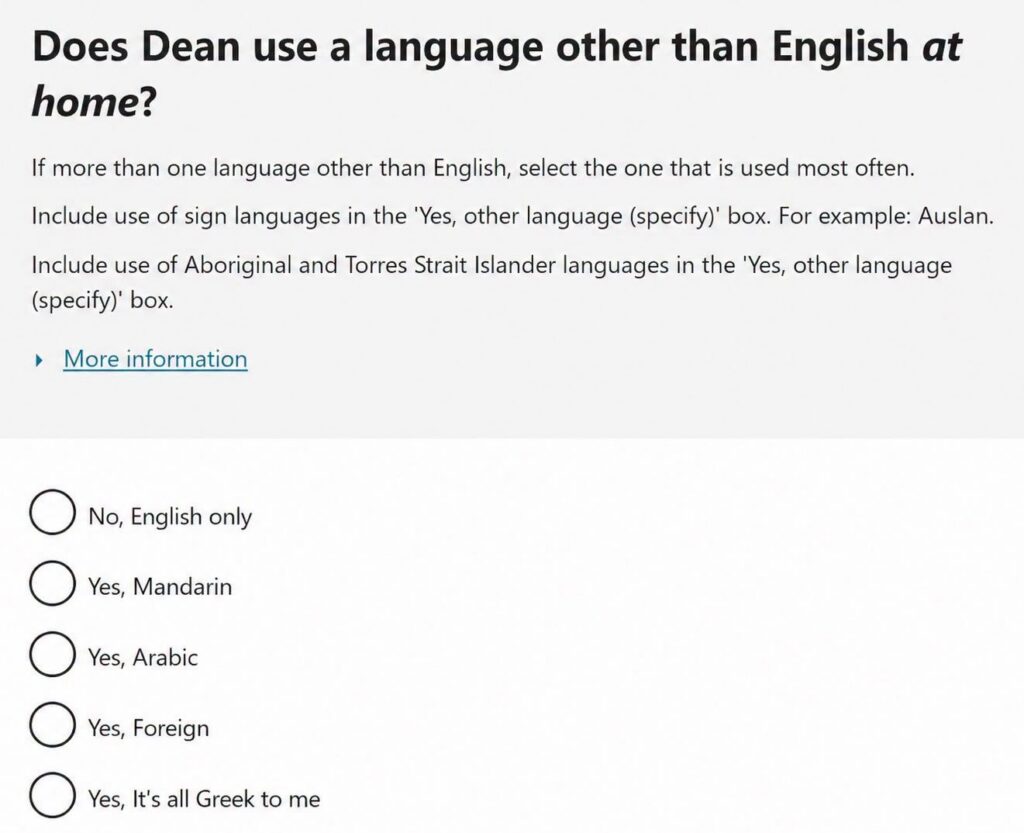
This year’s Australian census contains a deceptively simple question that reveals the persistence of a remarkably old way of thinking. Respondents are asked whether they speak a language other than English at home. Those who use more than one language are then instructed to nominate the one they use “most often.” At first glance, the question appears entirely reasonable. Yet embedded within it is a profound assumption: that multilingualism can ultimately be reduced to a single dominant language, that one language somehow represents the authentic linguistic identity of the household while all others become secondary.
That assumption bears little resemblance to the lived experience of multilingual Australia. In my home, for example, my children are fluent in both Greek and Assyrian. They use both languages interchangeably, moving effortlessly between them, often within the same conversation, depending upon who is speaking, what is being discussed, or because one thought finds its natural expression in one language rather than the other. One language carries particular memories; the other, particular histories. One contains expressions that simply cannot be translated without losing something essential, while the other preserves a different inheritance altogether. They are complementary rather than competitive and coexist without requiring a hierarchy. The 2026 Australian Census nevertheless insists that I impose one.
More fundamentally, the question misunderstands multilingualism itself. Contemporary sociolinguistics has long abandoned the notion that multilingual speakers inhabit neatly separated linguistic compartments. Multilingual speakers move fluidly between languages according to context, relationship, and purpose, drawing upon a shared linguistic repertoire rather than isolated systems. Language is not merely a system of vocabulary and grammar but a repertoire of relationships, negotiated daily across generations, marriages, friendships, and neighborhoods. Yet the census proceeds from an individualistic conception of language, as though it were a possession residing inside the speaker rather than a social practice existing among speakers. Languages survive because communities sustain them, not because individuals possess them in isolation. To ask me which language my children or I speak “most often” is rather like asking which member of our family we relate to most frequently. The answer depends entirely upon the circumstances, and even if it could be quantified it would reveal remarkably little about the relationships themselves.
The consequences of this perspective extend well beyond semantics. Census data informs public policy, shaping decisions about interpreting services, community language education, health care, aged care, broadcasting, and funding. Smaller language communities already confronting the pressures of assimilation suddenly appear smaller still because the instrument designed to measure them has first required that many of their speakers suppress part of their linguistic reality. The resulting statistics acquire the authority of objective truth, despite their reliance upon categories that have already simplified the phenomenon they purport to describe.
In the official record, my children will therefore be counted as speakers of Greek because that is the language I chose to nominate, even though they are equally fluent in Assyrian. Had I made the opposite choice, they would simply have become Assyrian speakers instead. One language would always disappear. Ironically, as the smaller linguistic community, Assyrian arguably has the greater need for every speaker to be counted, yet the Census compels me to privilege one inheritance over the other.
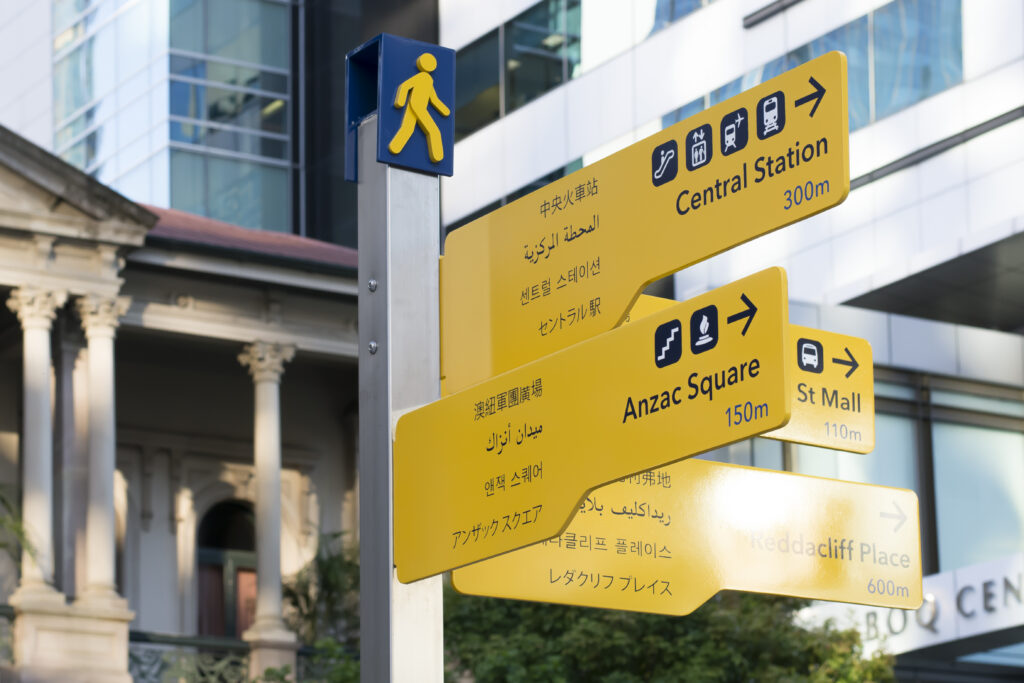
The irony is difficult to ignore. Australia speaks endlessly of multiculturalism as one of its defining achievements. We celebrate Harmony Week, fund multicultural festivals, and proudly describe ourselves as one of the world’s most linguistically diverse societies. Governments encourage the maintenance of community languages while educational institutions extol the cognitive and cultural benefits of multilingualism. Yet when the nation pauses every five years to count itself, it does so through categories that continue to reflect the logic of an earlier Australia, one still influenced by the assimilationist expectation that each household ultimately possesses one principal language and one primary identity.
Official multiculturalism has become remarkably adept at celebrating diversity symbolically while disciplining it administratively. Diversity is welcomed provided it first becomes intelligible to the bureaucratic gaze. Linguistic plurality must therefore be rendered orderly, singular, and statistically manageable before it can enter the official narrative of the nation.
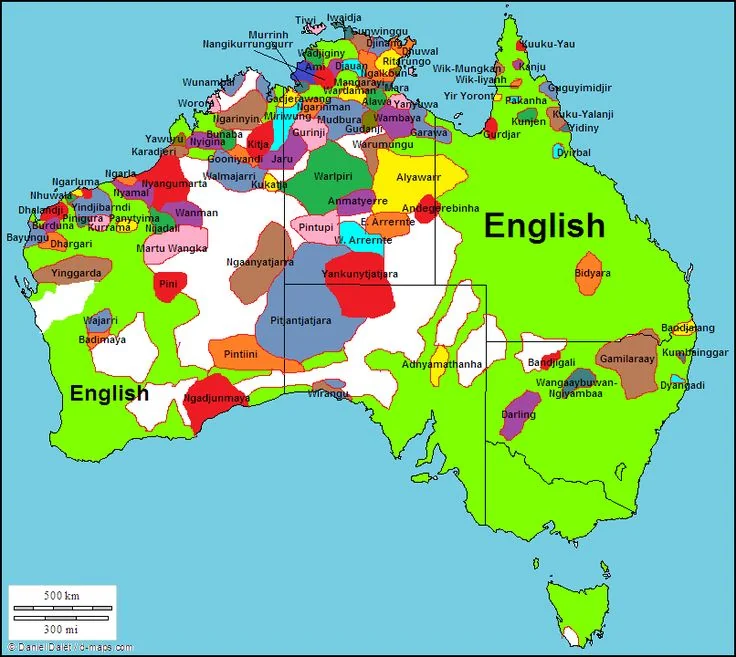
What makes this particularly striking is the historical amnesia that underpins it. The census proceeds from an essentially European conception of the nation state, one that instinctively seeks a primary language and a singular identity. Yet the oldest linguistic traditions of this continent point in precisely the opposite direction. Before colonization, many Aboriginal societies inhabited richly multilingual worlds, where several languages and dialects were used across kinship, ceremony, trade, and country without requiring speakers to privilege one over another. Contemporary migrant Australia has, through very different historical circumstances, recreated similarly multilingual environments in thousands of homes. It is therefore curious that the principal instrument through which Australia counts itself remains anchored in assumptions that sit more comfortably within 19th century European nationalism than within Australia’s own linguistic history.
Anglo-Irish political historian Benedict Anderson famously argued that nations are imagined communities. The census is one of the principal instruments through which that imagining takes place, determining which characteristics deserve measurement and which disappear beneath statistical convenience. When multilingual households are compressed into singular linguistic identities, Australia inevitably imagines itself as considerably less linguistically complex than it actually is.
The solution would hardly have been difficult. Rather than asking respondents to identify the language they use “most often,” the census could simply have invited Australians to identify every language regularly spoken at home. Modern statistical analysis is perfectly capable of accommodating multiple responses. Such an approach would have produced a richer understanding of Australia’s linguistic ecology, recognizing multilingualism as Australians actually live it rather than reducing it to categories dictated by bureaucratic convenience.
Equally perplexing, however, is the census’ complete lack of interest in the many other languages Australians may know, read, write, or speak beyond the home. A person may possess fluency in several languages, use them professionally, academically, or socially, and yet those linguistic competencies disappear entirely from the national record because they happen not to be exercised within the domestic sphere. Those languages nevertheless represent years of education, cultural knowledge, professional expertise, and engagement with the wider world, yet none of this linguistic capital appears in the statistical record. Why is the linguistic capital embodied in those languages considered unworthy of measurement? Does the state value multilingualism only insofar as it functions as a marker of ethnicity within the home, while remaining curiously indifferent to the linguistic knowledge its citizens possess and deploy in every other sphere of national life?
Perhaps that is the more profound question this census raises. The issue is scarcely whether Australia is multicultural. That proposition has long since ceased to be controversial. The real question concerns who possesses the authority to define the terms upon which multiculturalism is recognized and measured. Census statistics quickly acquire the authority of objective fact, informing government policy, academic research and public understanding alike. If the assumptions embedded within those statistics fail to capture the complexity of Australia’s linguistic life, they inevitably distort the picture they claim merely to describe.
The greatest danger, therefore, is not that the census fails to count multilingual Australia accurately. It is that Australia comes to believe the diminished reflection of itself that the census has created.
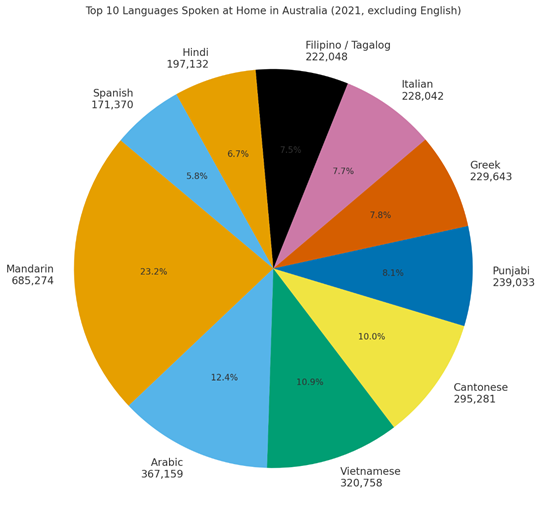
Most spoken non-English languages spoken at home by percentage of Australian population.

Dean Kalimniou
Born in Melbourne, Australia, lawyer-poet Dean Kalimniou (also known as Konstantinos Kalymnios) is, among all else, a screenwriter, short story writer, children’s author, and translator well known to Australia’s Greek community. One of the few Australian-born poets writing in Modern Greek, he has published eight poetry collections. As spokesperson for the Panepirotic Federation of Australia, Kalimniou has consistently raised awareness about the plight of the Northern Epirot Greek minority in Southern Albania. As a journalist, Kalimniou has written a column, Diatribe, for Melbourne’s Greek newspaper, Neos Kosmos (New World), since 2001. He also writes regularly for OPA! magazine and New York’s NEO magazine. In November 2007, Kalimniou was awarded a Government of Victoria Award for Excellence in Multicultural Affairs by the Governor of Victoria, Professor David de Kretser. (Author Head Shot Augment: René Laanen.)