Daddy Tractor
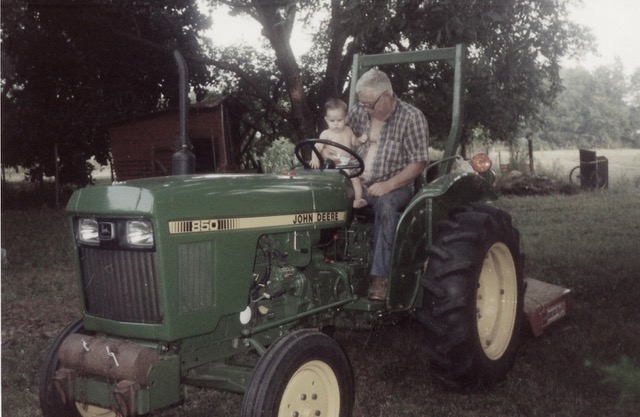
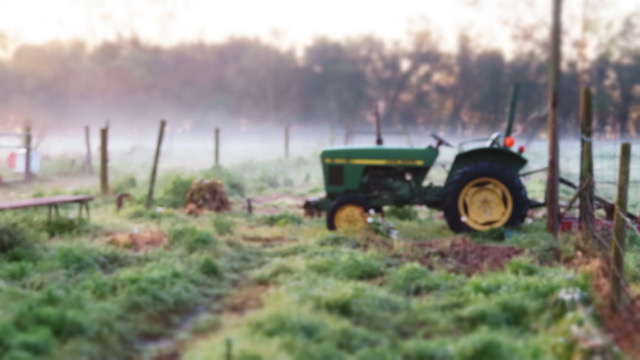
“This 1980s John Deere 850 model was all iron, all man, and, like I said, hard to make the things connect. Iron pins that went onto spinning steel balls, nestled in stiff arms. Iron levers, pedal controls, and pierced steel foot floor that let bugs, branches, and rain pass through. All painted green. Every time you needed him, the air was either blazing hot, dripping humid, or all that iron was frozen cold to the touch. He smelled of black diesel smoke, a choking smell, but only right when you cranked him up. After a while, the smell was of cut hay, wind across a corn field, or the sharp, perfumy, manly smell of privet trees.”—Jenks Farmer
Plant People
By Jenks Farmer
 COLUMBIA South Carolina—(Hubris)—November/December 2026—I let him run hot.
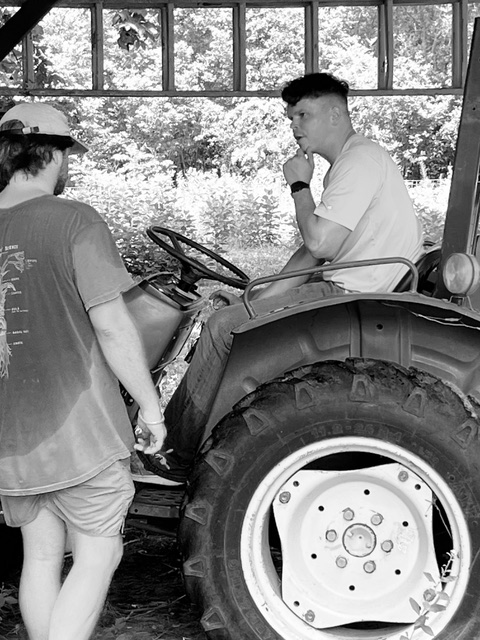
In searing, record-breaking September heat, I was anxious to finish limb clean-up from last October’s hurricane. Too anxious. Just like Daddy, his old tractor needed a slow and steady hand. I’d run him all day. Just before noon, I smelled the wet, rubbery, melting zinc first. Then I saw the fumes. I knew what it was all about but tried to deny it. Shame, regret, and then white steam clouded around me. All that old stuff bubbled up. Daddy stuff, a tractor’s laden with responsibility. Hissing steam from under the hood and tears and drips and smells meant I’d have to make the call after all these decades.
The men and machines I learned from meld together now—green paint, gruff silence, grease, distant and disciplined but steady and warm as smoke from a scrap-wood fire in a 55-gallon steel drum.
He was a tough old dude but always there. Every single time. He wasn’t always easy. Unlike modern ones, the connection was rough, heavy, clangy, and dangerous.
A tractor is a core; nothing more than a motor with wheels. All the other stuff that makes it do things get attached along the way. Those attachments accumulate over the years and seem like part of the whole. In order to use it for anything, you attach implements by backing up tractors to the plow, mower, or hay rake. You line things up just so. But the hitch is much more than a hitch. He had a multi-point connection—two arms that raise and lower, one stabilizer bar and if the implement needed to turn or spin, you connect the PTO shaft, too: that’s a square shaft inside a round tube with a fist-like locking mechanism. You back up straight, slow, and worry about level, too. Say one arm is higher than the other ‘cause the ground is uneven. Then, you have to make sure he is properly braked, jump off, get a heavy steel pry bar to push things into place.
That weighty bar stayed with him. If you used it for something else and left it somewhere else, he’d bellow like a bull. Daddy, I mean, not the tractor, though they were similar in a lot of ways. Backing, prying, leveling, sweat all the time, dripping down on the iron bars, you chock the implement with a rock or piece of firewood, then jump back onto the tractor seat, re-adjust, and back in slowly, all the while twisting your body backwards and low to slam that one previously unlevel arm into place, drop the pin in, and finally make a trusty, hand-shake of a connection.
Mr. Frank, local farmer, Daddy’s friend, my first farm boss, once told me that to get close to him, you better sidle up. Daddy never said it that way, but he lived it. I challenged him a lot when I should have been sidling up. But I tried again and again with the sidling and even then was left wanting.
Bristly and gruff to say the least.
This 1980s John Deere 850 model was all iron, all man, and, like I said, hard to make the things connect. Iron pins that went onto spinning steel balls, nestled in stiff arms. Iron levers, pedal controls, and pierced steel foot floor that let bugs, branches, and rain pass through. All painted green. Every time you needed him, the air was either blazing hot, dripping humid, or all that iron was frozen cold to the touch. He smelled of black diesel smoke, a choking smell, but only right when you cranked him up. After a while, the smell was of cut hay, wind across a corn field, or the sharp, perfumy, manly smell of privet trees.
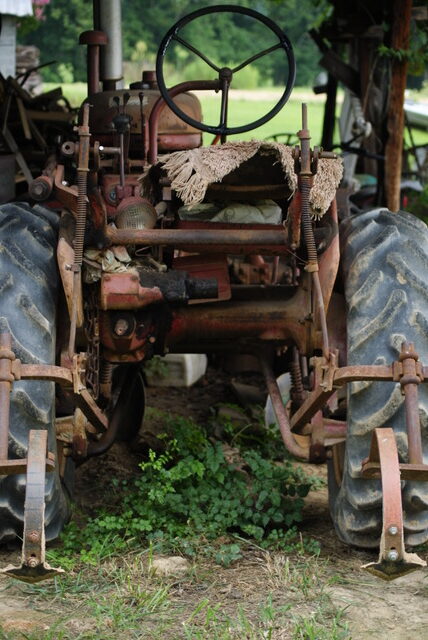
Nevertheless, it was no better than any other tractor we’d ever had on this poor farm. Before Daddy splurged on the 850, there was ancient Alice Chalmers. The brand was actually Aliss-Chalmers, but we didn’t know better so we called her Alice. She was a ’50 model, orange all over, and a tricycle style, prone to rear up like a bad pony and throw you. She was dangerous. She had to be cranked by turning a bent steel rod that some old farmer had rigged into the front of her engine. Cranking the rod sparked the engine, but it was prone to jerk back and could potentially break a skinny boy’s arm. I wasn’t allowed to crank her alone. Daddy bought her for a couple hundred dollars because that’s all he had; he made a massive sacrifice on a tractor dream to pay for a farm to send children to school. He did all kinds of work to make this little farm a farm, so he smelled of diesel smoke, Marlboro smoke, sawdust, sweat, and mildewed shirts—that invisible mildew that grows in clothes hung out on the line that got rained on, then dried again. The kind of smell that grows with humidity and sweat; then fades on a dry day, then comes back and won’t go away, even 40 years later.
Daddy knew I couldn’t use her. And he knew that he couldn’t teach me all the things a boy becoming a man needs to know about tractors. Men like him learned by watching other men—like Mr. Frank, the old farmer at the agriculture club who was also the mechanic at the John Deere place. These men taught in grunts and gestures; in what they fixed while I watched. Daddy respected Mr. Frank and got me a job with him. At 14, I became one of Mr. Frank’s farm boys. I rode a moped on dirt trails to get to work. No helmet required.
All Mr. Frank’s farm boys got John Deere caps. There were three of us. Within weeks, the caps were worn in, and we’d try to identify them, each from each, by the sweet, head-sweat smell of the inner band. Mr. Frank had about a dozen green tractors. I learned them all: the Tonka tough 1010, the 1950s tryke-style model, the massive and powerful 4020. I learned to run them, change their oil and of course I learned the two essential rules of diesel engines that every farmer knew by heart: never let a diesel run out of fuel and never ever let it run hot.
Mr. Frank taught me to coax and persuade those fellas when they didn’t want to crank or climb out of a ditch. On that farm’s rolling pastures, I learned chains and trailer backing; jacks and giant wrenches. I learned responsibility and freedom. You know the feeling. It might seem crazy to compare that to me, a teenager, tanned as dark as a black-eyed pea from the waist up; weighted down by ten-pound Red Wing boots. But if you’ve ever stood up while driving (make that commanding) a massive tractor with just one teenaged, muscled arm, a kudzu scented wind drying the sweat, you get it. It’s all about self-confidence to go and do and dream. Mr. Frank and Daddy knew that. They just never said it out loud.
The 850 was a long-nursed dream of Daddy’s. He was moving up to be like the farmer friends he respected. He waited until I was mostly paid for and in college; he was 54 years old when he finally splurged. I know he was proud, elated, but he never said it. He showed me the invoice but, being a know-it-all college boy, I probably wasn’t impressed. I know he mourned Alice too, though: she stayed in her barn for years.
Forty years later, I’ve kept him up, kept him alive and made him a myth. I hate changing oil and replacing tubes, so my Tom does that. I changed the tires a few years ago, which is not as easy as doing a car or truck. I jacked up his bulky torso, chocked it with a stack of railroad ties, found the giant wrench set and took off the 400-pound tires. That floating weathered body was helpless, a stitched together hulk, longing to do the strong work of youth. He had tubes everywhere, those rust-spotted, thin-skinned arms that should be strong enough to hold up a bush hog or plow hung limp, taped, tubed, and helpless.
There’s always been something about the arms, the muscle control in the forearm and hands. It’s the graceful, unconscious operations, the soft veins under hard muscle, the strength of competence. You can feel it all working. He had no power steering, of course, so every single tiny movement resulted in a mechanical strong shift or turn. Daddy’s young arms, back then, could manipulate those tractor arms.
I feel him respond, just before he dies, resistant but responsive to every slightly hidden movement, desire, in the touch of my fingers.
It was just a few weeks ago, I polished him up. I’d tried to meet the challenge of polishing for years. One of my farm boys and I needed something to do away from the searing sun. Officially an antique now, the 850 led a more coddled life than either Daddy or me. He’s not spent more than a dozen nights left in the rain; every single one of those a night of laxness or laziness on my part. Steel doesn’t fade, but green paint weathers. There are a few rusty edges on the iron parts, mostly around that place I scraped against a leaning hackberry tree back when cell phones first came out. I couldn’t really polish him up to be what I dreamed he’d be.
Still running, still working, still making desired connections difficult. This old-school model stubbornly determined to stay old-school, worn by weather and work. He didn’t want to live as a glorified, refinished antique any more than he could possibly be the updated, sensitive type—the kind that might look you in the eye and say things that men like Daddy and Mr. Frank and all those farmers never learned to say. At least he could convey things through the gruff edges and tough but still tender touch. That’s what they all did.
And then today in that searing, record-breaking heat when months of storm clean-up have worn me down and left me mad and resentful of the uncaring power of nature to do things that seem so unfair, to get the pasture bush-hogged, before the next thing, the next storm. I push us both a little too far, let us both run hot.
I’m furious at myself. Disappointed. As he’d have said, “Not mad, just disappointed.”
Afterwards, I mourned. And now I reckon I need to get on to cherishing the memory. It’s taken a while. I am still seriously mad at myself for not being what he needed and at him for not being what I needed, but now, too, I’m glad it was me that got to be there the day he died.

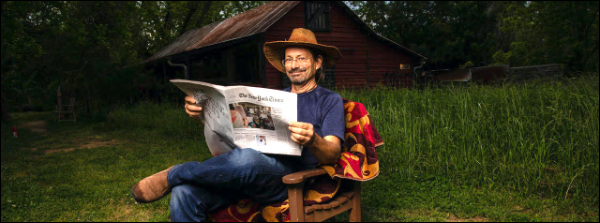
Jenks Farmer
Jenks Farmer is a renaissance plantsman. He fell for plant sciences at Clemson University, for botanical garden design at the University of Washington, and for the natural world during an early education from a family of artists, musicians, and farmers. For 20 years, Farmer led teams to plant and establish the vision for two of South Carolina's major botanical gardens; Riverbanks Botanical Garden and Moore Farms. These gardens as well as his designs for homes, museums, and businesses have received awards and delighted hundreds of thousands visitors with the joyful, easy exuberance of hand-crafted gardens. An engaging storyteller and teacher, Farmer has established multiple internship programs and is talented at motivating people of all ages and from all walks of life to get outside and get their hands dirty. Farmer has lectured for groups as varied as the North Carolina State Agricultural faculty, the Smithsonian, Wave Hill, scores of Master Gardeners, and, of course, his grandmother’s Allendale Ladies Afternoon Reading Club. His writing has been published in "Organic Gardening" and "Horticulture," and his photos in the "Royal Horticulture Society Magnolia Quarterly." He is the author of Funky Little Flower Farm, Gardening with Crinum Lilies, and Deep Rooted Wisdom; Lessons Learned from Generations of Gardeners. Farmer lives with his husband and family on an 18th-century South Carolina farm, now the site of a pioneering mail order nursery specializing in organically grown plants of the genus Crinum. (Banner Photo: Paisia Photography; Contributor Photo: Lonnie Webster/Augmented by René Lannen.)