A Meeting in Rome
“Father M thought I was too focused on the past, that I was looking for dirt on McQuaid. But to say that McQuaid was a dogmatic, conservative, narrow-minded and highly intelligent operator would hardly be news to anyone. That was not what I was after. I wanted to know how Pat reconciled himself to the endless contradictions of the corporation he had joined. I use the word ‘corporation’ because at the height of its power, the only useful comparison would be to the likes of Google and Apple. At one point the Catholic Church owned one third of the landmass of Europe. Not bad for a non-profit whose founder had espoused the virtues of poverty and simplicity. Birth, marriage, and death: the church was the sole contractor. It was impossible to do business without the church. They controlled the very air that people breathed.”—Laurence O’Dwyer
On a Hiding to Nothing
By Laurence O’ Dwyer
“I am only a man: I need visible signs./I tire easily, building the stairway of abstraction./Many a time I asked, you know it well, that the statue in church/lifts its hand, only once, just once, for me./But I understand that signs must be human,/therefore call one man, anywhere on earth,/not me—after all I have some decency—/and allow me, when I look at him, to marvel at you.”— Czesław Miłosz, from “Veni Ceator”
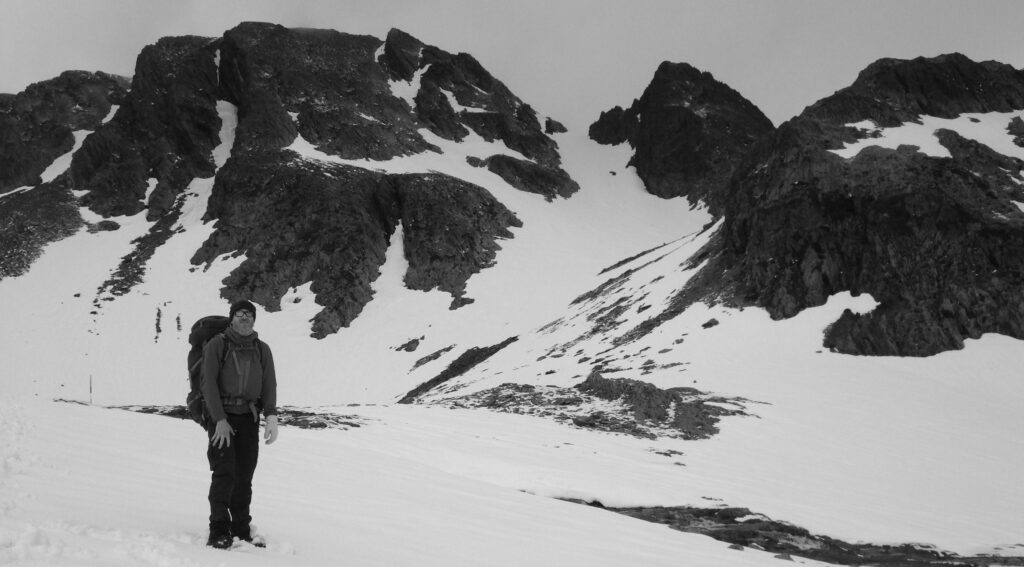
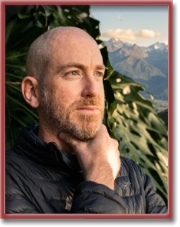 IRELAND—(Hubris)—June 2026—My uncle on my father’s side, was a priest. He was the head of the clan. He bussed people to the west of Ireland to see moving statues. He loved the paddywhackery of Irish Catholicism; the pomp and the superstition. He had been a missionary in Peru where I was told that he had learned Spanish but I found that very hard to believe. The few times I saw Pat and Father Séan together, at weddings or funerals, they looked distinctly uncomfortable in each other’s company. They had nothing to say to each other. Séan belonged to the world of John Charles McQuaid. He would have been a faithful disciple of the man who had clobbered Pat to death, at least professionally speaking, in the early 1970s.
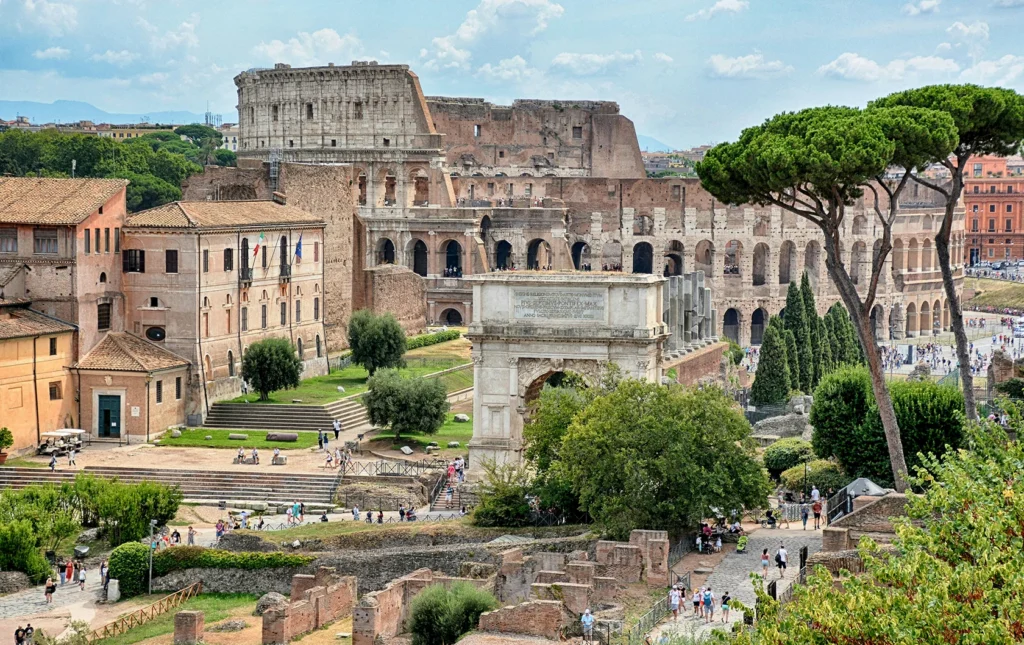
When I first wrote to Father M asking him about my uncle he replied: I was a good friend of Tom’s; we were together in the Priory for many years. But when I followed up with a question about my uncle’s run in with John Charles McQuaid, ruler of Catholic Ireland from 1940 to 1973, he did not reply. Two months later, I wrote to say that I would be in Rome for a few days and I suppose that being a priest and a Christian he couldn’t very well ignore me.
That’s how I found myself sitting down in the side room of a church nor far from the Colosseum with a man who made me realise one thing: I have absolutely no future as a journalist. There were so many things I wanted to ask him, so many things he must have known but Father M spun such a good tale of not knowing my uncle that I almost forgot his first email. I was depressed by our short meeting; also a little dazed and angry as I walked to a little osteria after our brief meeting to write up my notes. I was depressed because I am useless at this job of writing the story of my uncle. It will never be told. Angry because the man was clearly dissembling. Sitting there, scribbling furiously with the church at one end of the street and the Colosseum at the other, I stopped and picked up my phone to read his first email again. I was a good friend of Tom’s. I knew him well. I must have been talking to a different person.
*
Tom, or Pat, as we knew him, was an uncommon figure in my childhood. He was a radio producer, a television presenter, a traveller, a scholar, a mountain climber. I would be happy if I came home from school to find the kitchen filled with cigar smoke. It could only mean one thing. He would be paying a visit to his little sister, my mother. Most likely he’d be on his way to or from some radio assignment.
The figure I see even now is wearing a tattered leather jacket, corduroy trousers, suede shoes, and a check shirt. He has white hair and his face, though wrinkled and papery, is somehow boyish, almost angelic. He has a dusty appearance as though he’s just returned from the desert, the Libyan desert where he would have been travelling with an Italian.
Why Libya? Maybe because he once gave me a book called Libyan Sands: Travels in a Dead World. Why an Italian? Because he always said “ciao” instead of goodbye. My mother thought this was because he worked with so many people, in so many countries—“Ciao” was a useful kind of Esperanto.
When I was eight or nine, he gave me a present of two coloured balls with numbers on them. Each one came in a little leather pouch with the logo of the National Lottery. They were from the spinning wheel of the jackpot that was broadcast every week on RTÉ where he worked. Because they came from the land of television they were exotic. But his days in television were long gone when I was a boy. He was a radio producer. Later, he told me that he didn’t like working in television, he didn’t like people saying to him: I saw you on telly last night. That may or may not have been true. It might also have had something to do with his run in with McQuaid. But he never spoke about that to anyone and Father M had not replied when I asked about it.
The presents changed as I grew older. There were night binoculars that showed everything in a spectral green glow. There was the greatcoat of an SS officer that came with a story about my grandmother’s cousin, Dotty, who was a governess in the household of the President of Poland. There was a tent that attached to the top of a car but I didn’t have a car, so I had to turn that one down. When my brother was a medical student, he gave him the ball and socket joint from a human skeleton.
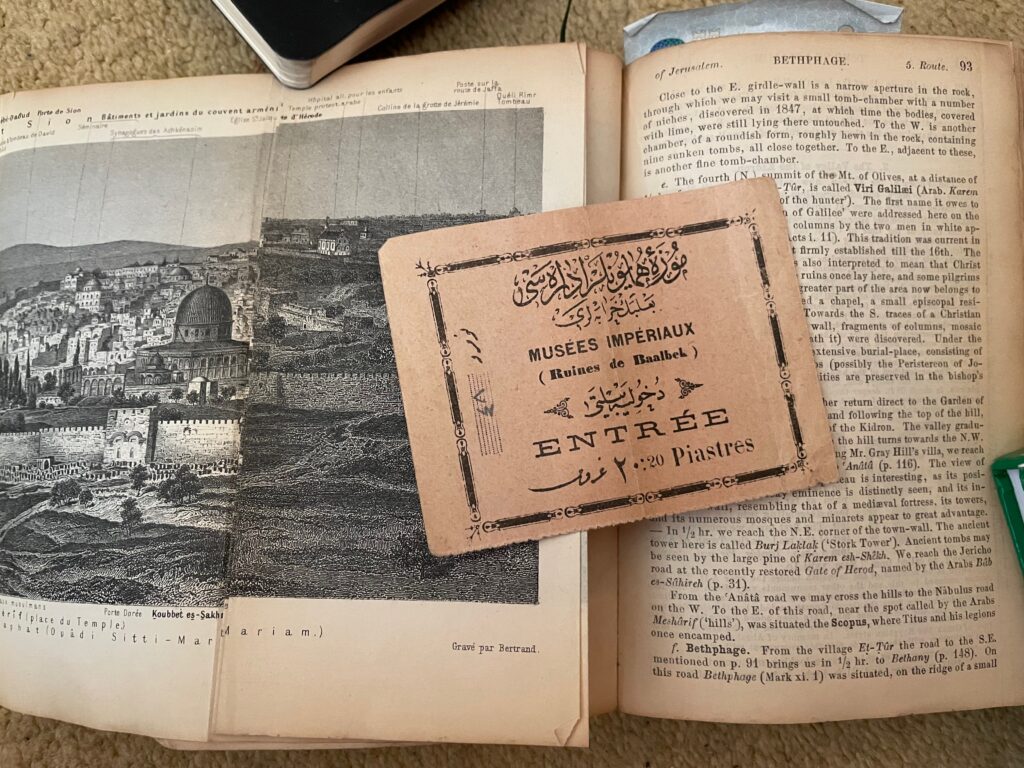
And then there were books. He had turned down a university scholarship which is strange because he was a born scholar. I thought of him as a kind of TE Lawrence. Not Lawrence of Arabia prancing across a David Lean film in silly robes waving an even sillier sword. No, not that one. I thought of him as the eccentric undergraduate who wandered alone in the Levant, getting badly burnt as he sketched crusader castles like Krak des Chevaliers with Baedekker’s Guide to Palestine and Syria in his knapsack. Lawrence travelled there with the first edition; 1898. Pat gave me the second edition; 1907. I brought it with me on my own trip to Krak des Chevaliers.
In a way, I guess I was his protégé and if that’s too grand a word maybe I can say he was a mentor or a guide. Though a guide in what exactly? Vagabonding? Scholarship? Theology?
*
I’ve gotten this far without saying that Pat was a priest. The fact that he was a priest was the least remarkable thing about him. I hardly ever remember him wearing a collar. Better to say that he was a Dominican. As Father M told me, the Jesuits produce character, the Dominicans produce characters.
My uncle on my father’s side, was a priest. He was the head of the clan. He bussed people to the west of Ireland to see moving statues. He loved the paddywhackery of Irish Catholicism; the pomp and the superstition. He had been a missionary in Peru where I was told that he had learned Spanish but I found that very hard to believe. The few times I saw Pat and Father Séan together, at weddings or funerals, they looked distinctly uncomfortable in each other’s company. They had nothing to say to each other. Séan belonged to the world of John Charles McQuaid. He would have been a faithful disciple of the man who had clobbered Pat to death, at least professionally speaking in the early 1970s.
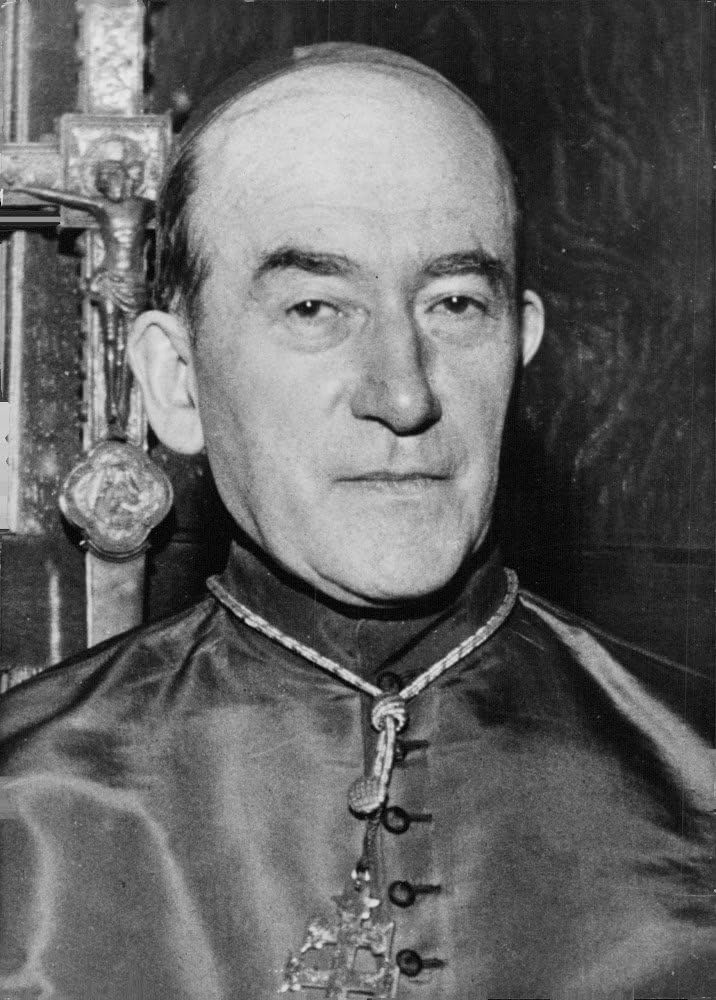
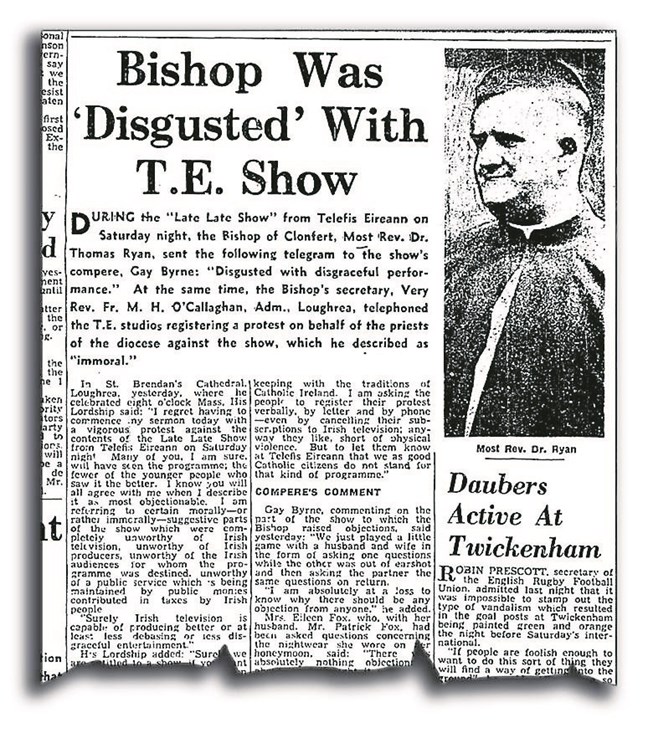
McQuaid was more than a little paranoid about the influence of radio and television on the lives of pure Irish Catholics. Through the 60s he received reports on “the mental outlook of the Liberals in RTÉ.” He set up a Vigilance Committee to “keep an eye on Communist activities and other anti-Catholic activities, such as Liberalism.” He sounds like a one-man CIA operation with his plans to “infiltrate neutral organisations” in order to influence radio and television. He wrote many letters to the director general of RTÉ about his concerns—“My dear Kevin.” The director general replied— “Your Grace.”
In this kind of atmosphere, we can only imagine what His Grace might have thought about a female journalist writing a profile of Pat in the Irish Independent in which she describes him as one of the most sophisticated men she had ever met. The photograph that accompanied the article shows him in his tattered jacket, haloed in cigar smoke. He tells the journalist about his time in India where he says that the curries ruined his health. I’m not sure if that’s true but he did teach in Nagpur for two years. And from India he travelled to Bhutan where he was invited to a wedding in the royal family. One of the princes had been a student in Nagpur. He crossed over the border in a rattling 4 x 4 with an Englishman.
If all that wasn’t bad enough, now he was back in Ireland producing current affairs programmes and being interviewed by a female journalist who seemed to be taking a bit of a shine to him.
In his own way, Pat represented a shift in Irish society. The Dominicans had sent him to America to be trained in radio and television. I was always told that he went to ABC studios but there are so many myths about Pat that I don’t know if that is true. What is true is that in Ireland he was a presenter and producer in radio and television. He considered himself a “worker-priest”–a tradition he picked up from his time as a student in Paris. He lived and worked in the secular world. So when McQuaid put the squeeze on RTÉ one too many times and the staff walked out, Pat supported his colleagues.
That was when he was called up to the archbishop’s palace. I don’t know what happened but all I can say is that his career took another direction after that meeting and he no longer appeared on television.
Almost the first thing that Father M said to me when I sat down with him was that he was really the wrong man to talk to. He had no information on my uncle beyond the obituary that he had sent on; a dull list of positions and dates and titles. It was clear that he did not want to say anything. More than that; from the little he did allow himself to say about Pat, I could have sworn that he was describing someone that he didn’t like very much.
Where did you learn to speak like that, Tom?
Pat spoke with a cut-glass accent, not something you’d associate with someone from rural Tipperary. He said that Pat could be a bit of a chancer when it came to lecturing. He might be leafing through a book at the front desk of a classroom, only to close it suddenly with a bang before launching into the topic of the day which would have nothing to do with the book he had just been reading.
He could be aloof. He could be condescending. (I was filling in the gaps). Pat probably didn’t even know his name. If he had said that once, it might have been believable. But he said it twice. Pat probably didn’t know his name because he wouldn’t have paid attention to mere underlings.
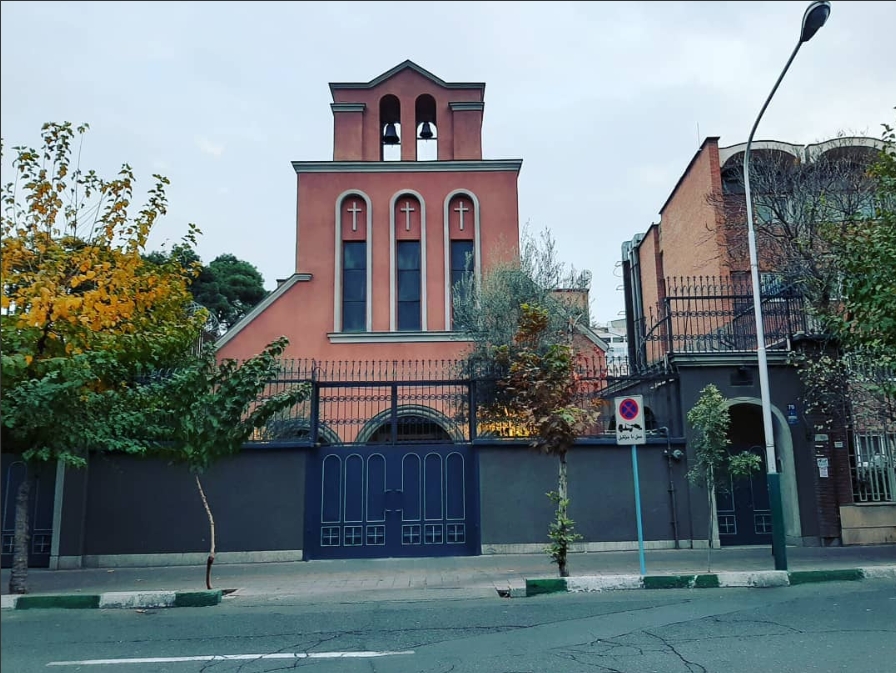
But things changed when Father M moved to Iran; the largest parish in the world with the smallest number of Catholics, he joked. Pat would have been interested in a post like that. He would have been knowledgeable about Persia. There was hardly an area that Pat didn’t know about. That much was familiar praise. So Pat would have wanted to know more about the goings on under the ayatollah. Perhaps he wanted to compare and contrast with McQuaid.
I told Father M the story of Pat having a nosebleed on his first night in a fancy hotel in Tehran. He didn’t know that Pat had been to Tehran but he had his own stories. I liked the one about the British ambassador who used to cycle across the city to meet him in a church in the centre of the city. A dangerous thing to do and Father M pleaded with him to take a car but the ambassador persisted with his cycling.
He talked about the former president, Khatami; a reformer who was educated in Germany. Khatami had been a friend and supporter of the Catholic church in Iran. He stopped himself:
Listen to me, I’m starting to sound like Tom!
Dominicans are good at telling stories. I used to like collecting anecdotes about Pat but I’m tired of them now. Father M even indulged me with one I hadn’t heard before: the day that Pat almost knocked over John Paul Sartre on a stairway in Paris. Father M did an impression of Sartre muttering “Bloody Dominicans . . .”
That would have been when Pat was a student in Le Saulchoir, the Dominican school near Montparnasse. It would also have been the time when he learned about the worker-priest movement that would shape his life. There were so many questions I wanted to ask about that time, so many more interesting things to discuss than pointless, probably mythical, anecdotes about Jean Paul Sartre.
What drew Pat to the Dominicans? Why did he enter the priesthood in the first place? What was his faith? Who was his God?
Father M thought I was too focused on the past, that I was looking for dirt on McQuaid. But to say that McQuaid was a dogmatic, conservative, narrow-minded and highly intelligent operator would hardly be news to anyone. That was not what I was after.
I wanted to know how Pat reconciled himself to the endless contradictions of the corporation he had joined. I use the word “corporation” because at the height of its power, the only useful comparison would be the likes of Google and Apple. At one point the Catholic Church owned one third of the landmass of Europe. Not bad for a non-profit whose founder had espoused the virtues of poverty and simplicity. Birth, marriage, and death: the church was the sole contractor. It was impossible to do business without the church. They controlled the very air that people breathed.
That kind of power had evaporated by the end of the 20th century but it held out for a long time. On a remote island off the west coast of Europe, a bishop was so influential that a posthumous biography of the man was titled: John Charles McQuaid, Ruler of Catholic Ireland. He died in 1973.
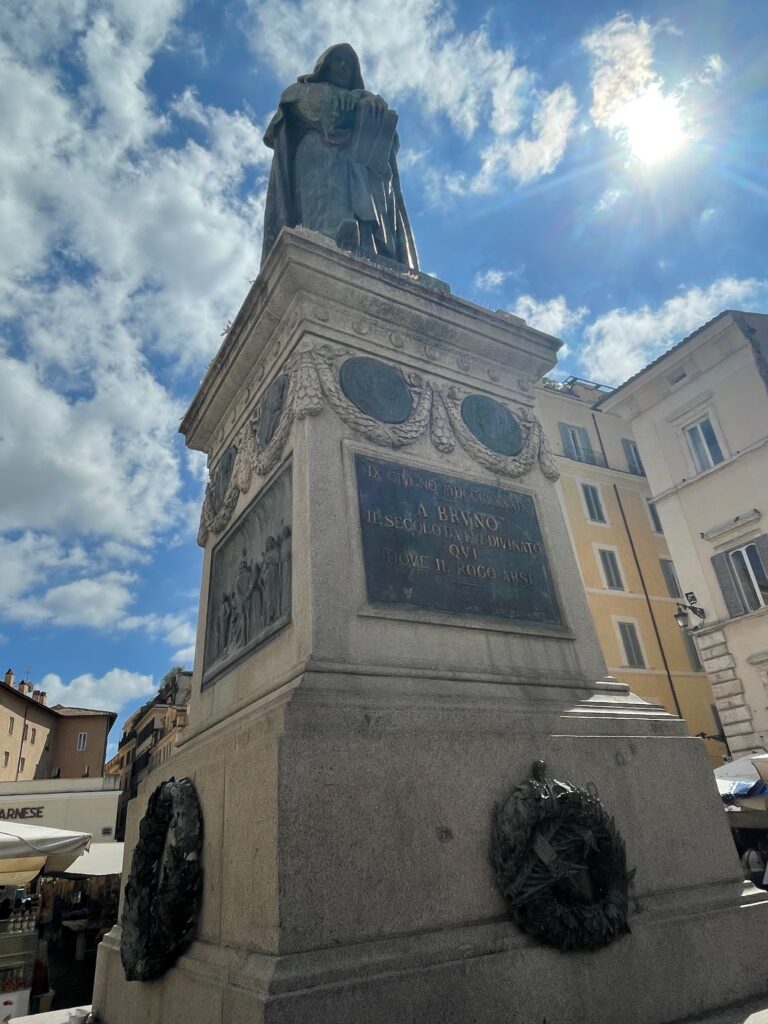
Of course the church is far richer and more complex than the sketch I’m making here. There were men and women of genuine faith, even if the most interesting ones were often ex-communicated or burnt at the stake like Giordano Bruno, a Dominican whose statue on the Campo de’ Fiori I went to visit before I called to see Father M.
Pat was attracted to philosophers like Bruno but more so to someone like Thomas Aquinas.
Aquinas was a dangerous man in his own right. When he gave lectures in Paris in the 13th century, the doors were guarded by archers to protect him from attacks from those who thought him a heretic for his study of Islamic philosophers. In the lab where I did research on memory formation I used to keep a copy of the Summa Theologica among books on brain anatomy. The few friends who noticed were puzzled: “Wasn’t he a saint?” It didn’t fit with a neuroscience lab.
But in a time before modern science existed, Aquinas was a natural philosopher which is another way of saying that he was a proto-scientist. He was a logician as well as a theologian. Surely it should be interesting to study how someone like Aquinas argued and reasoned; what moves he pulled; what directions he took in his research.
No doubt Pat coloured my thinking. He had taken his religious name in honour of Aquinas. To his fellow Dominicans he was Tom. For us, he was still Pat. There’s a schism, almost a schizophrenia inherent in these two names that go to the heart of this character who seemed to talk to me about everything and anything except God.
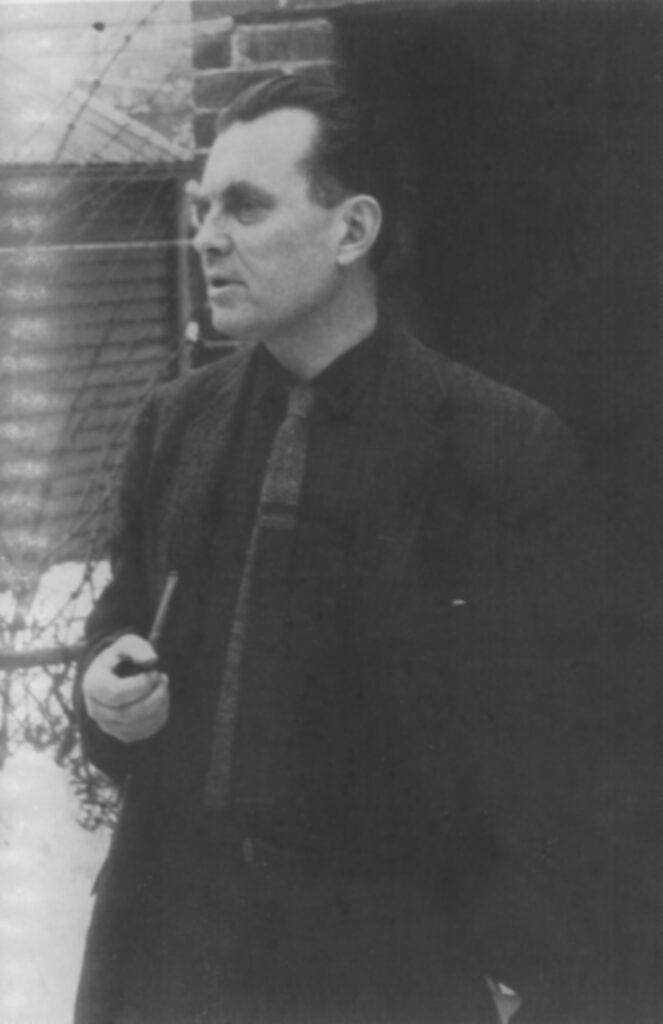
If all that philosophy from Aquinas to Giordano Bruno seems, as my neuroscience colleagues would say, like pointless nonsense, I should add that Pat was very much involved with the problems of his own time. When he was a student in Paris, Sartre would have been at the height of his power and Czesław Miłosz, the Polish poet, would have been at his lowest ebb. The former cultural attaché to the Polish embassy defected from the communist party in the year that Pat arrived in the city. With a young family to feed Milosz tried to live from his writing but that was impossible in a city where Sartre said that you were either for the Soviet Union or you were living on Mars. Sartre was infallible. So Milosz was excommunicated.
Miłosz, like Pat, was a man from the provinces, the backwaters. He was born at the beginning of the 20th century in present day Lithuania which was then a part of the Russian empire. Paris was the centre of the world and Pat loved French culture. Milosz was more ambivalent. The only one who stayed close after his break with the communists was Albert Camus.
A measure of how highly Camus thought of Miłosz may be gauged from the fact that he asked for his advice on the education of his son. Miłosz tells the story in a little book that he wrote at the end of the century called Road-Side Dog. He advised Camus to send his son to a Catholic school—he outlines the reasons in that book—and Camus, atheist and all that he was, heeded his advice. In the same chapter Miłosz calls Simone de Beauvoir a nasty hag for slandering Camus in her book The Mandarins.
So lots of bitching and gossip, masquerading as politics and philosophy. What did Pat make of it all? What were his politics? French theologians were melding Marx with the bible. Liberation Theology was getting off the ground. Priests were heading off to work in the favelas and slums of Latin America. The groundwork was being laid for the reforms of the Second Vatican Council.
Pat was in the middle of it all, but what was he thinking? What did he make of Miłosz who later became close friends with Karol Wojtyla, the Polish priest who went on to become Pope John Paul II. Pat gave a commentary and translation for Wojtyla’s inaugural address from the balcony of Saint Peters. On the last day that I spoke with him before he died, he said that he didn’t think much of the pope’s doctoral thesis on St. John of the Cross. I can see Father M rolling his eyes.

And another question. What did he make of the pope publicly scolding Ernesto Cardenal in Nicaragua for working in the Sandinista government as minister of culture. Cardenal was a Marxist priest and the pope, a fervent anti-communist, stripped him of the right to say mass. Cardenal had to wait for three popes to come and go before he was finally rehabilitated, a year before he died at the age of 95.
And another question. What did he make of Wojtyla being declared a saint? Isn’t that a bit like one Caesar declaring another a God?
Too many questions.
And I didn’t even ask Father M something as simple as: did you like Pat? What did you really think of him?
Questions like that would presume a degree of trust and I was a complete stranger who seemed to be looking for dirt. Maybe his reticence was entirely understandable. Maybe I’m being a bit hard on the man. I sensed that he thought that Pat was a bit of a Milosz; a man with an outsized ego and he probably wouldn’t have been wrong. But I was too shy to ask and he certainly wasn’t going to tell me of his own accord.
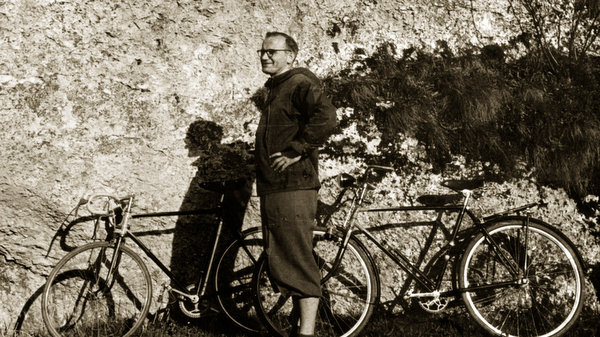
Depressed by my performance in the little church behind the Colosseum and tired after I’d finished writing my notes, I asked an AI bot which British ambassador used to cycle across Tehran on his bicycle: That would be Nicolas Hopton. Notable habit: while posted in Tehran, he was known for riding around the city on a bicycle including cycling to the Cathedral of the Consolata. The detail was often mentioned by diplomats and journalists as an example of his relatively informal style and interest in engaging with the city.
I asked for references. There were none. I asked the machine if it had made up the story to please me. The answer, more or less, was yes. It had inferred what I wanted to hear from the thread of my questions. People complain about bots but humans are worse. People were constantly telling me anecdotes about Pat, even Father M who was committed to saying nothing, gave me the one about Sartre. But they were starting to bore me by now.
I was looking for something else. I wanted to know what lay at the heart of this strange man. This priest who hardly ever used the word “God,” this Dominican who frowned a little when I mentioned the Book of Job. It was not his favourite book in the bible. He also seemed alarmed when I showed an interest in the Carthusian order. Monastic life was not for him. He said that he had once talked to the abbot of the Grand Chartreuse in the Alps. That man could buy and sell you better than a used car salesman. The point was that somebody had to pay the bills and keep the lights burning while the monks were praying. He must have recognised something of himself in that abbot.
In that interview with the Irish Independent he was asked what he did with his not inconsiderable salary. He said that it went to feed hungry young novices in the Priory where he lived. Father M had remembered the line. As with most things related to Pat, I think it irritated him.
None of the Dominicans I contacted would say anything about Pat beyond the familiar, almost tedious, anecdotes. Only one ventured a little beyond the superficial. He said that Pat did not engage with the conventional life of the community, especially those who were “mere” students. Seeing him driving to RTÉ every morning he said he admired his independence and wondered “in the somewhat self-righteous naivete of youthful idealism which inspired me at the time (though that was wearing off steadily) —how he fitted the various aspects of his life together and what made him tick.”
Now here we are getting something. What made him tick. Exactly. And isn’t there something interesting about the awkwardness of his sentence. He’s trying to say something difficult and doesn’t know how. Isn’t he really saying: he was aloof, he was apart, he was not one of us.
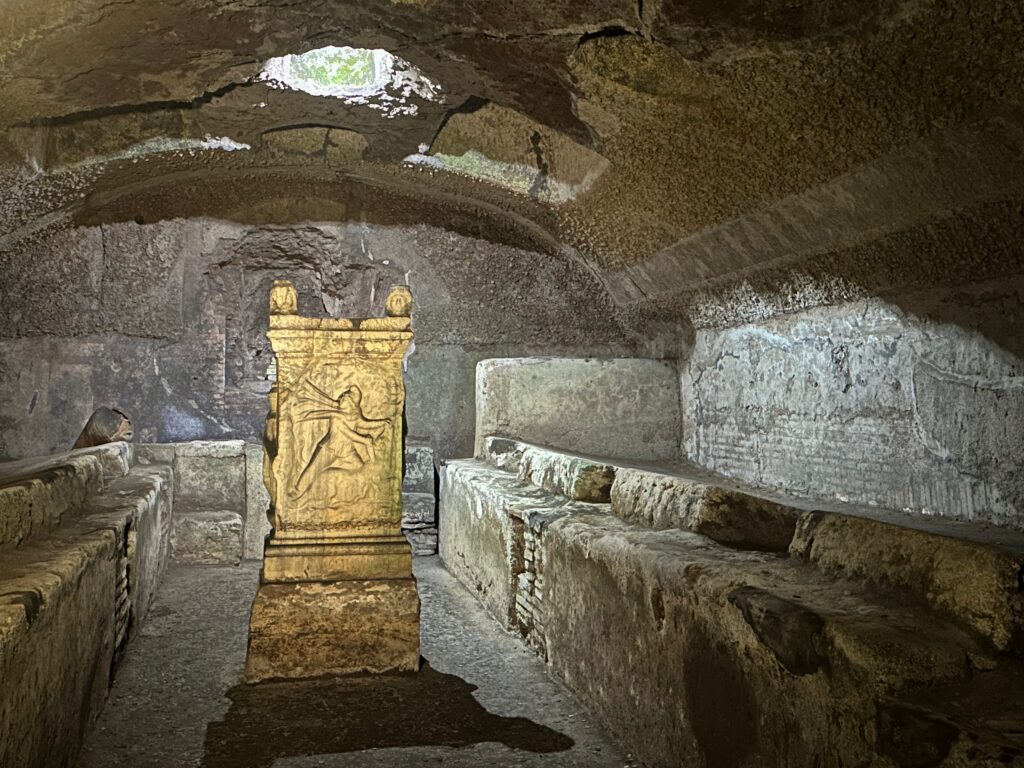
At the end of my brief meeting with Father M, he gave me the names of three Dominicans who were “professed” in the same year as Pat. Those men were almost dead and that, I think, was the point. Our time was up but before we parted he gave me a little guidebook to the history of the church.
Beneath the church were archaeological layers that went all the way down to an altar of a pre-Christian cult. Father M pointed down through a grille to a spring that was illuminated by electric light. He gave me a little history of the place before tailing off: Exciting stuff . . . I’m sure we’ll be seeing you around.
And that was that. We would definitely not be seeing each other around. As I walked down the steps to the under-storeys I had no interest in reading the panels and information boards. Normally I’d want to know everything about a pre-Christian cult sitting at the bottom of a Christian church but at that moment I couldn’t give a monkeys about ancient history.
When I wrote to Father M telling him that I was coming to Rome, what he said in his reply was that he had no problem acknowledging the errors of the past. It was a different world back then. Pat would have been the first person to point that out. What bothers me more, he said, would be not recognising the difficulties of the present.
But I never said that he had a problem with the past.
Tom or Pat was a lovely person, he had written in his email, and it’s great to hear that you are keeping his memory alive. Solas agus suaimhneas aige i láthair Dé.
May he have light and peace in the presence of God.
What a load of old bollocks. He had every interest in blocking out any chink of light. If I wanted to find out more about my uncle, I would have to go down a little deeper to where, at this moment there didn’t seem to be any light at all.
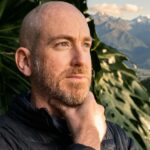
Laurence O’ Dwyer
Laurence O’ Dwyer is a writer and former researcher in neuroscience who specialised in brain imaging, Autism, and Alzheimer’s Disease. He has published four collections of poetry with Templar (UK) and has received the Patrick Kavanagh Award for Poetry as well fellowships from the Bogliasco Foundation and MacDowell. Travels through the mountains, most frequently the Pyrenees, cycle touring through Europe, and journeys through South America and the Caribbean have permeated much of his work. His long-distance trail running together with Matthias Ekman was the subject of a BBC Radio 3 documentary by Zoë Comyns (“The Racing Mind”). He holds a PhD in paradigms of memory formation from Trinity College Dublin and is currently studying the history and philosophy of science.