Learning to Love Pearl Fryar & His Plant Sculptures
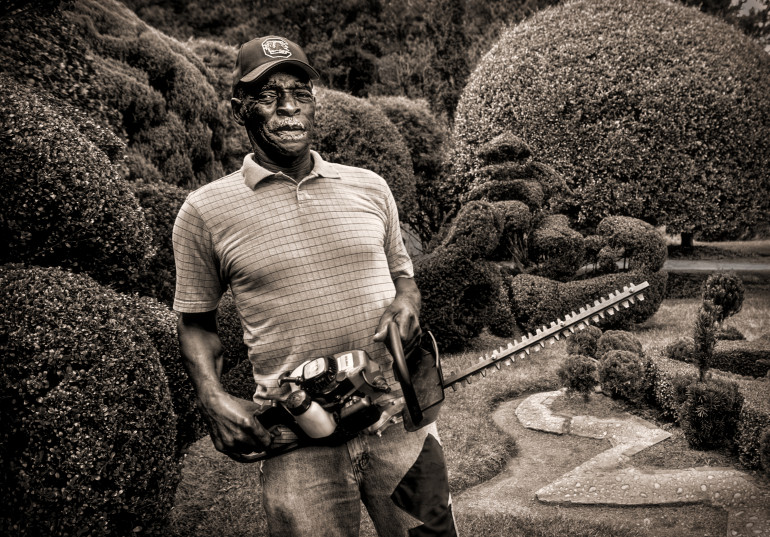
“Pearl Fryar was over six feet of lean, chocolate muscle in jeans. He had a bit of gray and a hundred-megawatt smile. In his enthusiasm, he reached out and hugged me. He engulfed me. It was like being hugged by one of the crazy green creatures in front of me. Pearl was sexy. His body and his enthusiasm pulled me in. He focused on visions I couldn’t see, and he talked about them like they were right there, plain as day.”—Jenks Farmer
Plant People
By Jenks Farmer
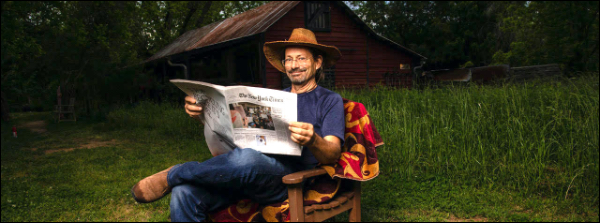
 Editor’s Note: This essay appears in Jenks Farmer’s
COLUMBIA South Carolina—(Hubris)—May 2026—I was a freshly minted horticulture graduate in 1999, newly hired to build a major botanical garden at Riverbanks Zoo in Columbia. My colleague Porter and I had made it our mission to get to know every good gardener hidden in the small towns across South Carolina—to learn their plants and country ways, and to spread the word about what we were building. We drove backroads on Saturday mornings, itineraries mostly set up by Porter, looking for the real horticultural history of the state. Not the grand plantation gardens. The other kind.
We were kind of lost, way out in the Pee Dee, so I turned the zebra van down the road Porter suggested. “I think that man named Pearl lives down there,” he said. Young, smug, refined-garden-loving me thought this was going to be a waste of time.
The tar and gravel road came to what passed for a subdivision in the rural South—a single lane, dead-end road with about eight houses ending in a farm field. I parked in front of one of the multi-colored brick ranch houses. Secretly, I hoped we hadn’t been spotted, so we could just back out and find lunch.
No such luck, though, as a basketball player of a man quickly bounded up, grinning, with arms outstretched, and words tumbling out like bubbles from a bubble machine. “You’re from the zoo? The Columbia Zoo? Fielding told me about you! Boy, I can’t believe you’re here. Come on and see my garden! It’s nothing like what y’all do at the zoo. I just pick stuff up from the trash pile outside of a local nursery.”
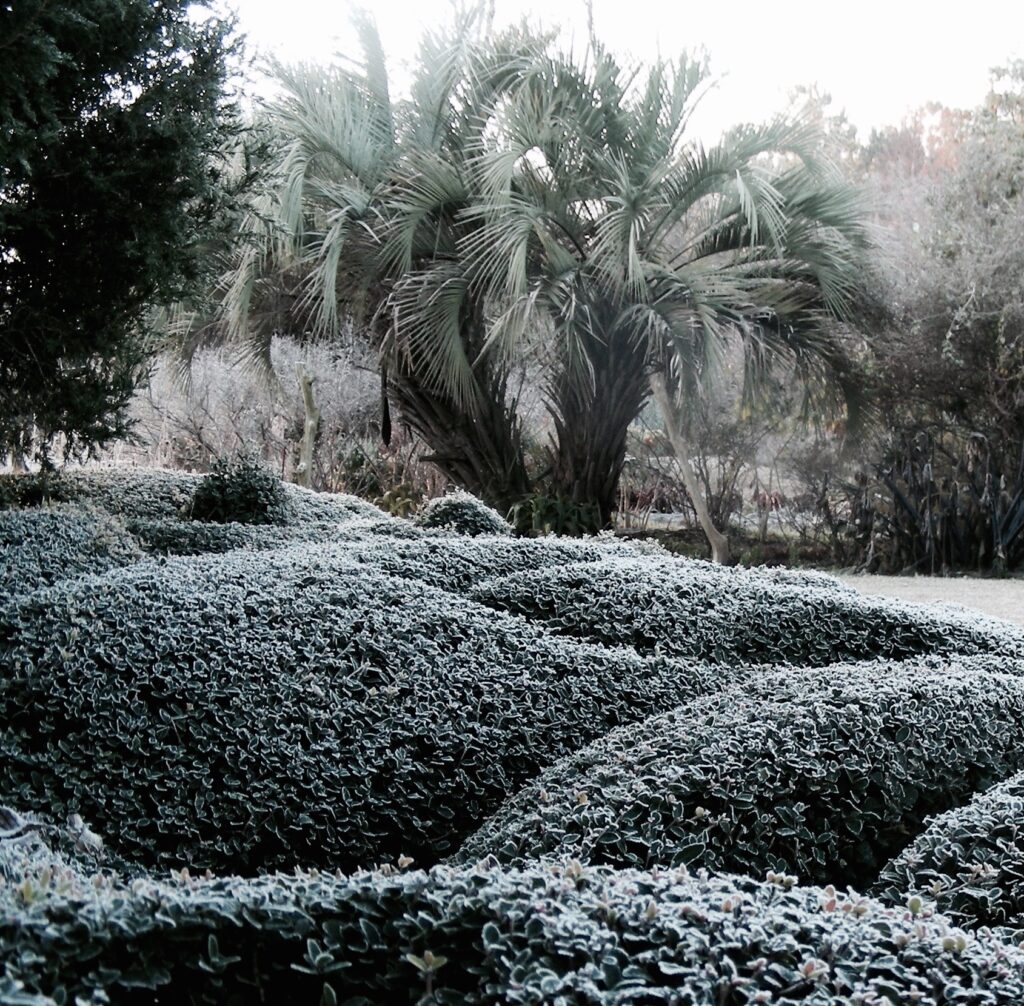
Lurking up ahead, surrounding the house, loomed dozens of multi-armed creatures. They were grazing, dancing, peaking out, and worshiping the sun. Little spider topiaries and elephantine creatures lazed on an endless, perfectly flat, green lawn—a zoo of sorts in its own right. It seemed like what I’d expected—a little tacky, a lot of sheared bushes, no flowers, not really a garden.
I didn’t want to commit the new botanical garden to anything. But here I was, so I resolved to be open, to listen, receive, and enjoy being with this compelling man.
Pearl Fryar was over six feet of lean, chocolate muscle in jeans. He had a bit of gray and a hundred-megawatt smile. In his enthusiasm, he reached out and hugged me. He engulfed me. It was like being hugged by one of the crazy green creatures in front of me.
Pearl was sexy. His body and his enthusiasm pulled me in. He focused on visions I couldn’t see, and he talked about them like they were right there, plain as day.
“I just pick up cast-offs, and I know there’s a beautiful plant in there. I can see it. Redeem it.” With arms waving, he painted a picture. “It’ll go like this, and then swirl over there. If I save this little twig, it’ll become a loop one day, like a big hug. It’ll be like it’s reaching out to hug you!” He grabbed two flimsy yaupon holly twigs and crossed them, thinking I could see what he meant. It took me a while to understand—he saw two hugging arms, two hearts intertwined. He saw potential in the prunings. Pearl could make what he saw, what he felt, come to life.
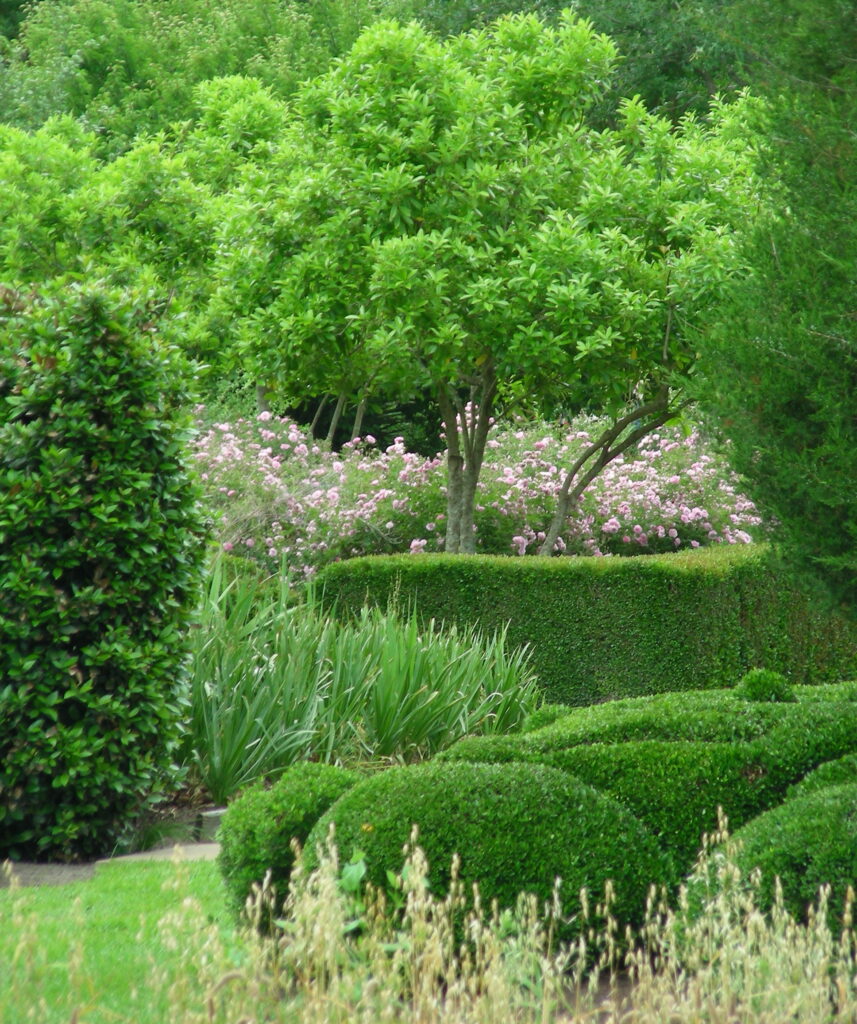
He wanted us to sit in the “gra-zee-bo.” Once there, Pearl launched into a monologue he’d been waiting to get out.
“I know all these children out there hear ‘no’ too much. They need someone to tell them, ‘Yes! You can do that!’”
He leaned in and looked into my eyes.
“I can say to them, ‘Look at me! Who’d have ever thought I could make this beautiful? I may never get Yard of the Month from the people who give that out but look at this! Believe it. You can do anything.’”
Pearl kept right on talking. “Farmer, you know they say you cannot grow a fir tree in this part of the state? Somebody from Clemson came here and told me. We were standing right here in front of this fir tree, and he told me I couldn’t grow one.” Though pruned up like a Dr. Seuss doll, the tree seemed perfectly healthy. Pearl reemphasized: “He said a fir tree won’t grow in the Pee Dee!”
Proclamations annoy me. Pearl’s story about an educated professional standing in front of a living, growing fir tree and declaring it impossible—that made me feel like we were on the same team. Slowly over that morning, I saw Pearl’s light. He was an artist, and his sinuous, strong, directed, flexing creatures were more sculpture than garden plant.
We were in a club together—the outsiders club. No bushes here. All passion.
Within an hour, I did what I’d told myself not to do. I said, “Pearl, will you come to Riverbanks Zoo and do a talk for us?”
“Farmer, what are you talking about? You are talking about me, standing up and speaking to garden club ladies—the same folks that won’t give me Yard of the Month?”
He finally agreed.
The Zoo was empty at night. Siamang apes howled and the garden club ladies walked past the dark Flamingo Gift Shop to the auditorium.
Pearl did his first-ever public presentation in that humble setting. He stood with his back to the audience and pointed at things in his yard on the screen. It was kind of hard to follow. But then he turned around and said, “I just wanted to get that Yard-of-the-Month sign. I knew they’d never give it to me. Now look at me up here on a stage! Busloads of children coming to see my yard! Can you believe it?”
People fell in love.
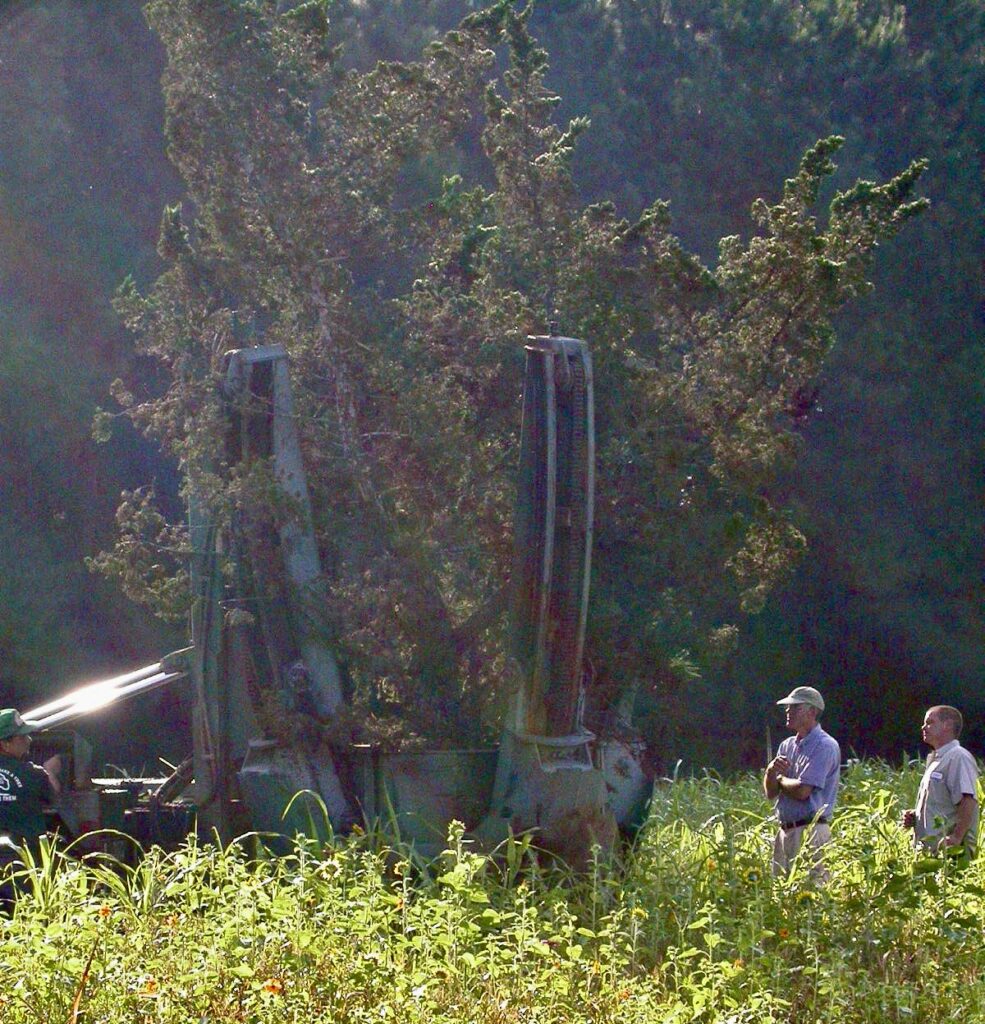
About 40 minutes in, I pulled two giant potted junipers onto the stage. He told us what he saw in each shrub; then pruned by hand a few minutes, releasing some inner beauty that only he could see. Pearl circled the junipers and said, “I see love in these bushes. Here’s how I start.” He picked up his gas-powered hedge shears, cranked them, and went to work.
We had made a colossal miscalculation. In just a few minutes, no one could see anything. The auditorium filled with blue smoke. People choked and ran out as I opened all the fire doors.
After things settled down, Pearl got a paper cup of punch. “Farmer, I swear, we should have known all that smoke would fill up the room. Can you believe it?”
Over the next 25 years, Pearl Fryar never once called me anything but Farmer. All through his career, he would call me up:
“Farmer, I am going to Tokyo, Japan. Can you believe it?”
“Brazil! Farmer, can you believe it?”
“Farmer, I had twelve buses of children from local schools visit this week!”
“They’re gonna make a movie, Farmer! I told them it had to be free for all of our local schools to watch.”
“Farmer, that lady you sent put a tip in my box. A $5,000 tip! Can you believe it?”
“Man. Can you believe it?”
Soon after that first talk, Pearl and I moved the first plant he ever let leave his garden—to Riverbanks Botanical Garden. We moved lots of plants over the years. We were, in many ways, cut from the same cloth: lower middle class, not too worldly, and definitely not in the right clubs to be in the right place at the right time. But we both had fun being where we were. We had fun finding ourselves in demand in the garden world, together, for a while. (All of the photos in this story are gardens that Pearl and I did together.)
I’ve always had friends older than I. I’m 60 now, and many of them have died over the past ten years. I feel their loss behind my eyelids, in my throat and chest. It’s a very private pain. There’s a twinge of jealousy in missing out on the celebrations of life with friends and family.
I know that bonding with the living matters, but I can’t give right now. I’ll spend a day with myself, writing and thinking things that probably will never be shared.
And I’ll spend a day with an old friend who’s in a nursing home. I’ll tell him my thoughts. I have something to read to him. And I know he’s going to tell me it’s OK, sometimes, not to go to the funeral.
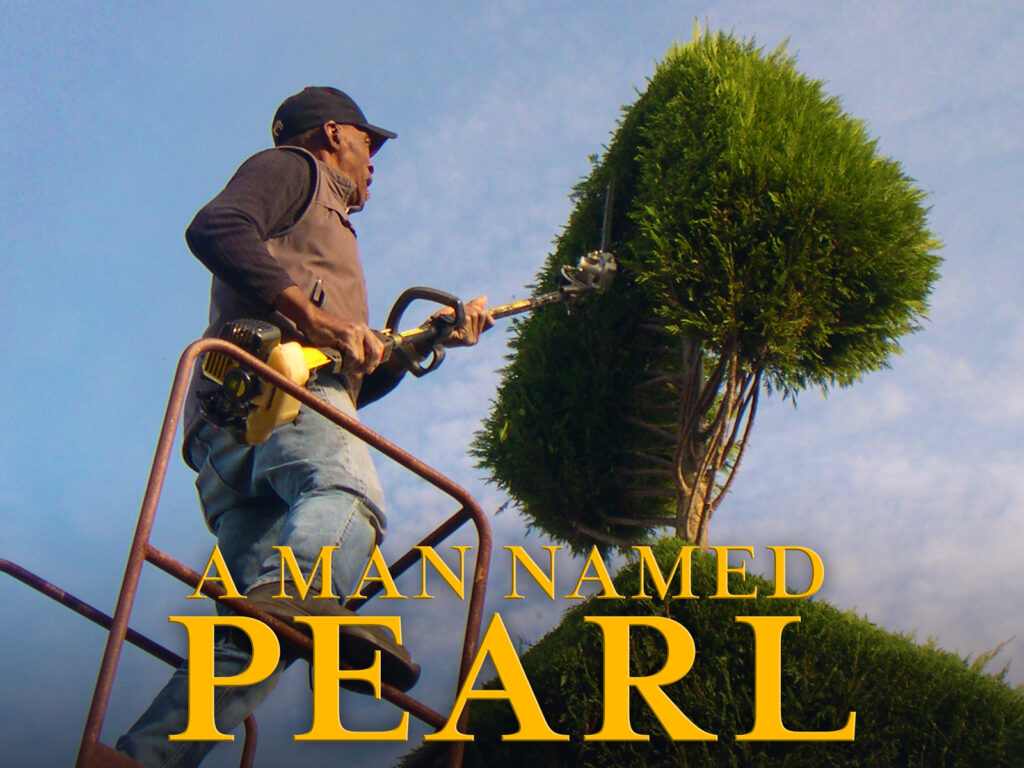

Editor’s Note: By the time he died, on April 8th of this year, Pearl Fryar had become a legendary figure in the world of topiary gardening. Fryar’s New York Times obituary follows here.
“Pearl Fryar, a Picasso of Plants, Dies at 86”
Published April 11, 2026 and Updated April 13, 2026
By Penelope Green
Pearl Fryar, a self-taught topiary artist who turned a former South Carolina cornfield into a world-famous garden featuring shrubs and trees that he coaxed into towering Seussian swirls, enticing Cubist forms and other uncanny shapes, drawing pilgrims from around the globe and raising the fortunes of his small community, died on April 4 at his home in Bishopville, SC. He was 86.
His death was confirmed by his wife, Metra Fryar.
What drove Mr. Fryar initially was a prize. In 1980, the Fryars, high-school sweethearts who had lived in apartments, bought a double lot in Lee County, SC, and built a sturdy brick ranch house. Mr. Fryar then began to embellish the property.
Newly house-proud, he was determined to win the Yard of the Month award from the local garden club. He began modestly, creating a decorative driveway with bricks and pebbles and then planting comely bushes, delicate ornamental trees and traditional flower beds.
But the garden club said he wasn’t eligible for its prize because the house was outside the city limits of Bishopville, the county seat.
“I decided then and there,” he told Charleston magazine in 2007, “that I’d come up with something so much better than all the other yards that they’d have to make an exception.”
He began to rescue plants that had been thrown out by a nearby nursery, scouting the compost pile every week like a lobsterman checking his pots. One day, he noticed a shrub on display that had been trimmed like a pompom, got a three-minute tutorial from the proprietor on how to shape plants with a pair of shears and went home with a $2 holly bush to practice on.
Topiary was not in his vocabulary—the son of sharecroppers, he had grown up on a farm—but it sparked something in him. “I really had no idea what I was doing,” he later said, “but at some level it was satisfying to me. Once I got started, I couldn’t stop.”
He was indefatigable. “Jet-fueled” is how Bill Noble, the former director of preservation at the Garden Conservancy in Garrison, NY, put it in an interview.
After his shift as a production engineer at a can factory, Mr. Fryar would work past midnight, his garden illuminated by floodlights as he sculpted a Hollywood juniper or a Norway spruce.
More Pablo Picasso than Capability Brown, Mr. Fryar was an artist at heart rather than a horticulturist. But he had a gardener’s patience. He envisioned forms in his head—he never sketched, saying that it flattened out his perspective and that his drawings were illegible anyway—and was willing to wait a decade for those forms to be realized.
He did win the local garden award, in January 1986. That was the first of many accolades. Year after year, using gas-powered hedge clippers, pruning shears and a chain saw, he continued to plant and sculpt.
His techniques were his own. He used PVC pipes to create arches between a pair of holly trees, for example, attaching the new growth to the pipes with zip-lock ties and slicing off the rest of the limbs.
He did impossible things with dogwood, turning one tree into something resembling a giant snowball.
He shaped the top of a 20-foot Leyland cypress—that suburban stalwart and neighbor screen—to resemble a fish bone. Junipers were sheared into animated mounds that seemed to embrace one another, dancing.
“I wasn’t sure if he was really his losing his mind or what,” his wife said in “A Man Named Pearl,” a 2006 documentary directed by Scott Galloway and Brent Pierson. “Because he was just clipping up everything.”
He carved the words “love,” “peace” and “goodwill” into the lawn in eight-foot letters, a 40-foot-wide message that he planted with annuals in the spring and summer and filled with straw in the colder months.
His bemused neighbors started asking for tips as they, too, began pruning and shaping their shrubs. “It’s hard to keep up with the Fryars,” one told the filmmakers.
Before long, Mr. Fryar was welcoming visitors from all over the country, and then the world. Garden clubs arrived by the vanload, and school and church groups came in flotillas of buses. In the documentary, Ronnie Williams, the director of the Lee County Chamber of Commerce, declared Mr. Fryar an economic driver for the town.
“I didn’t even know how to spell topiaries,” he joked, describing how he began fielding calls about the garden.
Mr. Fryar had an open admission policy—no appointments needed—and greeted every pilgrim personally. There was a donation box for those who wanted to contribute. One visitor left $5,000.
By 2002, he had retired from the can factory because, as he said, “my job was interfering with my hobby.”
The garden was only part of the draw for visitors, said Lindsey Kerr, a horticulturist who cataloged the nearly 400 plants there from 2009 to 2010.
“They wanted to meet Pearl,” Ms. Kerr said. “They wanted to shake his hand.”
He had found his mission, he told the documentary filmmakers. “I didn’t want to create a garden,” he said. “I wanted to create a feeling, that you felt differently when you walked through than when you started.”
Mr. Noble’s role at the Garden Conservancy involved finding and preserving outstanding American gardens, and he was part of an early effort to support Mr. Fryar’s.
“There was nothing like it, and there was no one like Pearl,” he said. “There is a tradition of outsider art in the rural South and of African American outsider art, and plants may play a role, but not always. If Pearl’s garden is not the only example, it is by far the most outstanding example. There is nothing close.”
Pearl Faison Fryar, who was named for an uncle, was born on Dec. 4, 1939, in Clinton, NC, one of three children of Gertie Mae (Faison) Fryar and Rufus Fryar.
After being drafted into the US Army and serving in Korea as a chemical weapons specialist, he studied math and chemistry at North Carolina College (now North Carolina Central University) in Durham. In the mid-1960s, he moved to New York, where Metra Raynor, his girlfriend since high school, was working as a seamstress. They married and Mr. Fryar went to work for the American Can Company.
Several years later, he was transferred to Atlanta and then to Bishopville, where the Fryars began looking for a house. They were discouraged from buying in one neighborhood, the broker told them later, because the sellers didn’t think they could keep the yard up, a coded racist trope. Instead, they found a property in a predominately Black neighborhood nearby, where there was land to stretch out on—more than three acres.
Mr. Fryar wasn’t particularly bitter about the bigotry; he was a child of the South and a realist. “There are always going to be those obstacles,” he told the filmmakers. “The thing about it is, you don’t let those obstacles determine where you’re going to go.”
In addition to Ms. Fryar, he is survived by their son, Patrick; and two siblings, Ada Fryar Randolph and Norwood Randolph.
Like a landscape designed by Frederick Law Olmsted, Mr. Fryar’s garden is a significant American landmark. And it is just as vulnerable—a living work of art that requires constant, skilled attention. In Mr. Fryar’s case, that meant hundreds of hours of backbreaking work every month.
As he aged, the work took a toll. In recent years, the community rallied around him with donations and volunteers. The garden is now managed by a nonprofit organization.
In 2021, Michael Gibson, a Black topiary artist, became the garden’s first artist in residence, helping to maintain the garden as Mr. Fryar’s health declined.
“I’d never seen a Black man doing topiary, especially at this scale,” Mr. Gibson told The New York Times.
Polly Laffitte, a curator who included Mr. Fryar in a 1997 exhibition of self-taught artists at the South Carolina State Museum in Columbia, said that he hoped his legacy would be more than horticultural.
“Pearl saw his garden as a living statement about the power of creative individuals doing extraordinary things to make a difference in one’s community,” Ms. Laffitte said.
She added: “It’s always been my fear—losing him and all he accomplished. But he once told me there’s no way people are going to forget a Black man that cut up bushes whose name was Pearl.”

Jenks Farmer
Jenks Farmer is a renaissance plantsman. He fell for plant sciences at Clemson University, for botanical garden design at the University of Washington, and for the natural world during an early education from a family of artists, musicians, and farmers. For 20 years, Farmer led teams to plant and establish the vision for two of South Carolina's major botanical gardens; Riverbanks Botanical Garden and Moore Farms. These gardens as well as his designs for homes, museums, and businesses have received awards and delighted hundreds of thousands visitors with the joyful, easy exuberance of hand-crafted gardens. An engaging storyteller and teacher, Farmer has established multiple internship programs and is talented at motivating people of all ages and from all walks of life to get outside and get their hands dirty. Farmer has lectured for groups as varied as the North Carolina State Agricultural faculty, the Smithsonian, Wave Hill, scores of Master Gardeners, and, of course, his grandmother’s Allendale Ladies Afternoon Reading Club. His writing has been published in "Organic Gardening" and "Horticulture," and his photos in the "Royal Horticulture Society Magnolia Quarterly." He is the author of Funky Little Flower Farm, Gardening with Crinum Lilies, and Deep Rooted Wisdom; Lessons Learned from Generations of Gardeners. Farmer lives with his husband and family on an 18th-century South Carolina farm, now the site of a pioneering mail order nursery specializing in organically grown plants of the genus Crinum. (Banner Photo: Paisia Photography; Contributor Photo: Lonnie Webster/Augmented by René Lannen.)