War, Huh, Yeah, What Is It Good For?
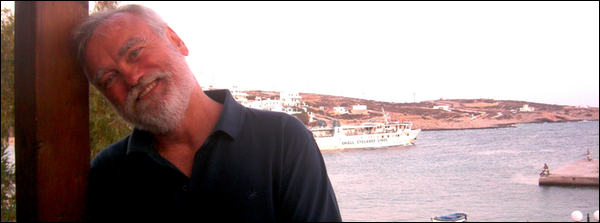
“Since 1980, the year I moved to Greece, there has been no single year in which the US and/or Israel has not been involved in Middle East military conflicts—bloodshed that frequently impacted friends, colleagues, and students of mine, many of whom are (were) from the countries involved. I’ve read accounts. I’ve conversed at length with those close to me who have suffered intimate losses, time and again. I’ve dared travel into conflict zones. No wonder, then, that over the years I’ve written a number of poems on war—a few presented below—trying to find some inkling of understanding. Why such primal, senseless, devastating repetitiveness?”—Don Schofield
Imagination’s Favors
By Don Schofield
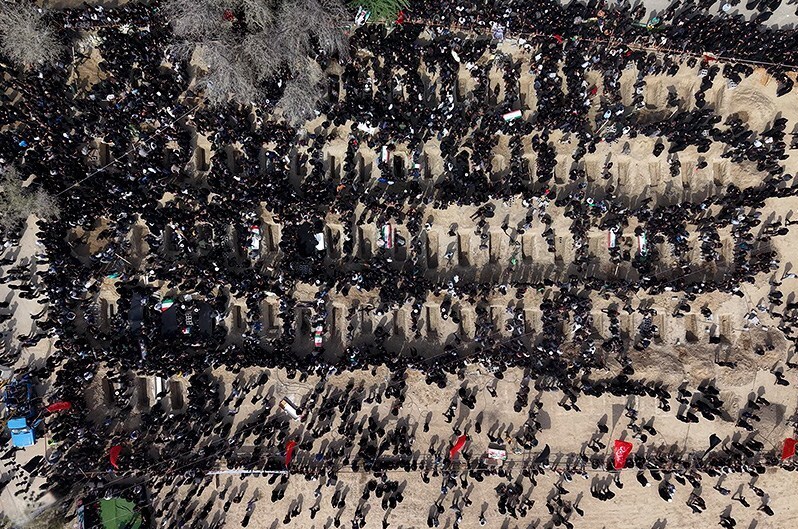

“War, Huh, Yeah, What Is It Good For?”—from “War,” by Norman Whitfield & Barrett Strong
 THESSALONIKI & ATHENS Greece—(Hubris)—May 2026—A few facts, historical and personal: I came to political awareness in the 1970s, in my university years, at the height of the Vietnam War. That’s also when I turned to writing poetry. Iran makes the 29th country the US has either bombed or invaded since 1949, the year I was born. Some, like Iran, more than once.
According to Bunk History, “From 1965 to 1975, the United States and its allies dropped more than 7.5 million tons of bombs on Vietnam, Laos, and Cambodia, making it the largest aerial bombardment in history.”
I didn’t go to Vietnam. At 17 (1967), because I got caught stealing a pick-up truck, the court ordered me to enlist in the Army. I would’ve arrived in Vietnam just in time for the Tet offensive (January 30-31, 1968). But, because of my poor eyesight (20/400), I failed my physical and was classified 4F.
Since 1980, the year I moved to Greece, there has been no single year in which the US and/or Israel has not been involved in Middle East military conflicts—bloodshed that frequently impacted friends, colleagues, and students of mine, many of whom are (were) from the countries involved.
I’ve read accounts. I’ve conversed at length with those close to me who have suffered intimate losses, time and again. I’ve dared travel into conflict zones.
No wonder, then, that over the years I’ve written a number of poems on war—a few presented below—trying to find some inkling of understanding. Why such primal, senseless, devastating repetitiveness?
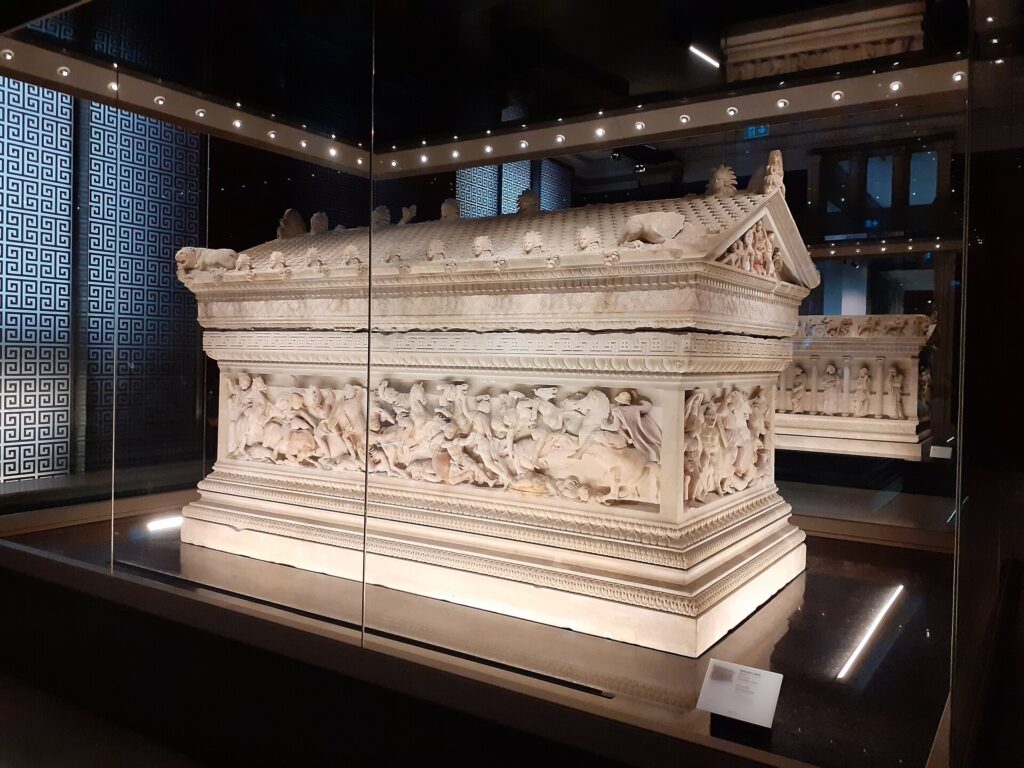

Sarcophagi with Glyphs
By Don Schofield
“. . . there are also sarcophagi shaped like human beings . . .”
—Guide to the National Archaeological Museum, Istanbul
Was this one tossed to the rocks
with the babies born lame,
brides who failed to bleed,
or one who watched it happen—
who can say? They had wars, they had hunts and the birds
were all caught, their heads hacked away. Who can say
what they say
these glyphs?
*
Upstairs was a picture of village women
piled in a pit, faces pale
as the dolls they once had,
the spots on their cheeks not rouge,
bruises where bullets punctured
the skin, their eyes on the sky
or the body above
or the grinning soldiers who shot them.
*
That was Lesbos. When I was there
the sheep one evening
grazed by my door. I heard them,
a tinkling euphony. The wall
where I leaned to listen
gave a little as I recalled
that flock in Cairo,
dirty white with a splotch of red
on their rumps, scuttling through noon traffic.
The shepherd spit as they passed,
our driver explaining red
means they’re ready for slaughter.
Then the wall gave way:
*
What’s become of this man?
He’s glad in the dark though he plays with the light.
The stelae can’t stop staring.
That he stays is their trance,
tracing glyphs in the light,
tracing our long
list of the guilty.
*
Now he sees:
They’ll place his head on the block,
his ears to the mark, then poke
the ribs so his neck juts up
and the blade cuts clean.
The axe will still shine
and his ears
want a sound want a sound want a sound.
*
There’s a pheasant on the corner of this sarcophagus,
a hunt on the back. In the end,
you’ll all take part, you who mate with a mask,
you who tear with a word then gawk.
So bring your flocks, your brightly feathered birds,
your reasons for staring into the dark.
Come look. Come tap at the glass.
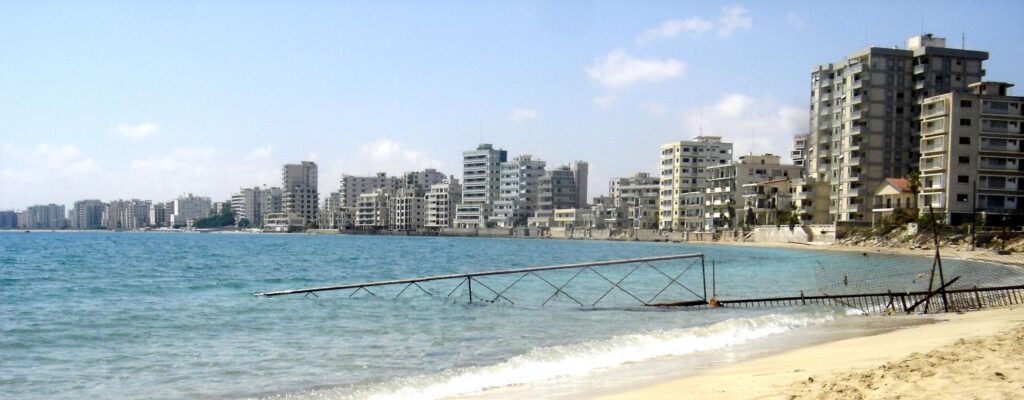
The Lights of Famagusta
By Don Schofield
Cyprus, 1980
Last night I saw my home–
the lights, the streets, the fields
of Famagusta. They took it all
and left us Larnaca, this camp
for refugees. I carry,
on nights I climb that hill,
only one dim candle
from the chapel of St. Lazarus I pass,
thinking of the night we fought
from its roof, of tanks in the grove
and faces the color of dust
as they fell
like pears . . . .
Some nights as I watch
I hear a mother calling
her sons to bed, and memory calls
from that wall where I played in the shade.
I find that wall in any wall,
her words in any darkness,
all we said now said by others.
The man asleep in my bed is me, as I
am any man who waits for what grows
in the fields beyond his window.
What’s left of the man
(or was it the boy?)
who wanted to be a tree: a pine
calling to no one
as he stared from sleep, his roots
deep in some other life
of immutable calm,
love flowing through his branches.
What branches? A man doesn’t fall
like a pear. He falls
like a man, holding all he’s lost, and so
loses nothing. The olive dark of his eyes
ripens to wonder at lights
like the lights last night as I stood
on that hill above Famagusta,
bewildered and ready to fall.
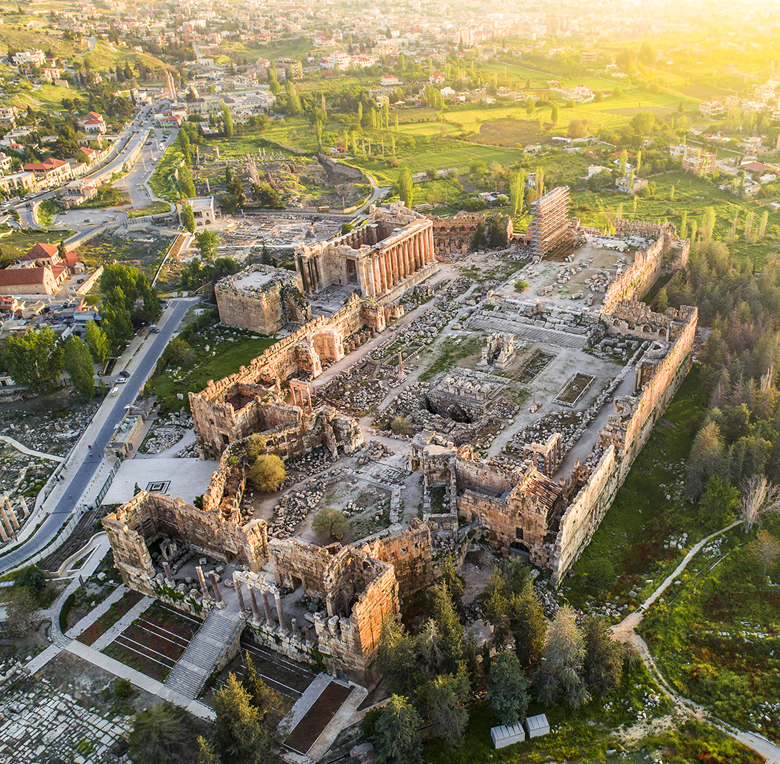
Beirut Pastoral
By Don Schofield
“When a man hath taken a new wife
he shall not go out to war . . .
but shall remain at home for one year . . . .”
—Deuteronomy 24: 5
All day the guns pound from the Chouf.
When a shell hits, the arbor shakes.
The sandbags fall unless we prop them up.
Here in Besaam’s garden
my new father-in-law talks
of mists in the Bekaa Valley,
deep grass hiding the ruins.
Dust hangs in the failing light. Before eight,
we go home past the searchlights.
And his words go with us through the rubble—
to be a weed in Baalbek, a stone piled
in that Roman library with field and sheep.
The Romans left that valley bitter, defeated,
to shepherds who now sit and smoke and follow
the trails of jets across the dusk sky.
Home is harsh lights, locked doors,
torn shutters, one room looking out
on an alley of burnt cars. My bride and I
leave our clothes behind the door and go into
that empty room. When the spotlights pass,
our bodies shine like toppled statues.

Hagar in the Wilderness
By Don Schofield
Let me not see the death of the child.
—Genesis
We kissed the icons and left. I carried the child,
bread, a bottle of water. Later
we drank from wells bitter with shards,
ate locusts and scorpions, glad to be gone.
What nations do I want? Only Abraham’s
arms on nights the dogs come
to sniff the child. I think of my doll
with corn eyes, the one I rocked
when she was scared—
I built a fire, said a prayer
and pushed her in. She was heavy.
There was nothing more for her
I could do. Under this shrub
he’ll stop his crying. The sand
will cover him and he’ll be calm.
How the rocks grieve
is not clear, or why
the birds keep circling,
except to remind me the angel
promised Paran with me the queen. I lie
in the sabra and laugh: Come
my wild son, my archer,
this is Paran, we’re a nation
of dust.
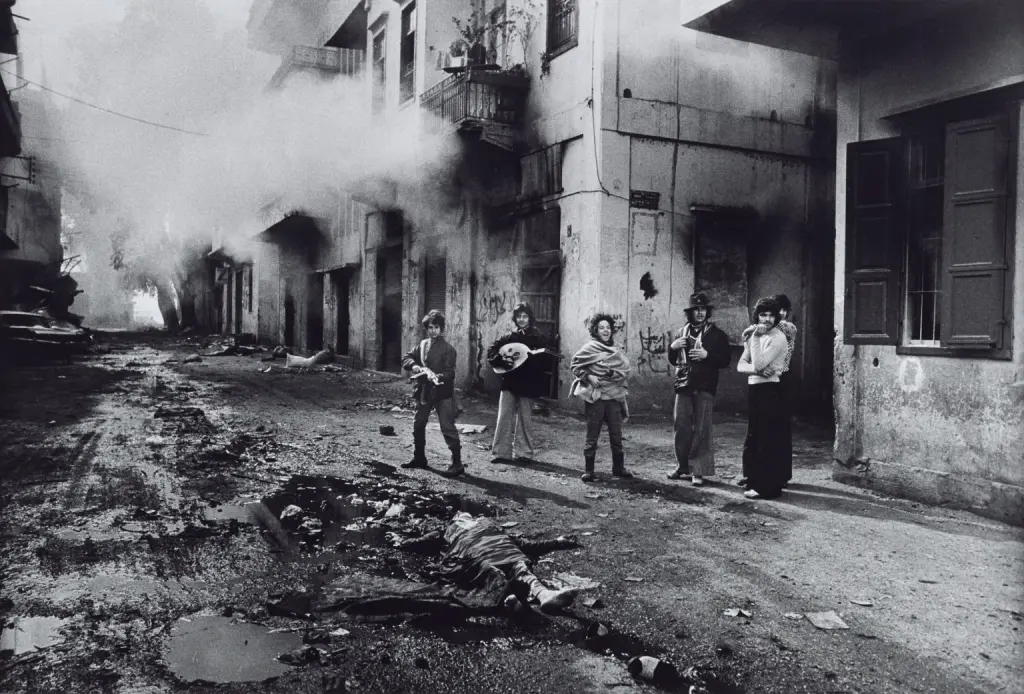
Angel
By Don Schofield
After a photograph by Don McCullin
Six boys just turning the corner,
one playing the oud, one firing
his Kalashnikov, one twirling his scarf,
all of them laughing at the woman
face-up in the street. It’s funny
how her arms flung straight out,
the sleeves of her robe trailing
in mud, look like wings.
With each bullet this angel
jumps a little.
Back in America,
thumbing through a book of photographs,
trying to fathom what impulse leads us to shoot
even angels and corpses, I was listening
to my old neighborhood,
heard nothing that mattered.
Then the garden greyed over
with rain, the hissing of passing cars
pulled me toward sleep, so I lay down
on my childhood bed. Donnie
whistled in my dream—
Come to the schoolyard,
there’s a fight!
That boy’s head
Donnie jerked back
and I slammed with my boot—
I woke wondering
at my own cruelty,
how we laughed and clambered
over a fence, forgetting those eyes
staring up from the blacktop
where we left him. What lack
and illusion turned that to fun?
Last week,
riding to the Beirut airport,
I was astonished to see Howitzers
hidden in a schoolyard—Besaam
grabbed my finger—
Don’t point! They’ll think
you’re shooting. You’re only asking
for trouble. But now, awake,
I can’t stop pointing—
at those guns,
at that boy on the blacktop,
at these ones emptying a rifle
into a dead woman,
toward laughter down the street
I only now barely hear.
Conference
By Don Schofield
I’m tired of words. Of making subject
and verb agree. Of searching for the right
metaphor for pain. Want pain? I give you
Georgette, my student who wrote how Phalangists
broke into her family’s home, shot them all,
each killer with an icon of the Virgin
glued to the butt of his Kalashnikov—
Mother. Father. Two sisters. Brother. Dead.
And I had to correct her prose, tell her
a sentence is a unit of meaning,
how conjunctions can balance ideas,
colons throw our attention forward: My father
in my first memory is throwing a lamp
across the room at Mom. I, four, stare numb
from the couch. I didn’t tell this to Georgette,
my pain seemed paltry next to hers. I simply
dropped it into the conversation last night,
my story no worse than the others
we told, sipping cocktails in a hot tub,
another writers’ conference ending.
Mike described his father’s way of throwing
him out, how his mother would leave him
at the depot, bound for one new family
or another, give him a roll of dimes
for the Tractor Scoop, and drive off. He could
pull those plastic rocks from synthetic earth,
pile three or four at a time up onto
a dump truck—how fascinating to a child
this occupation that can kill a man
or make him an angry father. Like writing,
I suppose. So Celan. Mayakovsky.
Pavese. Crane. Schwartz. Karyotákis….
Once, on a beach, I watched a man play catch
with his son, then sit, unscrew the lower part
of his left leg. He had the boy hold it
as he rolled into the waves, strong arms pumping,
a single kick in his wake. If it were me,
would I cradle that stub, quiet, patient,
a good son to a good dad, or toss it
away, let him live his own damn life, care
for his own rotting parts? If he swam so far
he couldn’t come back, for sure I’d raise it
like an exclamation point, say to Mike,
or Georgette, or anyone else who cared
to listen: This is a unit of meaning.
One of the Dead, 1969
By Don Schofield
For Donnie Parker
Sure, I popped the clutch, hit the gas and now we’re racing
up Clay, down Jackson, four in the morning, no cops,
no cars, just blinking red lights I ignore. And yeah,
I hear you yelling, Donnie stop, you’ll kill us both!
our bodies bouncing and jolting as we fishtail
toward North Beach. Not me at the wheel,
but the door-gunner of this HueyCobra
taking out the Viet Cong in the jungle below,
the guy who paints his face to walk point on patrol,
who keeps count of bunks emptying
one by one, some grunts transferred, some hit by mines,
some fragging a lieutenant and slipping away.
I’m home now, I know, since everyone keeps saying,
Get a job. Find a girl. You’ll be okay. But hey,
bullets keep popping in my head. I wake
praying it’s not me who got hit but the guy ahead
or behind. When I roll out of bed, the horde of myself
rolls with me. When I go for a walk, Dragonflies drop bombs
lawn to lawn, and in the park there’s a sniper’s nest
behind every tree. Some nights I sit on my porch
wanting to believe I’ve found some peace. But what’s here
ain’t peace, only rules I’m supposed to obey, all the while,
beneath the calm, a fuse slowly burns. When I stay to watch
the stars disappear, those I killed are there beside me.
I feel their breath on my cheek, their strong hands
lifting my shoulders, like when I was lying in mud,
facedown, bleeding out. I hear a voice whisper
yet again, Let your body be true to something more
than the man. Give it to the shifting winds….
So I’ll leave you now, leave this car
racing downhill. You’ll grab the wheel, I know,
hit the brakes. You’re the real hero here, my friend. And of course
you’ll come back to hold my bleeding head in your lap
as one of the horde says a few more words: Got it right
at last! From my sniper’s nest
here on the curb,
I can taste the wind, smell the trace
of burning flesh in the air. So, yeah,
the body can be so much more . . . .
Protest
By Don Schofield
More than 100,000 Vietnamese have been killed or injured by
abandoned explosives since the war ended.
—The Washington Post, December 5, 2011
Οutside this photo’s frame, Rachel and Greg
are passing leaflets out to drivers shouting
“Get a job!” “Take a bath!” “Go on,
get out of here!” In the frame,
we’re swarming into the Capitol,
filling its cavernous marble halls
with “One, two, three, four,
We don’t want your fucking war,”
as aides and secretaries lean from doorways
some stunned, some amused
by one another’s comments.
In this other photograph
I still have, we’re spilling from the Western Entrance
greeted by cheering protestors already here,
placards and faces swinging wide for us
as the speaker raises her fist,
says the words we came to hear,
words that lift our spirits
beyond the lines of cops, the TV trucks,
even beyond the dome’s
neoclassical romanticism,
but never far from our own illusions.
We liked to think we were in
history and outside of it, that we
could stop the war by baring our bodies
while wafting the air with Sinsemilla
and Ganji, all our words
like smoke back then, lofty paradigms
filling streets, bedrooms and bars,
surrendering our bodies to each other,
not to back-wrenching work or the ruined
dreams our parents left behind, ignoring
what we couldn’t (wouldn’t) say—
that something in the human
is terribly wrong.
What photograph can help
when a bomb like yesterday’s, outside Hanoi,
rips through a children’s playground, killing dozens
decades after our jets dropped it? Can we
(must we) protest the war that lies outside
the frame? The fragments glistening in memory
speak to just how brutal we humans
can be, how eager
for illusions such as peace.
“Absolutely nothing!”

To order copies of Don Schofield’s book, visit his Author Page here; or order individual books: From the Cyclops Cave: A Braided Memoir (2025); A Different Heaven: New & Selected Poems (2023); The Flow of Wonder (2018); Before Kodachrome (2012); Approximately Paradise (2002).

Don Schofield
Born in Nevada and raised in California, Don Schofield is a graduate of CSU, Sacramento (MA, 1978) and the University of Montana (MFA, 1980). A resident of Greece for many years, he has taught literature and creative writing at American, British, and Greek universities, and traveled extensively throughout Europe, the Middle East and farther afield. Fluent in Greek, a citizen of both his homeland and his adopted country, he is the editor of the anthology Kindled Terraces: American Poets in Greece (Truman State University Press), and has published six books of poetry in the US, the first of which, Approximately Paradise (University Press of Florida), was a finalist for the Walt Whitman Award, and a more recent collection, In Lands Imagination Favors (Dos Madres Press), reached the final round for the Rubery Book Award (UK). His translations of contemporary Greek poets have been honored by the London Hellenic Society, shortlisted for the Greek National Translation Award and nominated for a Pushcart Prize. Six poems from his most recent poetry collection, A Different Heaven: New & Selected Poems (Dos Madres Press) were also nominated for a Pushcart. From the Cyclops Cave, his first book-length memoir, is due out from Open Books Press in 2025. Currently, he lives with his companion Aleka in both Athens and Thessaloniki. (Author Head Shot Augment: René Laanen.)
2 Comments
Barry Brownstein
Like Don, I also flunked my army physical due to poor eyesight (legally blind in one eye) but I was not classified 4-F, rather 1-H. In case of all out war, I’m a hostage.
Don
Ah, so all along you WERE a Cyclops!