The Shrinking Radius: How Far Children Are Allowed to Roam

Off the Page
By Dr. Jason Page
“Growing up, the streets were mine to wander. I ran errands to the corner shop, crossed our council estate to go to shops on Reynolds Road, spent whole afternoons at the Airport Rec or Landseer Park, or exploring the Lairs; latterly renamed Orwell Country Park, for anyone who didn’t grow up there. Nobody worried. It was simply what children did. What we’ve told ourselves since is that we had to take that freedom away, that the world had become too dangerous to let children roam. In this essay, I want to push back on that. The greater danger was never the unsupervised child. It was the disconnected adult they grew into.— Jason Page
“If children feel safe, they can take risks, ask questions, make mistakes, learn to trust, share their feelings, and grow.”—Alfie Kohn
 HOMER New York—(Hubris)—November/December 2026—There is a version of community that we talk about as though it were a feeling, a warmth shared among neighbors, a shared sense of benevolence almost familial. But before it is an emotional bond, it is something more basic: knowledge. To belong to a place is first to know it. Which path cuts through to the next street, which garden the dog patrols, which shopkeeper knows your face. This is not a sophisticated skill set. It is one of the oldest human competencies, built not upon good intentions but something far simpler and far harder to manufacture: time spent in a place, moving through it, learning it from the inside.
For most of human history, childhood was the primary time for that learning. Children had the unstructured time and the inclination to wander, to acquire the granular and unhurried knowledge of a neighborhood that no adult with a schedule and a destination could easily replicate. And in acquiring it for themselves, children were also, without knowing it, building something larger: the web of mutual familiarity that makes a street readable, a community legible, a stranger identifiable as such. The community did not produce the roaming child. In many respects, the roaming child produced the community.
What has happened, over the course of the last hundred years, is that this mechanism has been quietly dismantled.
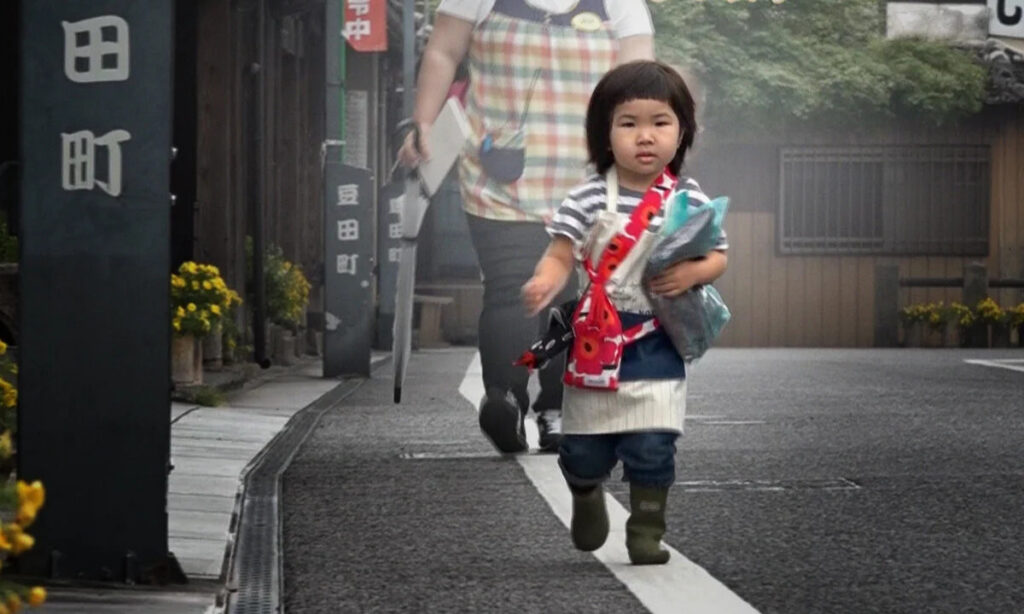
In 2022, a Japanese television program called Old Enough! landed on Netflix and briefly broke the internet. Known in Japan as Hajimete no Otsukai (“My First Errand”), it had been running since 1991, which tells you how thoroughly unremarkable its premise was to its original audience. The show followed children as young as two navigating real streets and real public transport to complete small errands alone: buying groceries, delivering messages, fetching fish from the market. Western viewers couldn’t decide whether to be charmed or appalled.
I watched it with the uneasy recognition of a person confronting his own contradictions. The children on screen were doing more or less what I had done at their age. At nine, I was catching the bus downtown to go swimming with a small group of friends free of adult supervision. By eleven, summers had a loose but recognizable shape: working my way around town, hitting different leisure centers, joining whatever programming was running, spending long stretches in the local woods. It was not supervised. It was not particularly structured. It was, in retrospect, an education about where I lived and how it worked. And then it struck me, with rather less comfort, that I had been more restrictive of my own children’s neighborhood exploration than my parents had been of mine. The controversy around Old Enough! was not really about Japanese toddlers. It was about what our society had given up, quietly, incrementally, one cancelled errand at a time.
That drift is measurable. Between 1975 and 2015, children’s time at home increased substantially while unstructured play declined sharply. This decline was partially masked by a rise in organized sport and after-school programming. On paper, these activities seem like a reasonable exchange, but they are not. Structured activity and free play are not interchangeable. One is rehearsed; the other is invented. One has a coach at the center of it; the other has the child, herself. One is limited by rules, the other by the child’s imagination.
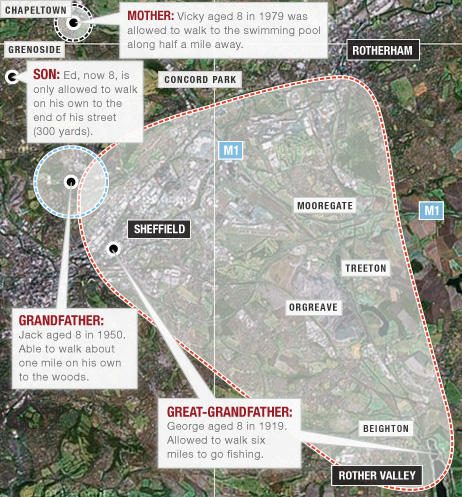
The most visible change during this period, and for a couple of generations prior, is what researchers call the “home range,” the territory a child is permitted to navigate alone. A century ago, children in Britain routinely walked several miles to school and spent afternoons in fields and waste ground. By the 1970s, around 80 percent of seven- and eight-year-olds still walked to school independently. By the 1990s, that figure had fallen to 10 percent. The rough radius within which a child might wander freely has contracted from several square miles in the early 20th century to an estimated 300 yards today. Three hundred yards. Roughly the end of the street and back.
What gets lost in these calculations is not only what children learn when they roam, but what they learn about. Children moving through a neighborhood unsupervised do not merely develop independence. They also, necessarily, come to know the neighborhood. They learn which local store keeps candy by the till and which one has an owner too sharp-eyed to risk it. They learn where the dog barks and where the path cuts through to the next street. They learn, by accumulated daily experience, who lives here: which adults are safe, which ones to avoid, and which neighbor you can go to in an emergency. They become embedded in the social fabric of the place they are growing up in.
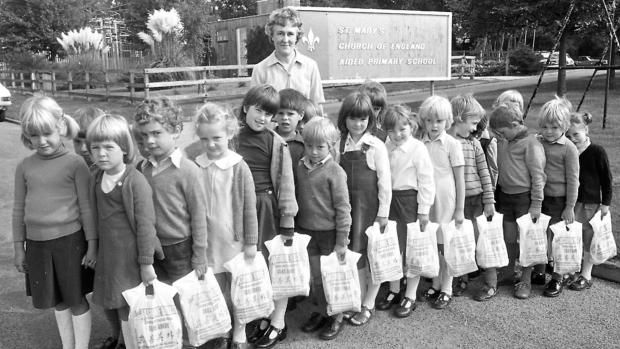
At my school, and most schools across the UK, this notion of community was understood well enough to be built into the year. Each fall, we would put together harvest baskets and deliver them to older members of the community. The expectation, more assumed than stated, was that we would know these people, or at least know of them, know roughly where they lived, have some passing sense of who they were. It was not a grand civic exercise. It was just what you did. But embedded in it was an assumption that no longer holds: that children and elderly neighbors occupied the same social world; that a child might reasonably be expected to have some prior knowledge of the person on the other side of the door.
That familiarity is not incidental to childhood freedom. It is the product of it. The familiarity that once made a street feel safe was not simply handed down to children by community-minded adults. It was built, incrementally and informally, through exactly the kind of unsupervised presence that we have systematically withdrawn. The child who wanders the neighborhood learns the neighborhood. The child who does not wander remains, however comfortable, a stranger to it.
And that stranger grows up. The children kept inside becomes adults who do not recognize the people on their street, who cannot place the face at the garden gate, who process the unfamiliar as a potential threat rather than a neighbor they have not yet spoken to. The loss of childhood freedom does not merely reflect the breakdown of community, it reproduces it, each generation kept a little farther inside producing the next generation of adults a little less equipped to know or be known.
Various causes are cited for the contraction of childhood freedom: increased traffic, changing work patterns, educational pressure, technology. But underlying all of them, threading through each like a current, is fear. Not a proportionate fear calibrated to actual risk, but the deeper and stickier variety that lodges in the gut and resists all argument.
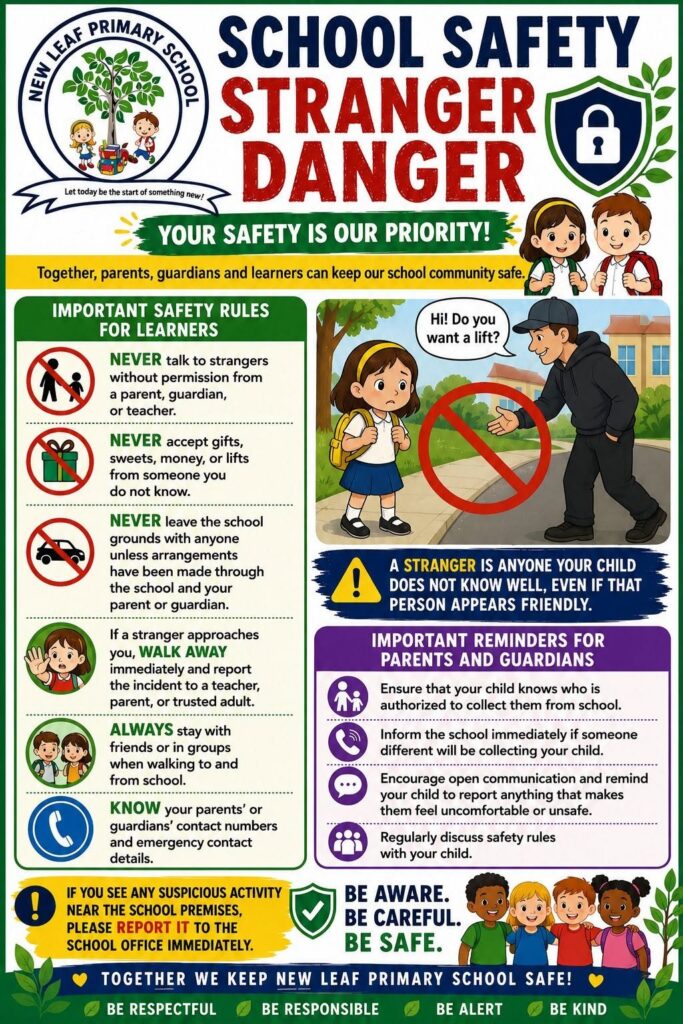
Consider the evidence. In the majority of cases, children are harmed not by strangers but by people already known to them, family members, neighbors, coaches, teachers. The “don’t talk to strangers” reflex, however well-intentioned, has never mapped onto the actual shape of the risk. The threat we are most frightened of, the lurking unknown, the unmarked van, is statistically marginal. And yet it is this threat that narrowed the radius, rewrote the school run, and pulled children off the streets of the Western world within a couple of generations.
This is not entirely irrational. Fear has never been much interested in base rates, and the imagination, once primed, does not easily stand down. But the particular stubbornness of this fear owes something to how thoroughly it has been institutionalized: built into school curricula, reinforced by news coverage that makes rare tragedies feel like routine hazards, absorbed into the cultural definition of responsible parenting. To let your child roam has become, gradually, a legible failure, the kind that other parents notice and register. And so, the radius has shrunk, not because the streets themselves have changed, but because the story we tell ourselves about them has.
What a genuinely connected community provides is information. In a street where adults know the children by sight, the category of stranger shrinks considerably. The unknown becomes visible precisely because everyone else can be placed. Community, in this sense, functions as a distributed watch that requires no cameras, no algorithms, no subscription fee. It runs on nothing more than familiarity.
The stranger at the gate is statistically the least likely threat. And yet it is the stranger who populated the public imagination, who caused a generation of parents to pull their children indoors while leaving largely unexamined the risks that were already inside the house.
What we lost is not goodness. It is the web of mutual recognition that made the neighborhood legible and children’s freedom within it defensible. And the cruel circularity of it is this: the freedom and the community were never separate things. They sustained each other. Children roaming the street built the familiarity that made the street safe to roam. Adults who knew the children around them were, without particularly trying, building the conditions under which those children could be trusted to come and go. The loss of one triggered the loss of the other, and then that loss circled back and deepened the original.
The fear did not create itself. It moved into the space that community left behind. And the children, kept inside, kept safe, kept from the daily and unremarkable work of learning where they lived, grew up as strangers to the streets they could have known. Those streets grew emptier. The adults on them grew less familiar with one another. And so, their own children, in turn, were kept a little farther in.
It would be sentimental to suggest that simply returning children’s freedom would solve everything. It would not be wrong to suggest that without it, nothing much else will. A street that no one belongs to is not a community. And children, it turns out, are among the primary means by which anyone comes to belong to a street at all.

Jason Page
Jason Page, born and brought up in Ipswich, UK, first went off to college in Canterbury before his path took a sharp transatlantic turn. While working at a summer camp in the United States, he met his future wife, eventually immigrating to America after teaching adaptive physical education in the UK. In the US, Page’s work has focused on human services and serving diverse populations, including at-risk youth and individuals with substance use and mental health disorders. After earning a second Bachelor’s degree in History and Political Science and then a Master’s in Therapeutic Recreation from SUNY Cortland, Page completed his PhD in Recreation Therapy at Clemson University, his research focusing on the behaviors and motivations behind participation in high-risk or “deviant” leisure activities, questioning why certain activities receive such labels. Known for his willingness to explore topics that might not get him invited back to dinner parties, Page says his scholarly focus aligns with his irreverent attitude toward institutional power and his dark sense of humor. His work challenges conventional perspectives on leisure activities, exploring the complex relationship between risk, societal norms, and personal fulfillment, deliberately questioning established boundaries and received assumptions. (Author Head Shot Augment: René Laanen; Banner image: Kaelyn Page.)