To the Cyclops Cave: A Homecoming

“As you will have sensed, the sought-after place where he belongs will be not so much a literal place as a state of emotional and mental well-being: wholeness felt and known, which he came close to achieving with his female companion. The narrator’s problem, with its implied, motivating wish, is not only ‘to make sense of my past’ but beyond this ‘to see . . . if . . . someone with a history like mine can ever really love and be loved.’”—David Havird
The Hubris Review
By David Havird
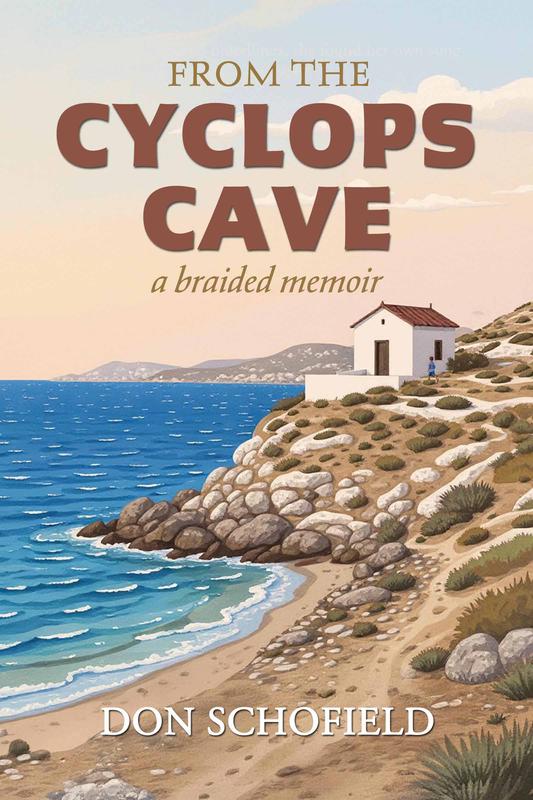
From the Cyclops Cave: A Braided Memoir, by Don Schofield (Open Books, 310 pp., $21.95, 2025).
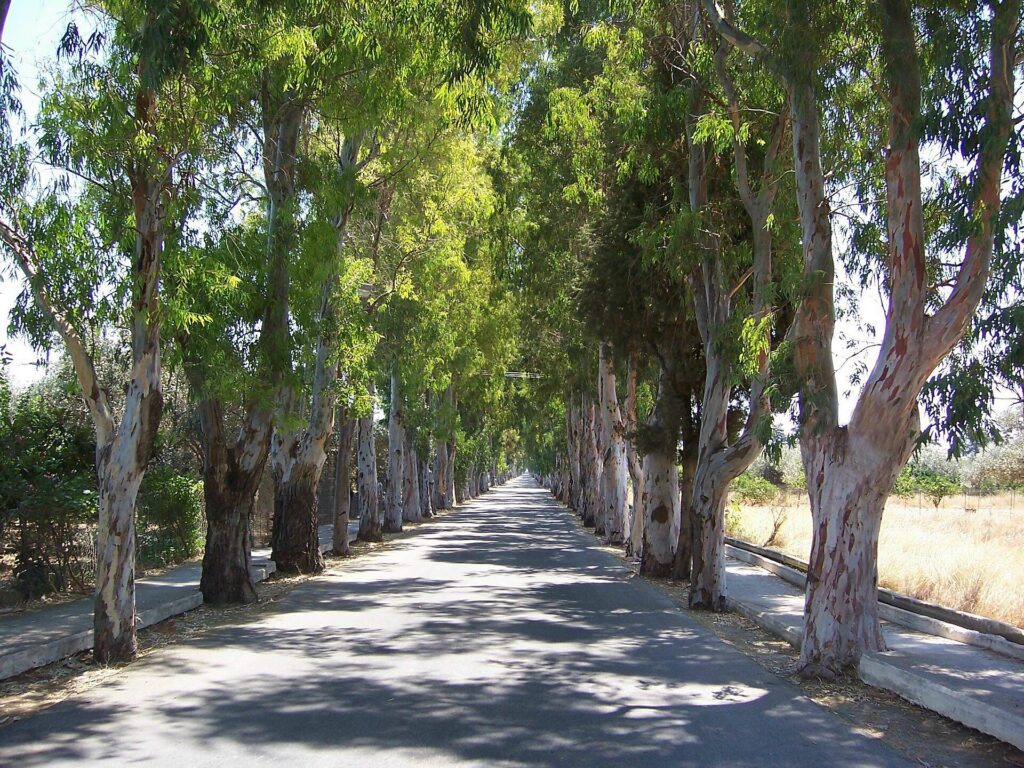
 SHREVEPORT Louisiana—(Hubris)—September/October 2026—The poet Don Schofield, who spent his boyhood in California, paid his first visit to Greece in 1976, when he was a 26-year-old tourist. “And to my surprise,” he observes in this “braided memoir,” “rural Greece looked and felt a lot like central California in the ’50s.” He’d be traveling by bus and “gaze out the window at long, symmetrical rows of trees—lemon and walnut, orange and pear—all leading to the same vanishing point. Whenever we neared a town, there were long rows of eucalyptuses with thick branches arching out over the road. Was this Greece I was traveling through, or Highway 99 north of Fresno?” (His description of the countryside, its evocation for him of the San Joaquin Valley, is richer than this short passage, even with its particularity of detail, reveals, and one of the challenges for me is resisting the impulse to quote at greater length, so actively does Schofield’s scene-setting involve the senses.) The several years of Schofield’s early childhood with foster parents in Fresno compose the principal braid. Those times hadn’t been painless—far from it; still, Schofield could feel that “by being in Greece I had stepped back into the happiest years of my childhood” and afterwards “it was the good memories from childhood that kept pulling me back to Greece, those golden years from four to eight, when I was with parents who loved me and even wanted to adopt me.” Four years later, in 1980 when he was 30, the author returned to Greece for good.

Within three years Schofield (who boasts two bachelor’s, a Master of Fine Arts, and Master of Arts degrees) had found full-time employment at an American university in Athens. Found, too, Patty, an Italian-Greek companion from whom, after ten years—“three good ones, then seven with things steadily disintegrating”—he has recently split when this memoir opens and we find him on Kýthnos, an island that draws comparatively fewer tourists than other Cycladic islands, in the last house on the bay and several coves away from a “well-worn,” rutted dirt road’s end: the Cyclops Cave, which promises to be the answer to his need not only for a “place to escape to” but more fundamentally “a place where I belonged.” Late in the narrative, when the third and unfortunately last of his three summers in the Cyclops Cave is coming to an end, he is eating a lunch of fried barboúnia (red mullet) freshly caught by his one close neighbor and remembering, if subliminally at first, the disintegration of their life together: “After cutting off the head and tail of the first barboúni, I inhale its aroma as I slice it open and lift out the delicate skeleton, then squeeze ample lemon juice over both halves. As I savor the crunchy crust while the soft, white meat all but melts in my mouth, my thoughts turn to Patty . . . How my mind,” he archly observes, “associates deboning this fish with the break-up with Patty, I don’t know.” He goes on to ask, however, where “all the sensuality” went: “How did we end up with so much deprivation by the end”—the meal eaten?
(An aside: Despite his poor eyesight, which has troubled him since early childhood, Schofield writes not only with senses engaged but also with his creative intelligence attuned to the figurative resonance of things, especially things in the “creaturely world”: spiders and their webs, cicadas, an octopus. “As far back as I can remember, I’ve wanted to be a part of the creaturely world…How safe it felt” to the sometimes bullied or punished child “and still feels, to be in that elemental world.” Of course that world also includes the fish, which he happens to be relishing, and a tethered mule.)
.jpg)
As you will have sensed, the sought-after place where he belongs will be not so much a literal place as a state of emotional and mental well-being: wholeness felt and known, which he came close to achieving with his female companion. The narrator’s problem, with its implied, motivating wish, is not only “to make sense of my past” but beyond this “to see…if…someone with a history like mine can ever really love and be loved.”
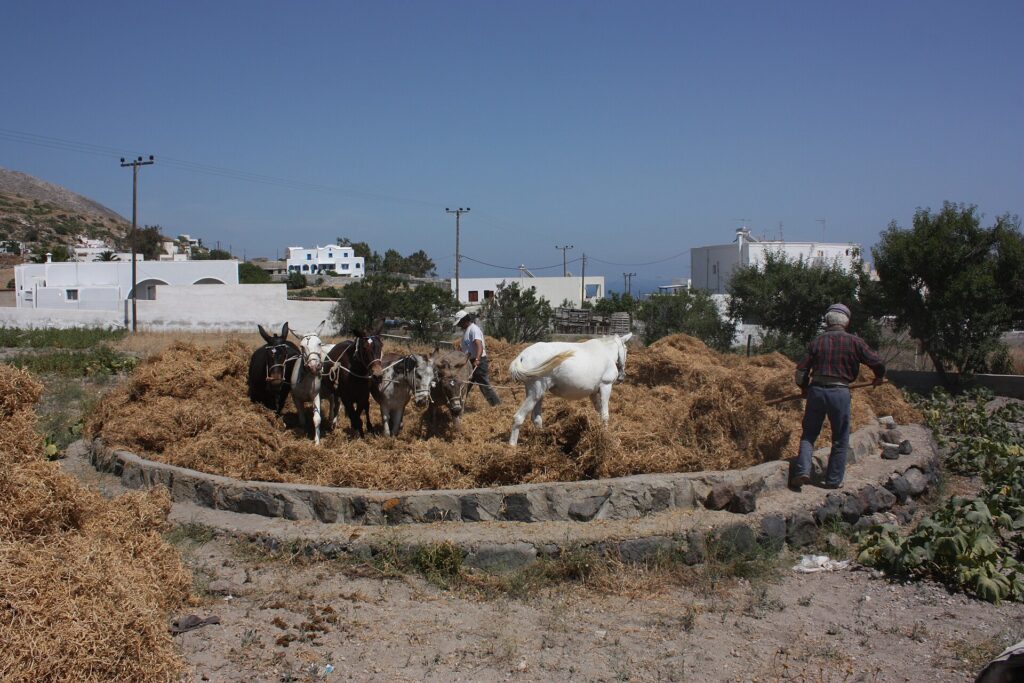
Despite the impression conveyed perhaps by the preceding paragraphs, Schofield devotes comparative little space to his relationship with Patty. Rather, it’s the history of his more distant past, his singular, unsettling childhood, which the break-up has urged him to explore, that involves him in its many turns. Early on, he has noted, while walking to the “nearest village” for supplies, a “tethered mule” and while trudging cave-ward, his backpack crammed, stopped at “an old threshing floor, long unused; and imagining “the heavy, muffled clopping of mule hooves going round and round that abandoned stone floor, threshing barley like I endlessly tread memories in my head,” he wonders if “like that mule . . . I’m doomed to repeat, over and over, the same destructive patterns as those who supposedly raised me,” those foster parents, the nurturing Nan and sadistic-when-drinking Papa, capable though he was of “tender, sometimes crushing love”; and his emotionally distant father, whose name, Gordon, he shares and goes by throughout his childhood (he became Don at age 16), and hard-hearted, bigoted stepmother; perhaps too the tyrannical Catholic father at the children’s home to which his father and stepmother, exasperated by preteen Gordon, send him.

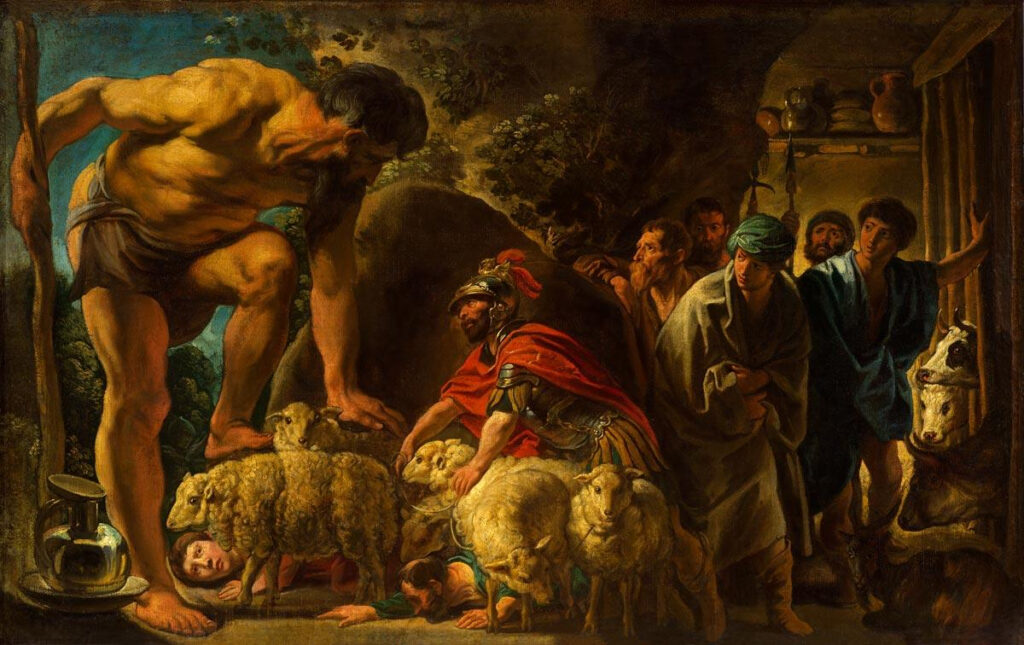
As first seen by Schofield, the Cyclops Cave is “the very last house on the bay, a small, whitewashed hut in the Cycladic style, perched on the rocks just above us” (himself and Giórgis, whose rental it is), surrounded by goat pens. The name, the Cyclops Cave, is both local and “apt” not only because of its relative isolation but also because of its “most telling” feature: “the hut itself was built right into the rock.” In The Odyssey, of course, the Cyclopes dwell, as Odysseus observes (in Robert Fitzgerald’s translation), each “in his own mountain cave”; and as for the one that he and his crew invade, “at one end of the bay, we saw a cavern/yawning above the water.” Not only does this Kýthnian cave boast a “Neolithic” look, it also lacks electricity and running water (“but,” as Giórgis informs Schofield, “you’ve got gas lamps and gas-burners for a stove . . . I’ll leave you plenty of propane”); and there’s no “fridge”: “Whatever you want to keep cool, just hang it in the net I keep in the well”—one of two wells, as it turns out, one with “bad water” (“for washing dishes, showering, flushing the toilet”) and one “on the other side of the bay” with “good” for drinking. “Perfect!” Schofield says to himself, and here this Cyclops, as he sees himself, writes during three consecutive summers.
Whether or not it’s Schofield’s intention—he’s definitely not insistent—his “homecoming” to the Cyclops Cave, as he does in fact call his return for his second summer there, invites the reader to see his peregrinations as an odyssey and to consider this “braided memoir” in relation to Homer’s epic. Throughout much of the memoir, Schofield plays Telemachus, a boy who yearns to reunite with his wayfaring father. Not only is Gordon Senior emotionally distant; he is physically absent as often as not, driving as he does a Greyhound bus for a living. One reads in anticipation of a scene, as enacted by Gordon Junior, analogous to the one in The Odyssey where Telemachus recognizes his father, made young-looking though he has been by Athena and freshened up, at the swineherd’s hut: “Then, throwing/his arms around this marvel of a father/Telémakhos began to weep.”
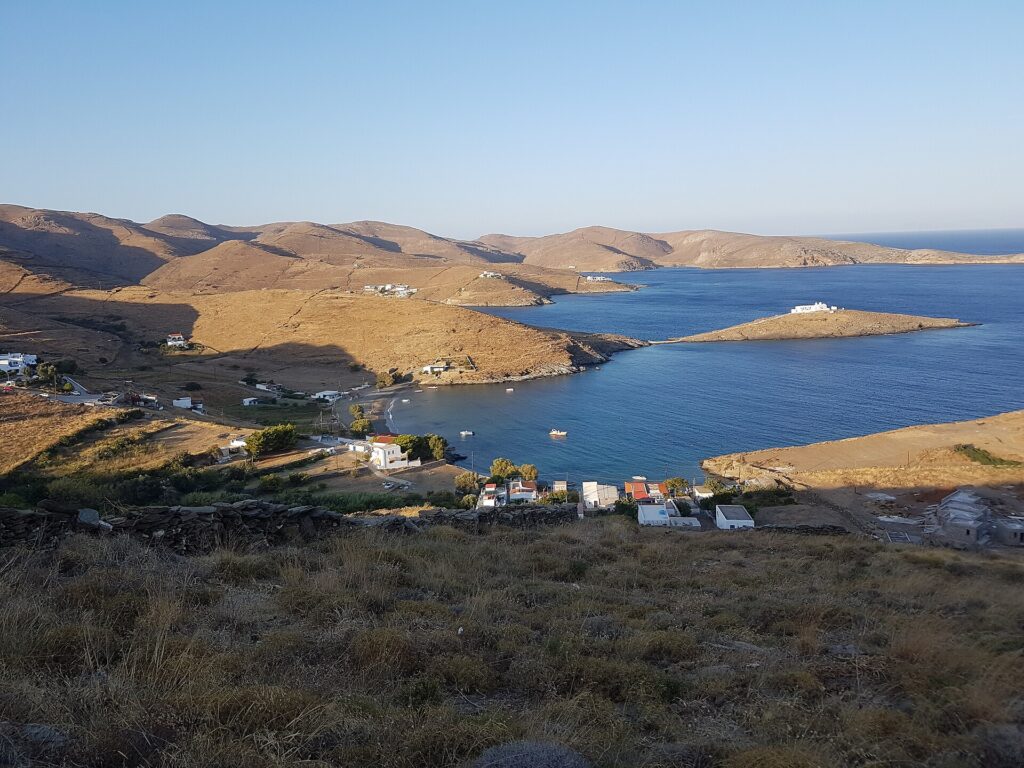

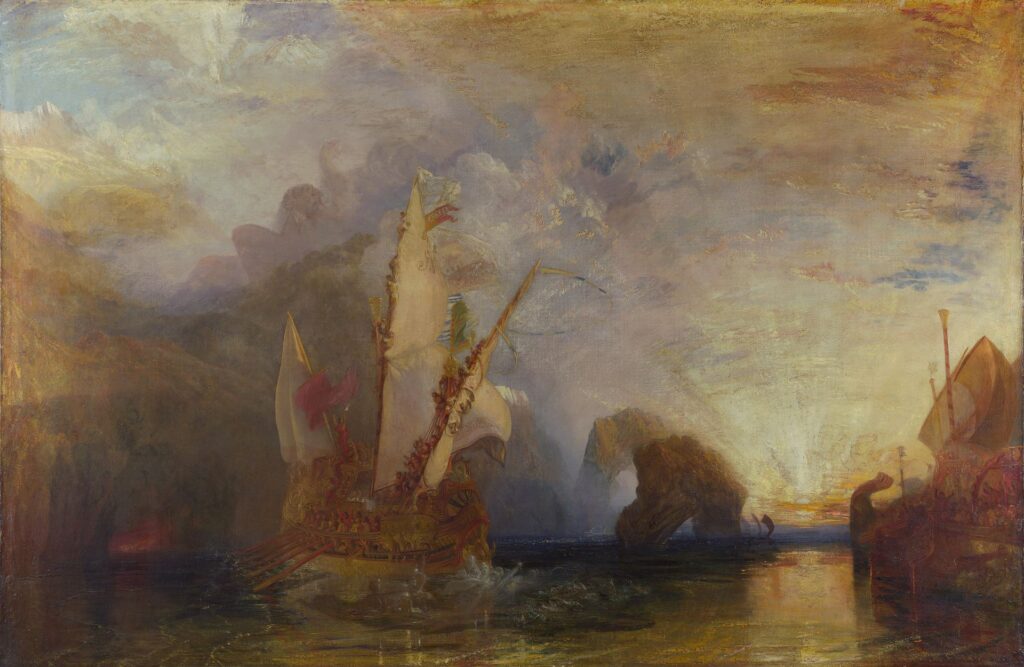
As a wayfaring man, of which Odysseus is, of course, the quintessential one, Schofield found his way home as an expatriate American in Greece by recognizing 1950s Fresno in the geographical features of Greece and by finding there the love of a woman—while valuing, however, his ability “to pick up and travel whenever I want” and lamenting his loss of “that kind of freedom” in favor of “a more sedate existence” in academe. One remembers that even before the consummation of their reunion can take place in their rooted bed, Odysseus informs Penelope of one “trial” more awaiting him, the journey inland with an oar, as Poseidon’s evangelist. So Tennyson’s homebound Ulysses insists, “I cannot rest from travel.” As Odysseus then, but “with only the pages of this journal for a raft, only this pen as an oar” (a raft such as Odysseus constructs for the voyage away from Calypso’s Ogygia), Schofield might find his way again.
The irony that binds these braids together, Gordon Junior’s quest for his father and the adult Don’s journey home, is tragic. The irony for the child that Schofield never outgrew—for this Telemachus—is that there is no “marvel of a father.” His biological father and foster father “are at war inside me” and both of them are Cyclopes, “louts, without a law to bless them,” Odysseus calls them and describes the one that he encounters as “remote from all companions,/knowing none but savages’ ways”: Gordon Senior, who flees intimacy, craves solitude, and must be always “on the move”; and Papa, who gets blind drunk and sometimes physical with others, bent as he is on “self-destruction.” And the irony for Schofield as Odysseus is that he finds his home to be this Cyclops Cave and, what is more, himself to be a Cyclops (at least for the duration of this absorbing memoir, a testament though it is to his resilient nature): an “angry, abandoned Cyclops . . . struggling to reunite with that evanescent core where tenderness and wholeness wait.”

(Another aside: My description of Schofield as a character with manifold identities in this odyssey of his reveals him to be, in a word, a “complicated” man. So Emily Wilson describes Odysseus in the first line of her 2017 translation: “Tell me about a complicated man”—thus she invokes the Muse. There was recently in social media much discussion of this English epithet, how well if at all it conveyed the sense of Homer’s polytropos: “of many turns”—the “twists and turns” that Robert Fagles in his 1996 translation applies to Odysseus—which nicely relates to both Odysseus, his quality of mind, and his odyssey. “Complicated,” many disparaging opinions asserted, was too ordinary a word, too prosaic, to apply to Odysseus. My own view was, and remains, that Wilson’s choice of “complicated” invites us to take a new look at this familiar word, and when we do, we find that at its root is “plait,” which involves folds, the twists and turns of polytropos, a root that “duplicitous” also shares. Etymologically, “complicated” means “folded together,” as are not only the plotlines of The Odyssey but more to the point the many-minded, sometimes duplicitous hero’s lines of thought. “Complicated” is a richer choice than it may seem at first, a poet’s choice. “Plait,” of course, is another word for “braid,” of which Schofield’s narrative, with its complicated protagonist, has many.)
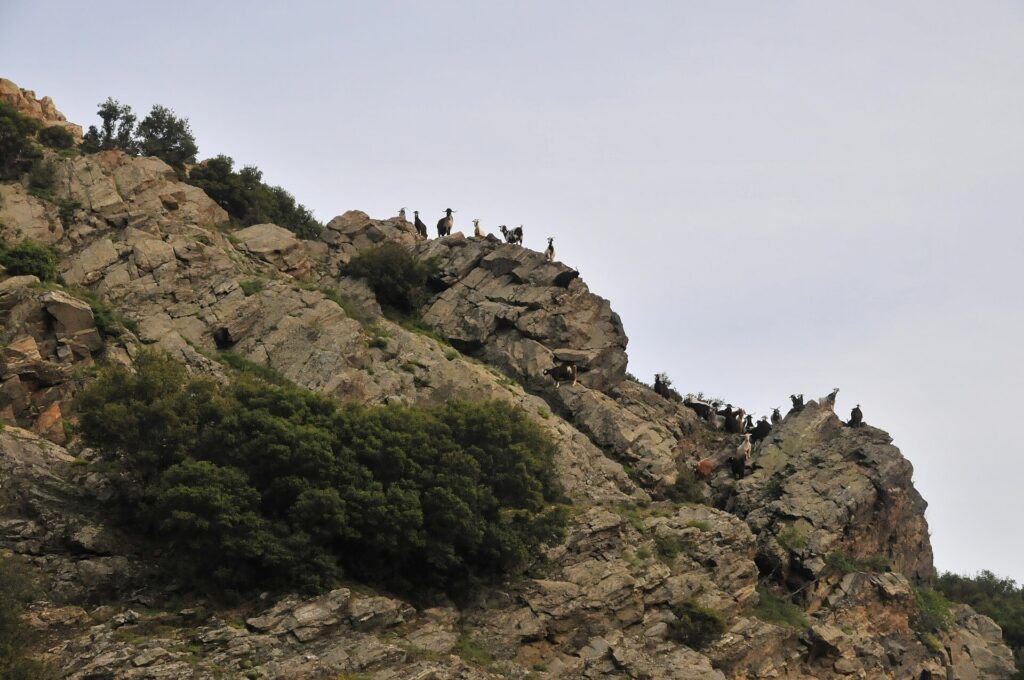
When you begin this memoir, you’ll think that the narrator has found exactly the idyllic place that reifies that core of being—only it’s too sensuously real to be evanescent. Here’s Schofield then at Náoussa Bay, giving his “whole body” to the “warmth” of the waves and later watching from his “broad, exposed veranda” his neighbors “come and go across the cove in their small wooden boats, hearing the ting-ting-ting of their little outboard motors, or the slow, rhythmic plash, plash of their oars as they row.” Later still, while sipping a local, homemade spirit (rakí), he lets his “mind leap from thought to thought, like goats . . . along the slopes above this bay,” and after dark, while listening “for the bullfrogs in the cistern” and to the nightlong “croaking” of frogs and hearing the “high-pitched bray of a donkey,” he feels, if not evanescent himself, contentedly “invisible.”

No smells you notice among the things felt, seen, tasted, and heard—and my list is much an abbreviation—unless the long-needle pine, which shades a “pair of lovers,” transmits a scent. But there is much to smell when, one page later, those leaping thoughts land Schofield in a “hotel bar in Fresno,” where he’s four years old and his father, who apparently took the boy with him when he split with the mother, and a “redheaded woman with two Irish setters” are whispering earnestly while “lighting cigarette after cigarette.” “The redhead,” as Schofield remembers her, “is wearing . . . smelly perfume.” The end result of their conversation, evidently a negotiation, is that young Gordon’s bus-driving father abandons him here and now to this vivid woman, whom it is not obvious that he knew. A “complete stranger” to the boy, she will, when her “husband refuses to accept him,” hand him over to her hairdresser, who is, along with husband, grieving the death of newborn twins. For four volatile years, the “best years” of his childhood, young Gordon lives with Nan and Papa, as he comes to call them, whom “Maybe, just maybe, I really could call . . . Mom and Dad.” No sooner does he think so than his father, to whose “invisible presence” he instinctively feels “allegiance,” phones, announcing his marriage, this “great master of withdrawal,” to a much older “witch,” and so the twists and turns in Schofield’s braids begin.

David Havird
David Havird is the author of three collections of poems, of which the most recent, Weathering (Mercer University Press, 2020), includes prose memoir, about youthful encounters with James Dickey, Robert Penn Warren, Robert Lowell, and Archibald MacLeish, as well as poetry. His poems and essays have appeared in many periodicals, including Agni, The Hopkins Review, Literary Matters, Plume, Raritan, and The Yale Review. A graduate of the University of South Carolina, where he studied under James Dickey, he completed his graduate education at the University of Virginia with a doctoral dissertation on Thomas Hardy. Havird retired from the classroom in 2020 after 30 years at Centenary College of Louisiana. He lives with his wife, the poet and novelist Ashley Mace Havird, and their Carolina dog, Sheba, in Shreveport. (Author Head Shot Augment: René Laanen, Sr.)
2 Comments
Don
David: Thank you so much for this insightful and generous review. Reading it was almost like when we, at times, look into a mirror and have to ask ourselves, “Is that really me?” But, yes, you hone in quite accurately on much of the “me” in my memoir–the boy as well as the adult. I especially like the parallels you draw between my narrators and Telemachos, and, even more, the way you connect Wilson’s “complicated” with “braiding.” Perfect!
One tiny correction: I spent three summers in the Cyclops Cave–’92, ’93. and ’94, as well as Easter Week those last two years.
Καλοτάξιδο for WEATHERING and all your other writing pursuits.
Warm regards, DS
David Havird
My pleasure!
The errors about how many summers have been corrected. Hoping another hasn’t resulted. I got entangled in the braids.