Rhythmic Sense: Light Verse
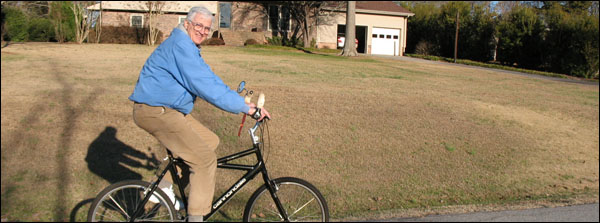
“As a versifier, I’m aware that rime does not pay; as a recovering Presbyterian, my firmest belief is in the illusion of free will; as an essayist, I know it’s not the eloquence but the evidence; as a critic, I assume the best until I know otherwise; as a linguist, I pride myself on being an ento-etymologist (a debugger of words); as a teacher, I have discovered that if I make the material seductive, the students will teach themselves; as an employee, I usually complete the worst first; as a husband, I come to the table with something to share, and as a father and grandfather, I’m a carpet bonder.”—Skip Eisiminger
Skip the B.S.
By Skip Eisiminger, aka The Wordspinner
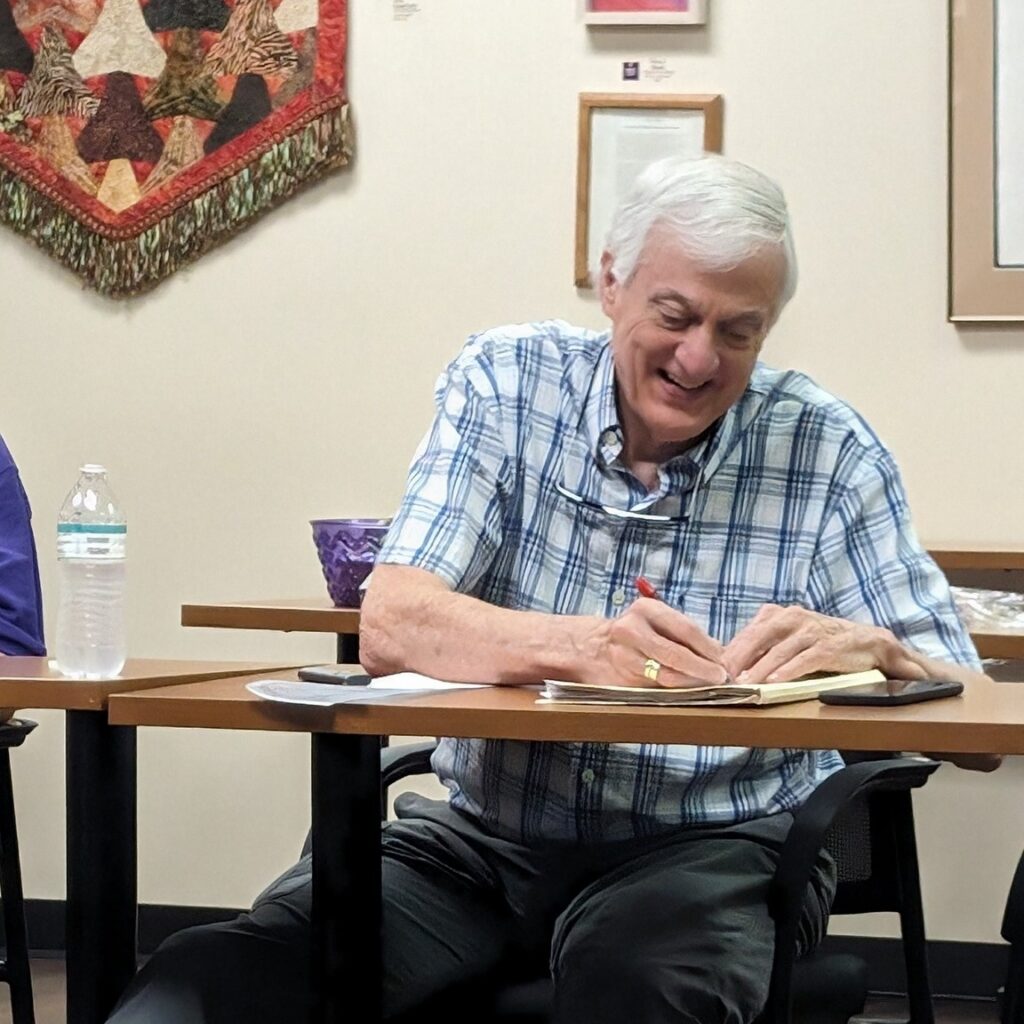
“. . . motion is beauty/in a sure hand/compared to an urn/that squats on a stand.”—Skip Eisiminger
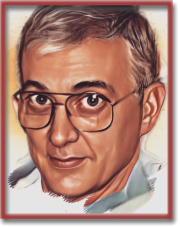 CLEMSON South Carolina—(Hubris)—June 2026—After publishing prose for over a decade in Hubris, I’ve decided to take the road not previously taken in these pages—verse.
As a versifier, I’m aware that rime does not pay; as a recovering Presbyterian, my firmest belief is in the illusion of free will; as an essayist, I know it’s not the eloquence but the evidence; as a critic, I assume the best until I know otherwise; as a linguist, I pride myself on being an ento-etymologist (a debugger of words); as a teacher, I have discovered that if I make the material seductive, the students will teach themselves; as an employee, I usually complete the worst first; as a husband, I come to the table with something to share, and as a father and grandfather, I’m a carpet bonder. Gradually, I’ve come to understand the virtue of giving more and expecting less, and that while curiosity did kill the cat, I hope I have several more lives.
In my 42 years as a teacher at Clemson University, I taught over 9,000 students in 29 different courses.
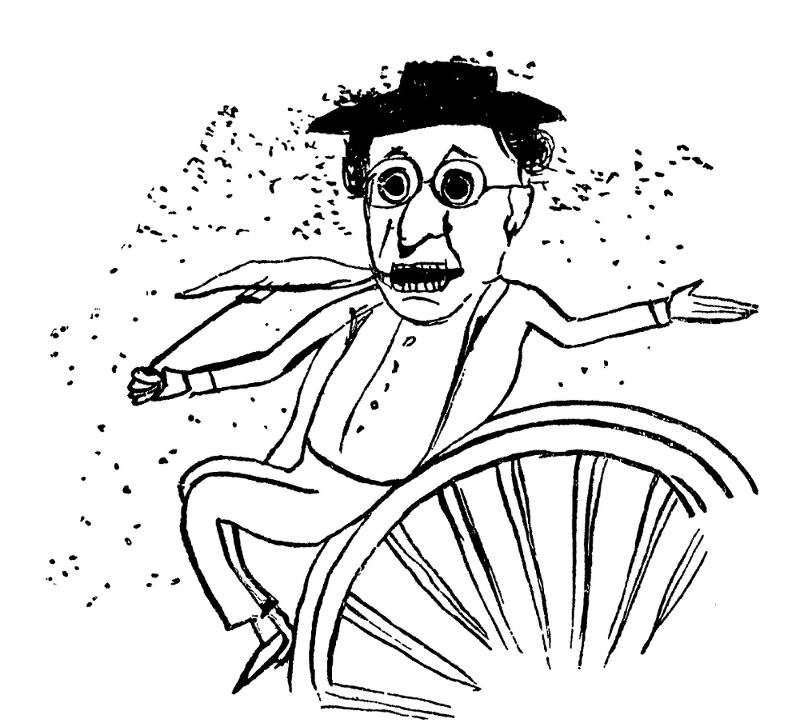
Malappropriations
By Skip Eisiminger
Following a fling with the Ladder Day Saints
and a lapsed nun with a case of altar ego,
Thomas took a leave of abstinence
and made a 360-degree turn.
Back at squall one,
defying conventional morays,
frustrated with Yahoo
and Mary’s Immaculate Contraption,
tired of waiting for the Calvary to rescue him
and convinced that Jesus’ death was a crucifiction
sponsored by the anti-Chrysler,
Thomas sought a faith lift.
Trudging up Calgary,
he spotted the Dolly Llama
curled in the feeble position.
“Hello, Dolly,” said Thomas
and poised a question,
“Are you open for private medication?
If so, please sing, ‘When the Haints Go Marchin’ In.’”
“I fear my faith no longer passes mustard, Dolly.
The god of Judyism
is slow as Moses
in nomad’s land.
The country run by our floundering fathers
appears to be closed for altercations.
I’d just as soon worship the poultry geist.”
Without casting any asparagus,
Dolly said, “You can’t get blood from a termite, Thomas.
Enough should be plenty
for the cognoscenti.”
Contemplating the Higher Forms of Beauty on the St. Goarshausen Landing
By Skip Eisiminger
Waiting for a ship
to take us downstream,
I tell you, the Rhine
was a verdant dream.
The Lorelei waited
to sing us a lied,
but the gorge itself
played a steel-blue suite.
Spotting our steamer,
I woke from a daze—
she was beating upstream
through a silver haze.
The current was swift
but the motors were stout—
strong on a diet
of schnitzel and kraut.
But first the Argo
faced an uphill turn—
in very tight quarters,
switch bow and stern.
“Come hard to starboard,”
the captain said.
“Cut both engines
and needle the thread.”
Suddenly silent,
the boat was a ball,
no longer rising,
not yet in its fall.
Hugely it quivered
right up to the pier
on which a mate stepped
scratching his ear,
dropping a rope loop
over a worn cleat,
securing the ship’s steel
to stone and concrete.
The finish of it stirred
some warm applause—
others just gaped
who were given to pause,
for motion is beauty
in a sure hand
compared to an urn
that squats on a stand.
Pedagogy of Hope
By Skip Eisiminger
I seldom give up
on a pet project—
the lower the score,
the greater the prospect.
When no one is watching,
I seize the poor dears
and bite the shrink wrap
that covers their ears.
Some students conspire
to stay at dumb
like the apprentice
who nailed down his thumb,
but like hikers who wish
to leave the trail,
so do students
have the right to fail.
They also deserve
to be told the truth—
if Sherlock’s a failure,
I don’t call him sleuth.
If mares led to water
just stand and blink,
some salt in their oats
may help them to think.
I can’t raise a class
with my own jack,
so I won’t abide one
that won’t talk back.
Hamlet and Prufrock
remain our leaders.
The greatest texts
sustain their readers.
The sword’s in a book,
not buried in stone.
Until it is freed,
none takes the throne.
The Deist Golfer
By Skip Eisiminger
I.
Recovering in a hospital bed,
Sparky rejoiced that he wasn’t dead.
On the eighteenth hole just two putts from par,
he thought he’d better dash to his car,
for lightning was arcing on Antenna Hill,
and a sudden cold wind gave him a chill,
but par was so near that he chose to play
in the pyrotechnics that brightened his day.
II.
Glabrous and charred he remembered Pope
and how his Essay had given him hope.
“Whatever is, is right” said the poet;
thus, lightning is just and all men should know it.
It kills a few thousand on average, I hear,
and millions in fires are tallied each year,
but seen from Olympus where Zeus winds his arm,
the good done by lightning outweighs the harm.
III.
Recalling this wisdom the pain subsided.
The more Sparks thought the more he delighted
in the ozone shield that reflects the sun’s rays—
a gourmet lunch for which no one pays,
in the cordless brooms that sweep static from air
so Bennett and Brahms may be heard unimpaired,
and in the nitrogen that’s fixed in the soil
saving the farmer money and toil.
IV.
Bound up with lightning God gave us good sense
and Benjamin Franklin for our defense
who showed us how to protect our homes
and roast a turkey with natural ohms.
Thus, Sparky acquired the cosmic view,
the spectrum of feeling which has no blue,
avoiding the sinkhole where he might have sunk
scanning his navel in a blind funk.
The burns would heal the hair would grow back,
and Sparks would return to the caddy shack.

Editor’s Note: Skip Eisiminger’s books include:
Wordspinner, Savage, MD: New York: Rowman & Littlefield, 1991.
The Consequences of Error and Other Language Essays, New York: Peter Lang, 1991.
Nonprescription Medicine, Harvey, LA: Mardi Gras Press, 1995.
Omi and the Christmas Candles: A Tale of Nine Christmases During the Nazi Era, Clemson, SC: Clemson University Press, 2005.
Letters to the Grandchildren, Clemson, SC: Clemson University Press, 2014.
Felix Academicus: Tales of a Happy Academic, Clemson, SC: Clemson University Press, 2018.
Anecdotes and Antidotes: People I’ve Known or Known of Including Myself, Copenhagen, Denmark: Serving House Press, 2019.

Sterling Eisiminger
Dr. Sterling (“Skip”) Eisiminger was born in Washington DC in 1941. The son of an Army officer, he traveled widely but often reluctantly with his family in the United States and Europe. After finishing a master’s degree at Auburn and taking a job at Clemson University in 1968, he promised himself that he would put down some deep roots. These roots now reach back through fifty years of Carolina clay. In 1974, Eisiminger received a Ph.D. from the University of South Carolina, where poet James Dickey “guided” his creative dissertation. His publications include Non-Prescription Medicine (poems), The Pleasures of Language: From Acropox to Word Clay (essays), Omi and the Christmas Candles (a children’s book), and Wordspinner (word games). He is married to the former Ingrid (“Omi”) Barmwater, a native of Germany, and is the proud father of a son, Shane, a daughter, Anja, and grandfather to four grandchildren, Edgar, Sterling, Spencer, and Lena. (Author Head Shot Augment: René Laanen.)