Collective Shame: The Holocaust

“At the trials, the usual Nazi defense was, ‘I was following orders,’ or, ‘The gods I worshipped demanded death.’ Nevertheless, the court ruled that a soldier under orders who participates in what any adult of average intelligence would recognize as a crime is as guilty as the authority who issued the order. Henceforth, to paraphrase US Supreme Court Justice Abraham Fortas, no one should ever believe that authority must always be believed. This authority included God Himself, for if God is omnipotent, given the Holocaust, He is not good. If He’s omniscient or omnipresent, His powers are surely limited.”—Skip Eisiminger
Skip the B.S.
By Skip Eisiminger

 CLEMSON South Carolina—Hubris—September/October 2026—For two and a half years (1961—1963) as a US Army ELINT (Electronic Intelligence) operator stationed on “gallows hill,” near Bahrdorf, West Germany, just two kilometers from the old East-West German border, I logged the “Big Mesh” radar operating most hours of the day and night at the Russian army’s Gardelegen military compound.
The town of Gardelegen was only 30 miles from our company’s Army Security Agency (ASA) site, so its radar was an “easy blip to scarf.” For the uninitiated, that means it was an easy signal to find, record, and analyze on magnetic tape which was then forwarded to the National Security Agency to be further analyzed along with thousands of other recordings from dozens of other Cold War listening posts on the land, sea, and in the air around the world. If the Gardelegen radar and dozens of other regulars were “down,” the Russians and East Germans were up to something—like building a wall in Berlin. In a nutshell, the ASA was reading the enemy’s mail that percolated through the rusting Iron Curtain between 1947 and 1991. There would be no “brewski with a Russki” on my watch.
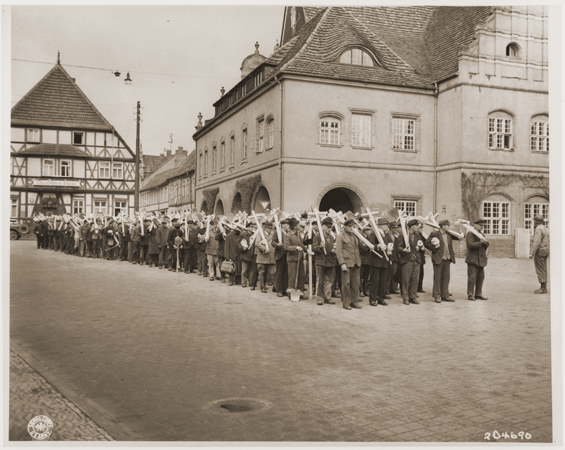
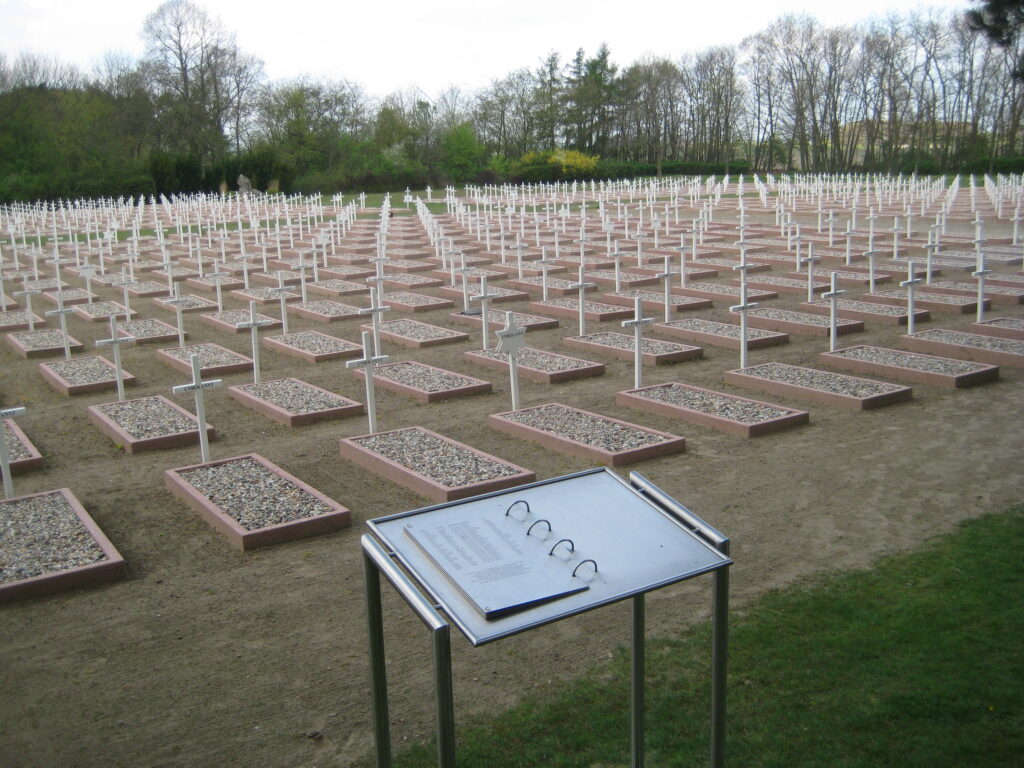
One item of the “mail” that was never delivered to our Bahrdorf site during my tenure was a shameful story that the Volk of Gardelegen were happy not to post. On April 13, 1945, just one day before the American 102nd Infantry Division arrived, members of the SS, the local Nazi Youth, firefighters, and the antique home guard forced 1,061 Jews into a large brick barn after Allied bombers had damaged the east-west railway, blocked the barn doors, and set the straw inside on fire. Those that crawled out under the doors were shot. As one American infantryman put it, “I never was so sure before of exactly what I was fighting for. Before this you would have said those stories were propaganda, but now you know they weren’t.”
In April of 1945, my father and the men of the 1698th Engineer Combat Battalion were just 40 miles west of Gardelegen, not far from Wolsdorf, where my future wife was living with her mother and brother. Years later, Dad told me that during his seven-month race across northern Germany hell-bent for Berlin, he saw no signs of Gardelegen-style atrocities. From 1946 to 1950, as my father’s dependent and later as a GI, I also saw no signs of the “final solution.” How we missed them is a mystery, for there were some 44,000 of these “camps” across Europe.
My German wife, Ingrid, never met a Jew until she came to the States in 1963. The sole Jew in her village had vanished one night, according to her mother, early in the war. Despite Ingrid’s and my own lack of direct involvement, both of us feel shame, if not guilt, every time we hear or see a reference to the Holocaust. And why should we feel guilt? She was six when the war ended; I was a child of four whose ancestors had emigrated from Germany in 1751.

Ingrid’s father, Otto, had joined the German air force because as a journeyman woodworker, he was qualified to repair the canvas and wood biplanes the Luftwaffe was using as trainers after World War One. The war offered Otto a job when no one else was hiring during that severe depression when my wife’s mother used a clothes basket full of money (or 200 billion Reichsmarks in 1923) to buy a loaf of bread. For her patriotic part, she rolled bandages before the war in the BDM, a Nazi organization for girls ages 14—18, that she was obliged to join. During the war, she raised two children, looked after her aging parents, tended a garden and orchard, sewed clothes to trade, and worked 60-hour weeks during the planting and harvest seasons for local farmers. One of Ingrid’s uncles was in the SS; two, who were severely wounded, served in the infantry, while another worked for the railroad, but it’s not known if he transported any Jews to a death camp. Her only living grandfather was a tailor and may have made a coat for his son-in-law in the SS.
By 1940, my wife’s family had moved from the industrial city of Magdeburg, 90 percent of which would be flattened by 1945, to Wolsdorf, a farm village of about 500, which was strafed occasionally by American Mustangs. Little Wolsdorf had few contacts with the outside world for most of the war except for a town crier and the radio with its 24/7 propaganda broadcasts. Nevertheless, young as they were, Ingrid and her brother were oddly affected by the war. One of her favorite games was “I Declare War” which involved drawing a large circle in the dirt to represent Earth and claiming as much territory as she could over the course of the game. Each player chose a country he or she wanted to be; Ingrid says she always wanted to be “America.” Her “Heil-Hitlering” brother was Germany.
She and Rolf also enjoyed catching mice and draining their blood. They also caught, cooked, and ate sparrows they’d trapped. This was their version of what they’d seen refugees do and the annual slaughter of the family’s two pigs, Peter and Paul. For unknown reasons, five-year-old Rolf also caught flies and “gassed” them with the fumes from the sulfurous matches he held under an open glass jar. Finally, her brother was forced to donate his toy soldiers to the war cause when the town’s Nazi mayor came calling for precious lead. As a student from 1946 to 1959, Ingrid never heard a word from any of her teachers concerning the Holocaust. That failure should come as no surprise because one of her teachers had been a Nazi who was “re-educated” after the war.
The first Jewish person Ingrid met in this country was a woman whose husband and I team-taught Clemson University’s inter-disciplinary Humanities courses. My colleague taught the music segments; I taught the rest. On one occasion when his wife was visiting, she happened to see a framed photograph of Ingrid’s father in his Luftwaffe uniform. There on his chest was a swastika as there was on every German soldier, sailor, and airman’s uniform regardless their political leanings. (Insignia design in most militaries does not leave the bearer many options.)
Though Otto had never been a member of the Nazi party, that didn’t matter to Ingrid’s acquaintance; she used many public opportunities to label Ingrid “the Nazi.” This conflict only deepened when Ingrid said that Palestinians deserved a home of their own. The irony is that in some sad reversal of the 1930s and 40s, this war survivor was determined that her own children would never face the hunger she’d faced as a Jew who managed to find various sanctuaries in Poland, the Soviet Union, Israel, New York, and finally South Carolina. She fed her children with a vengeance, and her son couldn’t get enough: he died at age 55 weighing over five hundred pounds. At his funeral, one mourner called this young man, a talented musician like his father, “the Holocaust’s last victim.”
When the Holocaust was mentioned in my university classes, most students remembered that six million Jews had died, but the real figure is much high—closer to eleven million by most contemporary estimates. Some five million Roma, homosexuals, physically disabled, and mentally ill people were summarily executed. Like African-Americans in Charleston, South Carolina, Jews in many European cities were forbidden to occupy a park bench, but that was just the beginning. The following brief list should give readers a fuller idea of the Holocaust’s horror:
- Jewish babies were sometimes thrown into the air and used for target practice. As Himmler said, “Even children in the cradle must be trampled like poisonous toads.”
- In addition to about 700 tons of gold the Nazis stole, they harvested 7.7 tons of human hair from the bodies and scalps of the “vermin” with post-war plans to turn it into textiles.
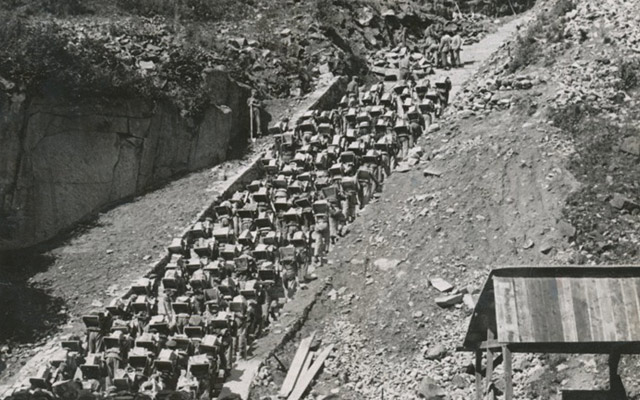
- At Mauthausen, cannibalism was encouraged. At this cruelest of all the death camps, Jews were required to carry 100-pound stones up and down 186 steps at an old granite quarry until their hearts burst.
- Polish POWs received 669 calories per day; Jewish enslaved workers received 184.
- Jews were often executed in alphabetical order.
- German law made the inhumane treatment of pets formerly owned by Jews illegal.
- Dr. Mengele experimented with various dyes and chemicals to turn brown eyes Nordic blue.
- The ashes of the incinerated Jews were trucked back to Germany to enhance the soil.
Nothing underscores the Holocaust’s horror for me more than a picture of a wall at Auschwitz gouged and scratched by later vandals and the victims who were gassed inside those unforgiving walls.
In 1936, when the Nazis published a board game for all ages called “Jews Out,” most European Jews had already been asked by someone whether they preferred deportation or suicide. However, while over 20,000 Jewish immigrants were granted asylum in Japan or Japanese-occupied territory, and the Danes were smuggling 99 percent of their Jewish population to neutral Sweden, the Americans, after initially accepting 200,000 Jewish refugees, were leaving 400,000 authorized immigration slots unfilled.
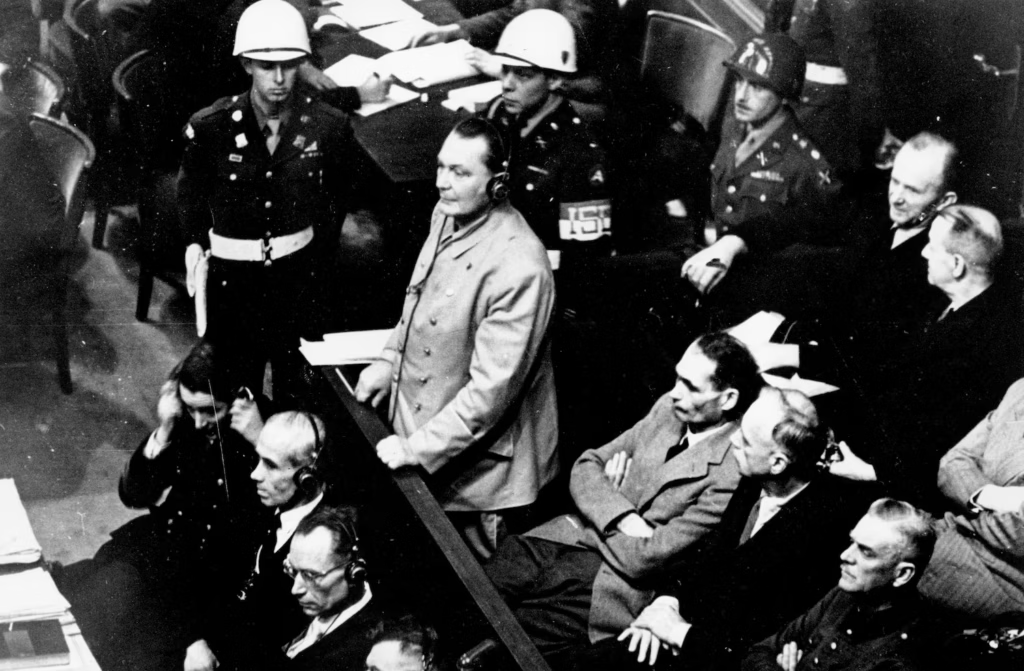
After the war, Holocaust survivors received a pension smaller than that granted to the surviving SS guards and the widows of those who’d died. The evidence against the Nazis presented at Nuremberg in 1946 was overwhelming; indeed, it weighed three tons. At the trials, the usual Nazi defense was, “I was following orders,” or, “The gods I worshipped demanded death.” Nevertheless, the court ruled that a soldier under orders who participates in what any adult of average intelligence would recognize as a crime is as guilty as the authority who issued the order. Henceforth, to paraphrase US Supreme Court Justice Abraham Fortas, no one should ever believe that authority must always be believed. This authority included God Himself, for if God is omnipotent, given the Holocaust, He is not good. If He’s omniscient or omnipresent, His powers are surely limited.
After the war, the German actor who’d played Jesus before the war in the Oberammergau Passion Play applied to play that part again. When Hollywood director Billy Wilder, who’d lost three of his family to the Nazis, learned that the applicant was a former Nazi, Wilder told the play’s director to tell him, “Only if we use real nails.” Understandably, that was the post-war mood in the Jewish community.
Have we learned a lesson in all of this? Though typically in recent years, six thousand books about the Holocaust are published annually, the AfD, a right-wing German political party, calls it, “just a speck of bird poop on an otherwise proud thousand-year history.” Furthermore, 20 percent of Americans under age 30 believe the Holocaust never happened; many English speakers call it “the holohoax,” and the American minister Rev. John Hagee says the Holocaust was just part of God’s plan to return the Jews to Israel.
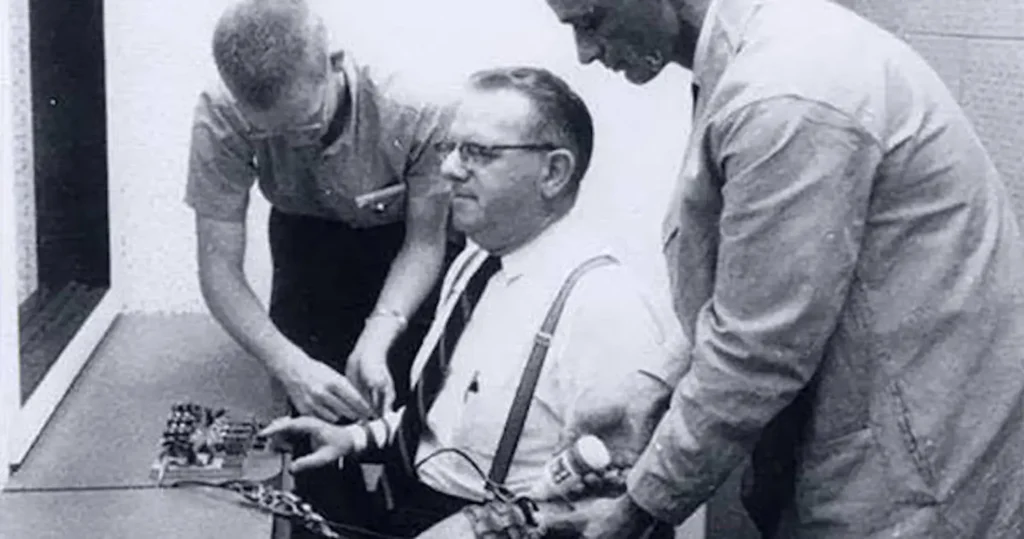
Could it happen again? Consider this: when Stanley Milgram, the American social scientist, used his imitation but very realistic shock generator at various sites in Germany, 60—85 percent of the sheepish volunteers delivered 450 volts, the maximum they thought, to another volunteer who was wise to Milgram’s game. In fact, it was 15 volts. If the volunteers balked, they were instructed by a tall stranger in a lab coat, “The experiment depends on it.” The “shocked” test taker had done nothing worse than answer a few questions incorrectly. Milgram titled the book summarizing his experiment, Obedience to Authority.

Sterling Eisiminger
Dr. Sterling (“Skip”) Eisiminger was born in Washington DC in 1941. The son of an Army officer, he traveled widely but often reluctantly with his family in the United States and Europe. After finishing a master’s degree at Auburn and taking a job at Clemson University in 1968, he promised himself that he would put down some deep roots. These roots now reach back through fifty years of Carolina clay. In 1974, Eisiminger received a Ph.D. from the University of South Carolina, where poet James Dickey “guided” his creative dissertation. His publications include Non-Prescription Medicine (poems), The Pleasures of Language: From Acropox to Word Clay (essays), Omi and the Christmas Candles (a children’s book), and Wordspinner (word games). He is married to the former Ingrid (“Omi”) Barmwater, a native of Germany, and is the proud father of a son, Shane, a daughter, Anja, and grandfather to four grandchildren, Edgar, Sterling, Spencer, and Lena. (Author Head Shot Augment: René Laanen.)