Human Sintering & The Theory of Water
“She has got me thinking of something else: the idea of the Sovereign Individual, self-governing, self-propertied, autonomous; steered by a State of Self toward whatever destiny, fame, or influence it considers its right. A state whose self-assertion is shadowed by hatred and fear; ultimately, a fear of what it has done to its sense of virtue and what it has taken and used and exploited to make itself larger and louder, to satisfy itself, and then to make itself ‘safe’ from others.”—William Ramp
The Hubris Review
By William Ramp
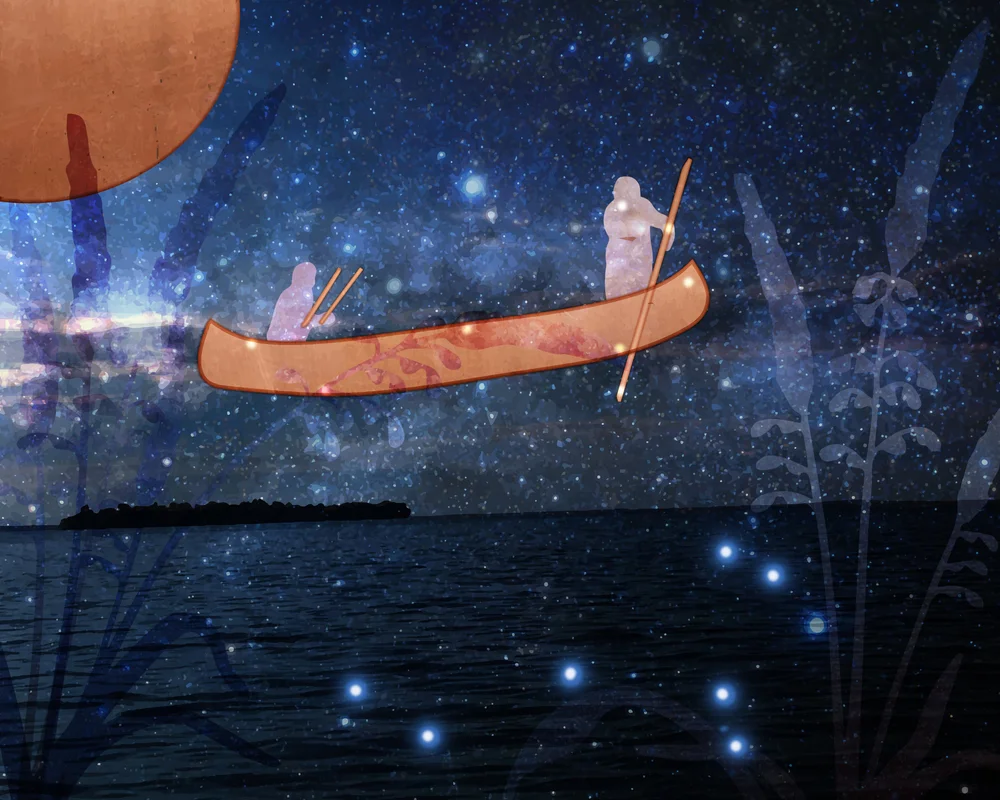
 LETHBRIDGE, ALBERTA Canada—(Hubris)—May 2026—The text that follows here was sent to me by my editor, Elizabeth Boleman-Herring, in the spring of 2018, eerily coincident with a time in which I fell from a giddy height into deep self-recrimination in the space of a mere three weeks. It’s an excerpt from Wendell Berry’s novel, Jayber Crow, which Boleman-Herring had admonished all of us here at Hubris to read back then:
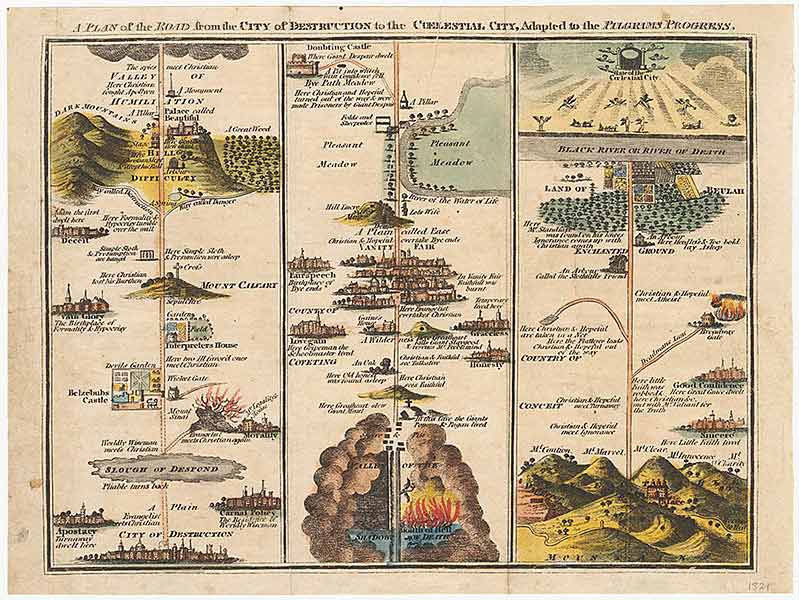
“If you could do it, I suppose, it would be a good idea to live your life in a straight line—starting, say, in the Dark Wood of Error, and proceeding by logical steps through Hell and Purgatory and into Heaven. Or you could take the King’s Highway past the appropriately named dangers, toils, and snares, and finally cross the River of Death and enter the Celestial City. But that is not the way I have done it, so far. I am a pilgrim, but my pilgrimage has been wandering and unmarked. Often what has looked like a straight line to me has been a circling or a doubling back. I have been in the Dark Wood of Error any number of times. I have known something of Hell, Purgatory, and Heaven, but not always in that order. The names of many snares and dangers have been made known to me, but I have seen them only in looking back. Often I have not known where I was going until I was already there. I have had my share of desires and goals, but my life has come to me or I have gone to it mainly by way of mistakes and surprises. Often I have received better than I deserved. Often my fairest hopes have rested on bad mistakes. I am an ignorant pilgrim, crossing a dark valley. And yet for a long time, looking back, I have been unable to shake off the feeling that I have been led—make of that what you will.”
In a single paragraph, Berry distills two key texts. One is Dante’s “Inferno,” central to the Roman Catholic tradition, though not in the canon of the Doctores ecclesiae. Its narrative guide is Virgil; for American settlers, long the first among classical writers. The other is John Bunyan’s The Pilgrim’s Progress, second only to the Bible, and perhaps the Westminster Catechism or the Psalms and Paraphrases, on the spartan bookshelves of those who armed themselves to settle and make manifest a Protestant fortress in North America.
Berry returns to these texts to have a word with the interior drama of the American collective psyche, formed in equal parts of righteousness and fortitude, sin and punishment, and now also disappointment, rage and contempt.
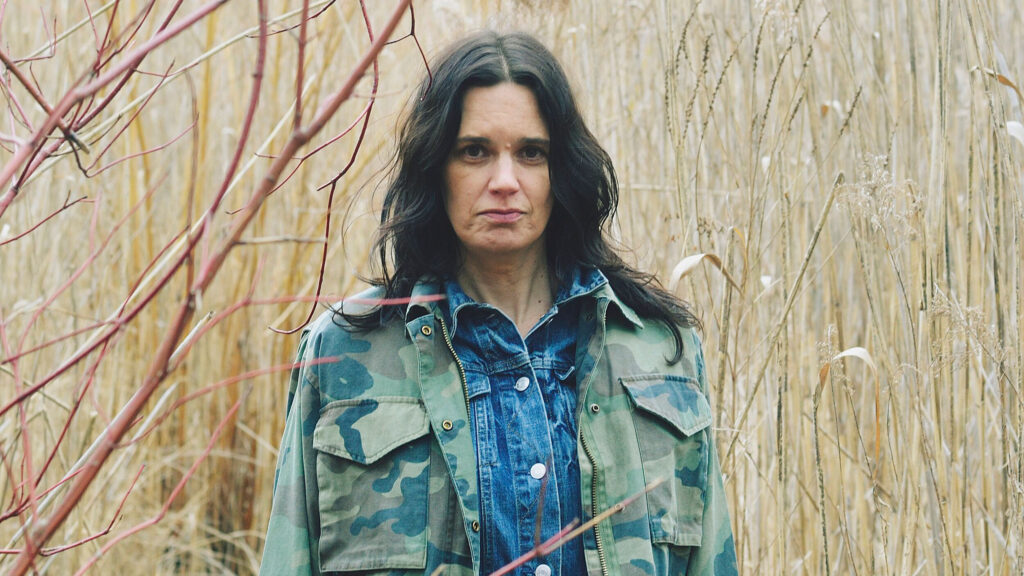
Facebook’s algorithm chose to dig it up as my “memory” of the day recently, and it caught me in the midst of re-reading chapter 12 in Leanne Betasamosake Simpson’s Theory of Water. Simpson’s Virgil, in a narrative-structural sense, was Gidigaa Migizi (Doug Williams), an Elder of the Michi Saagiig Nishnaabeg people and a good friend of a good friend. I encountered him at least twice some 35 years ago, was deeply impressed by his quiet presence, and should have learned from him more—but perhaps it wasn’t yet my time.
In Chapter 12, Simpson considers the possibility of a stateless, relational, and communicative nationhood, contrasting it to what we (in Canada) have at present; a (bi-)national state, now feverishly working to fortify and clarify its “territorial integrity” and autonomy. And to the south, another national state which claims it has no need of the rest of the world while bombing parts of it five thousand miles away into what it hopes will be submission and also contemplating the “taking” of two island nations, one rendered destitute by blockade. She does not explain this possibility in the language of political theory, but by telling stories of, among other entities, the pond lily. Not a great elevator pitch, but those don’t work all that often either and the pond lily example grows on you.
She has got me thinking of something else: the idea of the Sovereign Individual, self-governing, self-propertied, autonomous; steered by a State of Self toward whatever destiny, fame, or influence it considers its right. A state whose self-assertion is shadowed by hatred and fear; ultimately, a fear of what it has done to its sense of virtue and what it has taken and used and exploited to make itself larger and louder, to satisfy itself, and then to make itself “safe” from others.
Both national and personal states, formed in each other’s image, harbor a secret self-hatred, in that the Other reminds it of what it has done, denied doing, erased, and cannot admit because its habitual mode of communication is self-promotion and advantage-taking.
I think of this as I remember times I’ve carried a sense of insult against others who thought little of me, while at the same time obsessing in shame over details, real or imagined, of that little; effectively becoming a spectator at my own conjured stoning and holding the cloaks of the stone-throwers.
Or the times I have raged against injustice, thoughtless or deliberate, while unable or unwilling to live up consistently to the virtue in such rage.
I also wonder how we can individually and collectively imagine a stateless and unsovereign way of living, and turn to one that is relational, communicative, and defenseless, when everything at present seems to argue against it, whether we are oppressor or oppressed.
Certainly, exhortations to “change the world” haven’t worked as intended.
How can “ignorant pilgrims” sense a leading back from an abyss, or an attunement to “fairest hopes” somehow present in very bad mistakes?
Perhaps by revaluing the alleged virtue of productivity and self-‘worth’, and the so-called waste of time spent in wandering. Perhaps also by decoupling hope from optimism but also seeing the minor opportunities that, like frozen water, can crack and destabilize major barriers.
Or perhaps through a human equivalent of the process of sintering or frittage; our small and often few individual good acts, each light as a snowflake, near as light as air, but accumulating with those of others to form a new material under their slow, additive pressure; a dense, tough layer that resists wear, damage, or disintegration.
As such small acts did in Minneapolis in the fall and winter of 2025-26.
Leanne Betasamosake Simpson explores such possibilities in Theory of Water in ways different from, but somehow still imaginable in communication not only with those of her mentor, Gidigaa Migizi, but also those of her very distant literary cousin, the settler-dissenter Wendell Berry, in Jayber Crow.

William Ramp
William Ramp is (semi-)retired from the University of Lethbridge, Alberta, Canada where he taught social and cultural theory. He’s disconcerted to find himself in his eighth decade, nursing a long, idiosyncratic memory and driven ever faster forward in time by winds that also chase ahead of him massive drifts of never-to-be-finished writing and neglected documentation. He is definitely NOT at peace with old age nor ill health but is kept in line and enlivened by adult children, friends, extended family, and fortuitous encounters, online and off. He rages at the persistence of various of his garden-variety demons, but suspects he should calm down and have them in for coffee and a chat while there’s time. Though a dyed-in-the-tweed academic, he has resumed a love for incidental writing left off in high school. It’s how he keeps his footing now in perilous times and in free-range conversations (too few now, alas!). He harbours more faults than Cascadia and concomitant regrets but tries to turn them to such redeeming uses as remain possible. His interests are largely intellectual and cultural but he also delights in old books, obsolete tools and machinery, and the spring chorus of frogs. And in grafting strange sprigs to unsuspecting trees, and making dangerous use of hammers, knives, stepladders, a machete, and (in the near future) a scythe. He persists in watching thunderstorms outside in bare feet, and in talking to corvids. He gravitates to things kicked to the curb of modern life, bumbling waywardly around the dimming porch-lights of past cultures with Walter Pater and his 19th-century ilk. He tries not to let frustration with the passionate intensity of the misled or the whirling gyre of bad politics and worse news eclipse an affection for strayed and refugee things and people of this world. Banner photo used by permission of Bradley Rawlings; headshot image augment by René Laanen, Sr.