Liberate Your Pansies: The Rebels of January
“I watched while JC shuffled slides across a light table, flipping them into carousels for the next week’s lectures. I could sit here for hours. He’d show me slides from his travels. This was my crash course: Plants and Gardens of the World through the Lens of JC Raulston. He didn’t have a family. He had his plants and tricks and trips. They had become his world when he was an isolated, ostracized gay boy in 1950s Oklahoma. In later years, JC would recall, ‘As a boy, I played with plants because I knew they wouldn’t hurt me.’”—Jenks Farmer
Plant People
By Jenks Farmer

 COLUMBIA South Carolina—(Hubris)—January/February 2026—The uncles, men who came of age in the 1950s, gently taught me life lessons. You might think a gay country boy from the rural South wouldn’t have gay uncles, but I did. The first in my life were Daddy’s brother, Buist, and his lover, whom the whole family called Uncle Michael. Then there were a host of other confirmed bachelors, garden mentors, antique dealers, and obvious-to-me “uncles.”
I had never wanted to be their kind of gay. They seemed pretentious—despite having been cowed into careers in interior designer and directing bands—not to mention mostly closeted. But when I got my first real job developing Riverbanks Zoo’s Botanical Gardens, I started to appreciate them, to lean on, and even to seek their wisdom.
Jim Martin, a Southerner originally from an Ohio dairy farm, was my boss at Riverbanks. He didn’t have the extended “family” that I did. He appreciated these erudite uncles, the old queen crowd—the ones I sometimes took for granted. So, I was happy to have them on my side during perennial border design presentations. I lacked Jim’s experience and needed backup for some of my wilder design ideas.
Full of skepticism and empowered by authority, Jim often said, “OK. The timing sounds good. Now, show me how it works on the color wheel.” I hate the color wheel. It’s a collection of unchallenged rules based on someone else’s ideas of beauty. I wanted to roll my eyes and belt out the line from that Bronski Beat song, “Things that you’re liable to read in the Bible, they ain’t necessarily so.”
The uncles screamed, “Gershwin said it first in Porgy and Bess!”
Thanks, y’all.
I wanted Jim to see beyond the accepted rules. But for the time being, I said, “I’ll try to find an example,” and turned away, rolling my eyes. Why did everything have to be proven with Jim? Couldn’t we, the entire creative team, be the ones to prove something? He was the boss with a great team. Why couldn’t we be the ones to build a new world and ignore the old rules?
I should just pick up the phone and call my interior designer Uncle Michael and ask him how I could show that a dark brown carex, a burgundy crinum, and warm yellow “Autumn Minaret” daylilies work together. He would give me the goods: “You know Churchill’s library was done in exactly that color palette. It may seem dark and heavy for a flower garden but tell your boss you’re inspired by that interior color palette. Add a bit of aqua blue and greens all around to keep it lively.”
The uncles had survived their lives by playing roles: offering lessons on culture and making themselves valuable in a public way but hiding their love and sex lives from the public eye. One of the best at doing this happened to be someone among the country’s most connected and respected horticulturists: Dr. JC Raulston.

Dr. Raulston gave lectures around the world. He personally knew the elite of English gardens but also the trendsetters of Spanish, Russian, Korean, and Japanese horticulture. We had connected back in college when I had tried to do graduate work with him at North Carolina State, but he had sent me packing.
“No way,” he said. “You have to leave. Go to Seattle. You’ll find a whole new world of creative people, sexy gay guys, and the most amazing plants and gardens in this country. You can always come home.”
I did both.
Since moving back to the South for the job at the newly envisioned, not yet created Riverbanks Botanical Garden, I had frequently stayed at Raulston’s home in Raleigh and hung out with him at his job at North Carolina State. JC’s word was gold in any argument when Jim required validation.
On my next trip, I put my problem to JC like this: “I can manage the current plants and the designs, but I don’t know how to satisfy Jim. How can I set a plant agenda with immediate results and a long-term run? We should be breaking down barriers, but he’s making me grow out all the pansies for the Zoo. It’s going to look like someone threw a quilt on the ground, complete with a fringe of peacock kale puffs.”
I watched while JC shuffled slides across a light table, flipping them into carousels for the next week’s lectures. I could sit here for hours. He’d show me slides from his travels. This was my crash course: Plants and Gardens of the World through the Lens of JC Raulston. He didn’t have a family. He had his plants and tricks and trips. They had become his world when he was an isolated, ostracized gay boy in 1950s Oklahoma. In later years, JC would recall, “As a boy, I played with plants because I knew they wouldn’t hurt me.”
I knew he was considering what to tell me. Eventually, he said, “As your boss, as the face of the Zoo, Jim is compelled to make pretty and expected plantings. You have to learn to do that well because it is expected of Jim, and therefore you. But you can help people see beauty where they’ve never seen beauty before.”
He paused, considering. “Remember when we went to the premiere of Priscilla Queen of the Desert in Seattle? Afterwards, you walked me through the Asian community garden and showed me all those colorful Asian greens you loved.”
I nodded, remembering yards of pink lame flowing, rainbow colored ostrich feathers, burgundy organza, and chartreuse frills. Was he going to reminisce about a drag movie now?
“They’re all the same plant as collards, turnips, and mustard greens—Southern winter staples that you’ve grown and eaten your entire life.” He let that sink in, then said, “Do them.”
The connection hit me like a pre-Thanksgiving frost. Of course! The vegetables Southerners had been growing for generations that I now sort of looked down on, humble, “shack plants for poor people”—had colorful Asian cousins. Purple Osaka mustard with its wine-dark, frilled leaves. Golden mizuna like edible fireworks. Glossy tatsoi forming perfect rosettes against frost-touched soil. I’d met them all during my graduate school years in Seattle. If I planted collards with pansies, people would sneer, but crinkle leaf gray kale would be new here and it’d be spectacular with antique rose pansies and Elizabeth Arden tulips. I went to sleep and drifted off into a kaleidoscopic dream of Seattle fog, purple mustard, and glossy tatsoi. I woke up with the words that would become my mantra: Liberate the pansies!

I knew that to liberate the pansies, so to speak, I had to get on board our greenhouse manager and grower. She was a salt-of-the-earth sort of redneck girl who loved collards. I commandeered space behind the tiger exhibit—sun, visibility, and a hose bib. By October, we had flats of purple mustards, golden mizuna, rainbow chard, and red kale ready to plant. Each flat was a small rebellion.
The main trial area was an abandoned plot between Public Restroom Two and the Reptile people’s smoking area. Near the Flamingo Gift Shop, orange sherbet tulips swayed among burgundy mustard leaves. In the whisky barrels around Kenya Cafe, lacquered, Kelly-green tatsoi rubbed against pale blue pansies. Tatsoi, aka flat bok choy, I started calling spoon mustard and it is still a favorite. Easy from seed, never harmed by cold, it’s beautiful and delicious.
The Red Russian kale grew as tall as the children who stopped to touch its pink-tinged leaves, asking “Can you really eat that?”
We even included in old reliables such as parsley and celery and, of course, low-growing, heading collards.
We documented everything—production schedules which would be shared with commercial growers for next year; frost responses so we’d understand best value plants. We noted that pesky rabbits hated the mustards—too spicy. And of course we photographed color combinations. We took sexy photos—dewy leaves backlit by winter sun, frost crystals on tatsoi, the way mizuna seemed to glow chartreuse against dark mulch. Finally, we were confident and ready to invite the press to the Gardens to celebrate these cool new plantings and tease the public with a taste of what the celebrated new Botanical Gardens would do. Next season, we’d work with growers and press to entice homeowners to buy and grow these plants, too.
Jim used his extensive network to make that coming-out plan for the following year. Color photos and promos ran in the newspaper and whetted the public’s appetite for these new plants. The city committed to hundreds of veggie flats for fall. A commitment like that made it profitable for wholesale nurseries to grow our unusual plants, which meant homeowners would be able to buy them, too.
Columbia was soon blanketed in purple mustard, chartreuse mizuna, red Russian kale, crinkly parsley, and glossy tatsoi. Suddenly, the old boring palette of pansies and peacock kale had a whole new level of texture, color, and height. Front yards that had been dull all winter now stopped traffic. Garden clubs were suddenly cool again.
Jim continued to work his magic on TV and in slide lectures. We were doing what the Gardens were meant to do: stimulate the local horticulture industry. Homeowners got cool new plants, nurseries made money, and we got accolades. The concept wasn’t new. A few creative individual gardeners across the South had been doing it for years, but we got to do it on a grand scale, to test the boundaries, to popularize more and more veggies, and to showcase greens as winter garden plants. We shared information with other gardens, too. The next year, the first International Flower Show at EPCOT featured veggies.

A year later, JC asked me to do a slide presentation at NC State. I called it “Liberate Your Pansies.” A young graduate student was looking for research trials focused on commercial nursery production. During my lecture, he saw an opportunity for doctoral research. That young man spent the next few years doing much-needed research that brought these Asian veggie plants to a wider audience. He continued that research even after he became a professor—Dr. James Gibson at the University of Florida.
On the heels of this success, Jim Martin and others seemed to buy into my vision a bit more. It made sense to work with plants that had a Southern history or at least had relatives that thrive in our climate. The same went for design. Looking to places like Britain or Philadelphia for inspiration would always lead to failure. No need to rehash or glorify the past. We looked, instead, to Southeast Asia, the Caribbean, Florida, and even Mexico. We wanted to change the usual approach. I’d learned to look back, then to expand my Southern roots. Rather than focusing on similar cultures, we focused on climates with similar temperature, rain patterns, and soils, and changed the focus to sun intensity, breezes, shade, and timing.
The liberation involved far more than plants. It was about seeing beauty where others saw only utility or poverty. It was about trusting your own eye over someone else’s rules. It was about the uncles who had survived by playing roles, filling their real lives apart from their professional lives—strictures the younger generations might not be bound by.
JC never got to see that future fully realized. But he saw enough to know that teaching a gay country boy to look at collards differently was about more than horticulture.
The uncles loved a good double entendre, and “Liberate the pansies” had multiple layers of meaning they appreciated. Free the garden from tired combinations. Free yourself from other people’s definitions of beauty. Free young gay men from having to hide whom they love along with what they create.
These days, walk through any Southern garden center in October and you’ll find flats of Asian greens next to the pansies. Purple mustard, mizuna, tatsoi, bok choy, and ornamental kale that actually look good. Most people don’t know they’re eating salad greens all winter from their flower beds, don’t know there was ever a time when these plants were considered too humble, too ethnic, too other to merit a place in respectable gardens.
That’s how liberation works, as we free ourselves (and/or our gardens) from expectations, from constraints, from other people’s rules. Look back to your roots, then look wide to what else is possible. Sleep on it. Dream crazy dreams. Pull in your friends and supporters. Change comes.

Editor’s Note: Jenks Farmer’s new book is a candid primer and reminder of horticulture lessons for the Deep South. “It’s my Hort 101 textbook with 25 years of notes added and plenty of bs scratched out,” he says. Farmer is one of four authors who will be inducted into the South Carolina Academy of Authors Hall of Fame in 2026. Find his books only on his website: www.jenksfarmer.com.

Jenks Farmer
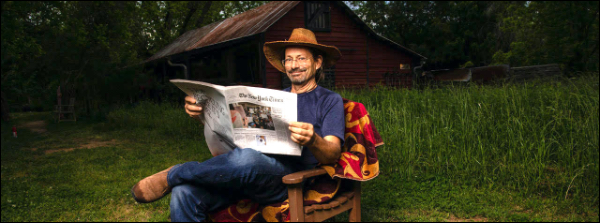
Jenks Farmer is a renaissance plantsman. He fell for plant sciences at Clemson University, for botanical garden design at the University of Washington, and for the natural world during an early education from a family of artists, musicians, and farmers. For 20 years, Farmer led teams to plant and establish the vision for two of South Carolina's major botanical gardens; Riverbanks Botanical Garden and Moore Farms. These gardens as well as his designs for homes, museums, and businesses have received awards and delighted hundreds of thousands visitors with the joyful, easy exuberance of hand-crafted gardens. An engaging storyteller and teacher, Farmer has established multiple internship programs and is talented at motivating people of all ages and from all walks of life to get outside and get their hands dirty. Farmer has lectured for groups as varied as the North Carolina State Agricultural faculty, the Smithsonian, Wave Hill, scores of Master Gardeners, and, of course, his grandmother’s Allendale Ladies Afternoon Reading Club. His writing has been published in "Organic Gardening" and "Horticulture," and his photos in the "Royal Horticulture Society Magnolia Quarterly." He is the author of Funky Little Flower Farm, Gardening with Crinum Lilies, and Deep Rooted Wisdom; Lessons Learned from Generations of Gardeners. Farmer lives with his husband and family on an 18th-century South Carolina farm, now the site of a pioneering mail order nursery specializing in organically grown plants of the genus Crinum. (Banner Photo: Paisia Photography; Contributor Photo: Lonnie Webster/Augmented by René Lannen.)
4 Comments
Hall Easton
Delightful, absolutely delightful and tasty too! Thank you…..
Helen Yoest
Jenks, you write and design like a poet! I always appreciate learning from you. I’ve seen many of your designs, and they are STUNNING!
Jenks Farmer
Thank you
Ginger Berglund
Wonder/full how the times, and we, change. Thank you for documenting with such enchanting writing! A lovely preface and frame for a day of getting dirty. En/joy!