Pave Paradise
“But somewhere along the way, as always happens, everything changed. The neighbor across from us expanded a business that previously didn’t encroach on our street, cutting down two magnolias and a couple of pines (the hilarious mockingbirds that crooned at 3:30 a.m. flew away, never to be seen or heard again). Down the block, someone felled a huge Linden tree—I had often inhaled its familiar sweet scent each June when writing at night near an open window. Not saying everything was perfect—a violent death struck one family, and a wandering pit bull frightened our kids at times—but all in all not much happened. Though not far from an intersection, it was easy to get in and out of the street on foot or by car—there was never any traffic congestion.”—Kathryn E. Livingston
Words & Wonder
By Kathryn E. Livingston

“Don’t it always seem to go/That you don’t know what you’ve got ’til it’s gone?/They paved paradise/Put up a parking lot.”—Joni Mitchell
 BOGOTA New Jersey—(Hubris)—September/October 2025—A few weeks ago, a fellow rang our doorbell and said he was in the neighborhood doing some work. Did we want our driveway paved?
Our “driveway,” which consists of a smattering of scraggly pebbles strewn between the house and two spruce trees, is a source of mud and pine needles, and the path to our two-car garage (that has never once housed an actual working vehicle unless a kayak counts) is a narrow swath of grass and an ever-expanding blackberry patch which yielded enough for five pies this summer.
My husband, who for a living plays a musical instrument invented in the 1700s, replied, “No.”
“No?”
“No.” And then I heard him say, “We like the dirt.”
“You like the dirt?
“Yes.”
The man turned on his heel and stalked away, scratching his head and probably wondering at our lunacy. We laughed aloud.
But the truth is, we do like the dirt and blacktop is the last thing I want to see in my yard (though some day, no doubt, new owners will view things differently). Paving stones would be possible, though I’m afraid the tree roots wouldn’t survive the digging, and I view trees like children—basically, they rule.
I don’t live in paradise by a long shot, but perhaps I once did. When I moved from Washington Heights in Manhattan to a mile-square New Jersey town 40 years ago, my new surroundings seemed quite idyllic. At the top of our dead-end street were pine, oak, and maple trees, magnolias and mockingbirds. The local park harbored neither a plethora of pigeons, broken glass nor intoxicated bums (important to a mother of a then two-year-old boy), and cars rarely if ever roared by at night. Our former apartment building—where our septuagenarian, widowed landlady had been beaten up by thugs or drug dealers—didn’t seem an ideal place to raise a child (let alone, eventually, three), so off to the “suburbs” we went.

Our one-bath, three-bedroom house (built in1905) on a modest lot nevertheless was home to four pear trees, an apple tree, a mulberry tree, a huge blackberry patch, vines of delicious concord grapes, a rhubarb plant, a plum and a wild cherry tree (now deceased), mint, opossums, woodchucks, a skunk or two, and the occasional praying mantis and garter snake. (A neighbor suggested that the folks who’d lived here before must have been trying to “live off the land.” I don’t know, but we did find a wine press in the garage). As our family grew, our three boys played basketball, hockey, or rode bikes in the street. They sledded down the hill in the winter and made snow forts under the spruce. They climbed over the fence in the backyard to attend the local high school and played in the marching band.

But somewhere along the way, as always happens, everything changed. The neighbor across from us expanded a business that previously didn’t encroach on our street, cutting down two magnolias and a couple of pines (the hilarious mockingbirds that crooned at 4 a.m. flew away, never to be seen or heard again). Down the block, someone felled a huge Linden tree—I had often inhaled its familiar sweet scent each June when writing at night near an open window. Not saying everything was perfect—a violent death struck one family, and a wandering pit bull frightened our kids at times—but all in all not much happened. Though not far from an intersection, it was easy to get in and out of the street on foot or by car—there was never any traffic congestion.
Fast forward several decades and 20 cars can easily be backed up at the traffic light at rush hour, Amazon and other delivery trucks speed up and down the hill, the business across the way employs workers who take up the parking spots, a house down the road has morphed into a popular restaurant, and life here in general is no longer quiet and calm (though with three boys it never was exactly that). The chill vibe of yore, however, has definitely changed, and traffic spills over from the once-sleepy nearby city of Hackensack, now home to a glut of luxury apartments, its iconic diner replaced by Starbucks, New Jersey Mikes and the like.

But tucked in between all of this is the minuscule White Mana, a retro hamburger joint that opened its doors in 1946 (the original—located in Jersey City—debuted at the World’s Fair in 1939 and is also still in business). Hackensack’s teensy place has always been packed, a reminder that not everyone wants to pave paradise. I’m not fond of red meat, but this miniature hamburger joint (which, it’s been said, has been known to sell 800 to 1,000 sliders a day) cheers me up every time I drive by, with its happy throng of customers seeming to metaphorically flip off the tall buildings and new construction surrounding it.
Though change is inevitable, progress is not. For me, loss of wildlife, trees, space, and quiet isn’t progress at all. I hold on to what I can, surprised just the other day by a possum passing under our bay window. And at least for the local carnivores anyway, time stands still as they chow down on “the award-winning sliders” (perhaps best described as small, juicy hamburgers served on small soft buns with lots of onions and cheese and, in this case, served in a very small place).
If only the mockingbirds would come back. First thing in the morning, they were good for a laugh, which we all certainly can use these days.

Kathryn Livingston
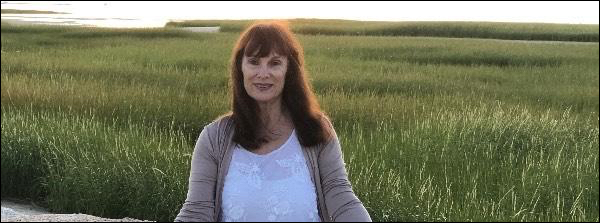
Kathryn E. Livingston was born in Schenectady, New York and lived there in a stick-style Victorian house until she left for Kirkland College (the short-lived women’s coordinate college of Hamilton College in small-town Clinton, New York). In l975, with her BA in English/Creative Writing, she moved to New Paltz to become first a waitress at an Italian restaurant, and then a community newspaper reporter. A few years later, she married a classical clarinetist she had met in high school and moved to Manhattan (Washington Heights), beginning a job as a trade magazine editor the day after their wedding. A few years later, after picking up an MA in English/Education at Hunter College, she became an editor at the visually stunning American Photographer. Motherhood (three sons) eventually brought her to suburban New Jersey, close enough for her husband to moped home for dinner between rehearsal and performance at the New York City Opera. Between baby diaper changes and boys’ homework assignments, Livingston toiled as a freelance writer on the topic of motherhood for numerous mainstream magazines. She also co-authored several parenting books, several photography books, and eventually wrote a memoir of her anxiety-ridden but charmed life and her path to Yoga: Yin, Yang, Yogini: A Woman’s Quest for Balance, Strength and Inner Peace (Open Road Media, 2014). With the kids now grown, and the husband still playing notes, Kathryn enjoys fiddling with words, writing her blog, puttering in her garden, and teaching the occasional Yoga class. (Author Photo: John Isaac/Author Head Shot Augment: René Laanen.)
2 Comments
Janet Kenny
Kathryn, your essay touched my heart. The same experience is happening in Hervey Bay, Queensland, Australia where I now live. Though both originally New Zealanders we worked and lived in London and Sydney. When my husband brcame ill we discovered this coastal town made up from five fishing villages. More birds than you would believe possible. This is changing. In many similar ways. You described the pain and the priorities beautifully. Essays like yours are needed. Thank you.
Janet
Kathryn
Thank you so much for your comment, Janet; it is lovely to hear from a kindred spirit so far from my NJ home. It sounds like you live in an amazing place! It’s so hard to watch things change when we know the changes are not for the better. Hopefully there will always be places where nature is valued, but the personal paradises we love so much are certainly endangered these days.