Two Arrivals
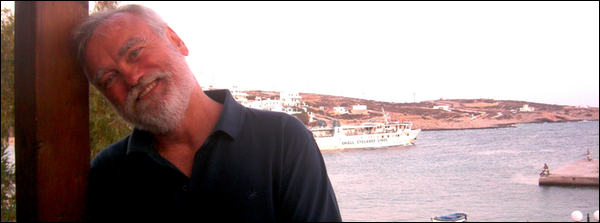
“And it wasn’t only Giórgis’s rental that felt like a place the Cyclops could live in. This whole island could have been Homer’s Land of the Cyclops, with its rocky coast, its arid terrain that sustains little more than goats and sheep, along with a few small gardens and scattered fields of barley cultivated as fodder by the locals, all of whom are either shepherds or the descendants of shepherds. Even my landlord, who works for the phone company, has the local franchise for propane gas and cuts all the local men’s hair, raises sheep and goats.”—Don Schofield
Imagination’s Favors
By Don Schofield

Author’s Note: What follows are two chapters from my memoir, From the Cyclops Cave, due out this month from Open Books Press. In the first excerpt it’s August, 1980. I have left America for good, living out my dream of moving to Greece. I’m in Syntagma Square, waiting for the one person outside of America I know. He hasn’t arrived yet. I’m afraid he might not show up at all. The second excerpt, set in the mid-‘90s, recounts how I discovered the Cyclops Cave, that primitive Cycladic hut that became a sanctuary of sorts, a place I kept returning to, for solitude, for inspiration, and, in spite of myself, for connection. A place I lost. The core motif of my braided memoir.

Chapter 12
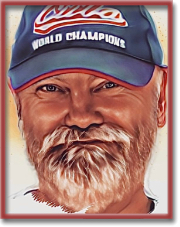 THESSALONIKI & ATHENS Greece—(Hubris)—November 2025—There I was, thirty-years-old, with most of my worldly possessions in a heavy blue backpack and a stained grey suitcase at my feet, leaning toward the oncoming traffic on Queen Amalías Boulevard, in t-shirt, cutoffs, and Birkenstock sandals—unmistakably American—nervously waiting at the Tomb of the Unknown Soldier for the only person I knew this side of the Atlantic, John Photiádes.
John was the Greek-American econ prof who befriended me in my last year of graduate school at University of Montana. When I told him I wanted to go live in Greece, he offered to teach me the alphabet and, as I made plans for my one-way trip, agreed to meet me when I arrived. He’d be in Athens anyway, he said, for his annual visit. But now he was late.
Where will I go if he doesn’t show up? I was mumbling under my breath, to some tourist hotel off Omónia? A youth hostel in the Plaka?
But this time I wasn’t a tourist, in spite of the gaggle of foreigners behind me clicking photos of Evzones ceremoniously high-stepping past. This time I was in the immensity of a dream. I had read Seferis, Ritsos, and Elytis. Homer and Sappho. I knew about the Language Question, the Catastrophe of 1922, the Military Junta in the 60s. Now I cared about Greece and Greeks. I was ready, on that sweltering afternoon in August of 1980, to do whatever it took to stay in this country that had so mesmerized me four years earlier with its landscape, its layers of associations with my own life, its venerable traditions that seemed to link me to time immemorial, its warm, generous people.
But why did I come? What was I after? What could possibly have led me to sell almost everything I owned, take a Greyhound from Missoula to New York City, then fly across the Atlantic and half of Europe, to come live in a country I’d only visited for a couple weeks, no job waiting, no relatives or friends? What could I possibly have hoped to find?
Those were the questions I was asking myself when John finally arrived, stepped out of a cab, and helped me put my things into the trunk. Once we were on our way, he told me we were going to Floka, a nearby pastry café, to meet his brother.
There, the waiters were rushing about in the oppressive heat hefting big trays laden with frappés, ice creams, and syrupy sweets. Sitting in a little square under the shade of a wide awning, at a marble table with ornate wrought-iron chairs, Nikos and Una, his Irish wife, stood up to greet us as we got out of the cab.
Youngest of the three Photiádes brothers, Nikos scarcely looked like his middle-aged sibling, the oldest in the family. Where John was light-skinned, a bit pudgy, with a wide face and a quiet laugh, Nikos was thin, much darker and not much older than I. He had quick eyes and an easy laugh. Una looked very Irish, with freckled skin and brown, shoulder-length hair streaked red from the sun. She too had an easy, charming laugh. After we ordered (a dish of vanilla ice cream for me, frappés for everyone else), John explained who I was and how we knew each other. Then we started talking about job possibilities for an American like me.
“Oh, you won’t have any problem at all,” Una laughed, gesturing almost as freely as her husband as she talked. “It’s easy to get private English lessons. Greek parents all want their kids to learn English, and many want them to go to America or England for university. You’re a native speaker, and an American, so you won’t have any problem getting as many lessons as you want. And you’ll make the equivalent of about $20 an hour.”
I was delighted to hear that. But it sounded too good to be true. “Won’t I have to have a work permit? I’ve heard they’re impossible to get.”
“No. Don’t worry,” Nikos answered, in perfect English, “Everybody works under the table here in Greece. And you’ll have your summers free. Nobody does lessons then.”
A little later we let John off at a square somewhere in the city center and Nikos and Una took me to their basement apartment in Kifissiá, a suburb 30 minutes north of the city. I couldn’t believe my luck: John had arranged for them to put me up for a few days until I could find my own place to live. On the way up Kifissías Boulevard, Nikos was snickering to himself as he looked at me in the rearview mirror, Una trying to hush him.
“What’s so funny?” I asked.
‘Where did you get those pants?” Nikos asked, bursting out laughing as Una turned red at his boldness.
“Shame on you,” she admonished, yet she was laughing too.
Nobody, it seems, wore cutoffs back then in Greece, not even on the beach.
A few blocks later, waiting at another traffic light, Nikos asked me what I had studied at his brother’s university,
“Creative writing,” I proudly responded.
“What? What’s that?”
“I studied poetry.”
“You mean literature, right?” Una asked.
“No, I worked with other writers, learning how to write poetry.”
At that, Nikos burst out laughing even harder than before. “You mean someone can learn to write poetry at a university?”
The more I tried to explain, the louder he laughed.
I stayed a couple of weeks with them in their small apartment, Nikos now and then chuckling and winking at me as he whispered, “Poíisi” (Poetry) while Una wagged her finger at him, “Kakós” (Bad)!
Once I realized how expensive apartments were in Kifissiá, I decided to move into The Old Mill, a hotel near Kefalári Square, a few blocks away, a three-story structure that had seen better days. Since it was August, the hotel was occupied mainly by Athenian matrons who for decades had been coming to the cool climes of Kifissiá to escape the summer heat in Athens. Every evening the ladies would sit in their summer finery on the small front porch of the hotel, fanning themselves and prattling away.

My second evening there, I went out to join them. I so wanted to understand what they were saying, but could only catch the most repeated words, málista (yes), entáksi (okay), diladí (in other words). That evening, and on many others, I tried to answer all the questions they asked in English over and over: where am I from? where do I work? how much am I paying for my room? what work does my father do? how could I possibly leave California?
Before I could answer one question they impatiently asked another, and before I could answer that, they started talking amongst themselves in Greek and French, which they seemed to prefer over English, laughing and chattering away as if I weren’t there.
As September unfolded, one by one the matrons returned to their homes in the city center, soon replaced by British and Irish expatriates, teachers at a nearby British private school. I remember Ian, the hotel manager, with a game leg; Pete, the brooding P.E. teacher; Ben, the wall-eyed Irish poet; and Zaina, lovely Zaina, the English teacher who had fled the civil war in Lebanon.
As the weeks passed, I started thinking about basic necessities—how to earn money and how to remain in Greece legally. The former proved easier than the latter. When the October rains came, people started responding to my ads in the Athens News for English lessons, just as Una had predicted. I was soon traveling to the homes of young Athenians, tutoring them for the American TOEFL and the British First Certificate and Advanced exams. I remember that whenever it rained, which it did a lot that fall, I would have to walk in the middle of Kolokotroni Street, where the flooding water was thinnest, as I made my way down to Kifissías Boulevard. When a driver rushed past, I’d leap onto the bumper of the closest parked car. Once I got to the boulevard. I’d make my way by bus or train to Psykhikó, Kolonáki, Néos Kósmos or other districts farther south, my shoes, socks and pant legs soaked, traveling an hour or more each way to teach a 50-minute lesson. A lot of commuting, but at least I was making money.
Lessons turned out to be easy come, easy go. Students would lose interest after one or two meetings, or their parents would decide that their child needed to study something else. Sometimes I wouldn’t get paid for weeks, in a few cases not at all. But private lessons were plentiful, and I was enjoying the access they gave me to Athenian lives I wouldn’t have encountered otherwise. I quickly grew fond of most of my students, who were as curious about me as I was about them.
Una was also right about the advantages of lessons: tutoring paid well, left me free for holidays and entire summers, and were always taken care of under the table. Of necessity, I wasn’t on file anywhere as working in the country. But I still had to maintain some kind of legal status, which meant that when my tourist visa expired (officially, after three months, though I could usually stretch it out to as many as six) I had to go to the Aliens’ Police to renew it.

As I remember, in those days we foreigners in the northern suburbs had to report to the police station in Maroúsi, a suburb just south of Kifissiá. The offices there had pea green walls, stained and streaked, with yellowing announcements held up by peeling tape. Behind the long narrow counters where we waited in line, tall dusty shelves were piled high with folders tied in bundles. At their grey metal desks, clerks and officials would be smoking and sipping coffee in tiny white cups, the women usually with brightly painted nails, men often with a long pinky nail, all indifferent, or so it seemed, to my inability to understand their rattled off instructions. “Fill out this form,” they’d say (or something equivalent), “and take it to Window Two, then go across the street and get two photocopies and 500 drachmas in stamps.” Or I’d be sent to such and such office upstairs (darker yet) for a signature, waiting again in one line after another, only to be told that I needed a paper I didn’t have, or that the person I wanted was on vacation or sick or working at another office, or I’d be given no reason at all for his or her absence, just left standing there with my mouth open, unable to find the simple words I needed to explain what I’d come for.
“Never mind,” my fellow residents at The Old Mill would reassure me, “Even if you’ve been turned down, you’ll eventually find the right person to get you what you’re after.”
“What you need,” Nikos told me, “is an expeditor.” The first one I found to help me, a Cretan who had Papa’s stocky build and was connected to some multinational in another suburb, was appropriately named Hercules. Whenever we went to the Aliens’ Police, he’d bring chocolates for the secretaries, tell dirty jokes to the supervisors, and take care of half-a-dozen cases at once, which meant I’d wind up waiting just as long with his help as without it. And as we were leaving, he’d tell me, more often than not, that he had had to pay so and so for a signature or the promise of help, which meant I owed him even more money. However, in the end, usually after several visits, I got what I was after, at first an extension of my tourist visa, and later, once I was no longer eligible for extensions, a residence permit.
I soon learned that I could renew my residence permit by leaving the country for at least one night every six months, which was a great opportunity to travel to Europe or the Middle East. But as much as visiting new, exotic countries fascinated me, I never really wanted to leave Greece. My heart was in my adopted country. I couldn’t see enough of it. That’s why I took off from Athens as often as I could, spending weekends, holidays, and whole summers in the islands.
Chapter 6

So many departures in my life, so many arrivals. Even here on Kýthnos I’ve arrived several times, the first being Easter of last year, when I came to find a place to rent the following summer. I had no idea where, or even if, I’d find something. I only knew I needed a quiet place to write, something simple and far away from tourists, some remote corner of the island, preferably on the sea. A place to be alone and mull things over.
I chose this island because I’ve always liked the harsh, elemental landscape of the Cyclades, and because it’s not far from Syros, the first island I spent time on when I came to Greece as a tourist in ’76, almost 20 years ago.
Once off the ferryboat that first visit, I drove to Hóra, the island’s main town, and tried to find a room for my ten-day stay. It turned out that there were no lodgings for visitors in the village (the first time I’d ever encountered that), so I had to get a hotel in Loutrá, a small, tourist town a couple kilometers farther north, famous for its therapeutic baths.
The next morning, I started my search, tootling around in my little red Lada as I have done on so many other islands, stopping at stores and tavernas, tourist shops and kiosks, even asking people walking along the side of the road if they knew of a place that might be available in July and August. To anyone who’d listen, I’d describe what I was looking for, giving them time to get over both surprises—that a foreigner, especially an American, spoke their language fairly well, and that a tourist, as they inevitably saw me, would want to stay by himself, far away from other tourists. Some would lift their heads upward while raising their eyebrows, the Greek way of nodding no, and say something like, “Nope, nothing like that around here.” Some would throw up their hands in dismay, “Why would you want to be so far away from other people?” And some, slightly irritated, would turn to whoever else might be near, “Can you help this guy out? I have no idea what he’s looking for?” Such exchanges always reaffirmed my foreignness, to the person I was talking to, and, even after so many years, to me as well.
Each afternoon around siesta time I’d return to my hotel, report that day’s vain effort to Dimítris, the owner, who, from the day I arrived, was curious about me (having lived in Chicago for several years, as I recall him saying) and to his mother, a widow always dressed in black, who was even more curious. I’d tell them where I’d asked, who sent me to whom, and they’d interrupt me now and then to question each other, “Was that so and so’s daughter, so and so’s cousin, so and so’s neighbor?” They’d sympathize with my frustration, and sometimes offer me new suggestions, none of which ever panned out.

On the Monday after Easter, with only three days left, I decided to search the southern part of the island, around Driopída, the island’s second largest village. On my first stop there, at a little general store next to the bus stop and the big “NO PARKING” circle (cars weren’t allowed inside the village itself), where the road stops and busses turn around, I asked my usual question. Instead of dismay or scorn, the shop owner, without raising his eyes from the register, simply said, “Mállon (Maybe),” then wrote a name and number on a scrap of paper and handed it to me, saying, still without looking up, “Call Giórgis. He might have something,” then turned to wait on the next customer.
If I hadn’t seen his kind of behavior so many times before, I would’ve been irritated by the owner’s seeming rudeness. Instead, I simply went to a nearby kiosk and called the number. I got Giórgis’s wife, who told me to come to the church, a short ways into the village. She’d meet me there.
A short, thin woman in her early forties, with a certain grace in the constant motion of her arms and hands, Mariétta stood at the big wooden doors of Driopída’s main church, extending her hand as I approached. After we exchanged greetings, she led me to their house, there on the town’s main cobbled lane (the only door with a doormat in front), lined with shops on either side, busy with passing shoppers, most greeting her and eyeing me curiously. As we entered, Mariétta explained that their house was once an ouzerí that used to serve a nice variety of ouzos and appetizers. That explained the long, narrow space I saw before me, crowded with stuffed chairs, a long couch, a glass-covered dining room table, a wooden counter at the back with a large TV (doily on top), framed pictures on walls and shelves, and two large white chandeliers dangling from the ceiling.

Sitting me down at that glass-covered table, Mariétta brought me the usual hospitality for a visitor, Greek coffee, served as always with a glass of water and a sweet, this time a cherry glykó tou koutalioú (spoon-sweet), and started asking me the usual litany of questions: where am I from, how long have I been in Greece, why did I come, am I married (she gave me a questioning look when I said no, but didn’t pursue the matter, assuming, probably, that she’d have other chances to take up this important topic), what is my work, how much do I make (she sounded disappointed at the small amount I stated), do I get paid in dollars (again disappointed), where do I live in Athens (she was pleased to hear “Kifissiá,” a northern suburb, supposedly for the wealthy), how much rent do I pay (an amount that seemed to please her), etc.
Interspersed among these questions were her answers to those I managed to slip in. They’re both from Driopída. They have one son, just now finishing high school. Her husband works for OTE, the state-owned phone company, but he’s also the one who brings those big propane cylinders to people’s houses, and, at a “shop” a few doors down, the one who cuts the local men’s hair. Yes, like many on the island, they keep a few goats and sheep. No, they haven’t lived in this house for long. They’re in the middle of building a new one, not far from here, now just a brick and cement shell, except for the ground floor, which is almost finished. As she was telling me how she keeps a few chickens and ducks on the top floor, Giórgis arrived with a friend.
We shook hands and Mariétta served each of us a glass of rakí and put a plate of feta cheese and olives in the middle of the table. Giórgis, about the same age as his wife, was well-tanned, with dark, unruly hair. Like her, he was thin and wiry, but unlike her his hands and arms seemed to move only when absolutely necessary. I don’t recall the friend’s name, only that, midway through the conversation, he leaned and whispered something to Giórgis, who replied, “American.”
To which the friend responded, not so quietly this time, “Okay, he’s American, but why does he have to have those whiskers?”

“Sout!” Giórgis hushed him, a finger to his lips.
Knowing it was getting close to siesta time, I quickly explained what I was looking for. To my surprise, no one—neither Giórgis, nor Mariétta, nor their friend—started asking me why I would want such a place. Giórgis simply said, “I think I have just what you want. Meet me tomorrow morning at the church and I’ll take you there.”
When I got back to my hotel a half-hour later, I excitedly told Dimítris and his mother that I might’ve found a place.
“Pou (Where)?” they both asked at once.
“Somewhere on the coast, below Driopída,” I said with a big grin, happy to be sharing my good news.
“Oh,” his mother responded, her expression quickly shifting to a scowl. “Why would you want to live with those people?”
And so I learned of the animus northern Kýthnioi have toward southern Kýthnioi, and vice versa, what turned out to be valuable information in getting along with the locals: even here on this small, remote island, there are outsiders.
The next morning, Giórgis seemed in a hurry, which is probably why he met me at the bus stop just as I was parking my car.
As we left the asphalt for a well-worn dirt road with lots of ruts and rocks, I tried to question him about the house, but he kept saying. “Just wait. See it first and then we’ll talk.”
Once we left the car at road’s end and, at Giórgis’ quick pace, descended the stone steps down to Zogáki, I started wondering which of the dozen or so houses on that cove would be his. But, to my surprise, with Giórgis walking several steps ahead and not saying a word, we went past all of them, then ascended a rocky promontory and made our way down to Kourí. Again I tried to guess which house was his, hoping it wasn’t among that dense cluster of dwellings at the far end. But we passed them all and followed the path up onto the headland, where a brisk, southern wind kept pushing at our backs and buffeting the choppy sea to our right. We’d been walking 20 minutes, and still no Giórgis house.

Descending toward yet another cove, he opened a sturdy wooden gate, shutting it behind me after I passed, then led me down some stone steps toward a clutch of houses, a dozen or so, just above the rocks to our left. To our right, waves were lapping close to our feet and, farther on, several small boats were tied to the rocks. As we passed a short, wooden dock with more boats bobbing on the abrupt waves, I was saying to myself, However quaint these houses and boats are, please don’t let his place be here. Much too crowded.
Luckily, he didn’t stop. Following the curve of the bay, we climbed over another jutting rock and down to a long, sandy beach. There were only two more houses on the cove. With Giórgis now a couple of yards ahead, and my heart pounding from the heat and from the distance we’d trekked so far, and even more from anticipation, I was asking myself, Is this it? as I looked at the house to our left, up just beyond the beach, behind two thick sea pines.
Giórgis kept going, though, heading toward the rocks at the end of the beach. No, not another cove! I bristled, thinking that neither of these two places was his, that we would have to hike over yet another windy headland.
But then he stopped, just below some steps up to a path that led to a little white chapel at the far edge of the cape. Turning toward me, smiling and raising his arm, he pointed up toward what was the very last house on the bay, a small, whitewashed hut in the Cycladic style, perched on the rocks just above us. Gesturing proudly, he declared, “This is it! This is the house for you. The Cyclops Cave!”

An apt name, it turned out, since not only did this Neolithic-looking hut and its wide veranda lean slightly toward the sea, not only did goat pens behind the house stretch out on either side, but also, as I saw when Giórgis took me inside, its low cement ceiling was insulated by whitewashed strips of bamboo and supported by eight rough-wood beams (actually old telephone poles, I learned later) painted dark blue, the ends of which jutted out unevenly from the front of the house in typical Cycladic style. And, most telling of all, the hut itself was built right into the rock. The wall of the kitchen and along the hall was the cliff itself jutting into the space of the Cyclops Cave, all whitewashed of course. Perfect!.
And it wasn’t only Giórgis’s rental that felt like a place the Cyclops could live in. This whole island could have been Homer’s Land of the Cyclops, with its rocky coast, its arid terrain that sustains little more than goats and sheep, along with a few small gardens and scattered fields of barley cultivated as fodder by the locals, all of whom are either shepherds or the descendants of shepherds. Even my landlord, who works for the phone company, has the local franchise for propane gas and cuts all the local men’s hair, raises sheep and goats.
Standing just inside the threshold, Giórgis turned to me and quipped, a glimmer in his eyes, “You can pretend you’re camping,”
When I looked at him quizzically, he continued, “There’s no electricity and no running water, but you’ve got gas lamps and gas burners for a stove. And I’ll leave you plenty of propane.”
Eyeing the battered pots and two well-used cast-iron skillets across from me, each hanging from a hook drilled into the rockface, a propane camp-stove on one side of the marble kitchen sink, a plastic dish-drainer and long board for cutting up all the veggies and fruit I’d be eating that coming summer on the other, faded red-checkered curtains draped over the shelves below the sink—I couldn’t have been more thrilled.
“And a fridge?” I asked, already knowing his answer.
He just raised his hands, shrugged his shoulders and pronounced the ubiquitous Greek response to any thorny difficulty, “Ti na kánoume (What can we do)?”
Then, after a pause, he added, “Whatever you want to keep cool, just hang it in the net I keep in the well,” and quickly continued, as if to preempt my next question, “Actually, you have two wells. Good water and bad water,” his eyes glinting even brighter once he saw my dismay.
“Good water, bad water?” I asked, completely baffled.
“I’ll explain in a minute,” he said as he turned to show me the main space of the two-room house. Besides the kitchen with its rock-wall set back a ways, there was, to our left, an open space, not quite a living room, lit from two sides by traditional, deep-silled, timber-framed windows, a divan in one corner and a round cafeneío table with two chairs in the other.
Off the small hall to our right, he showed me a surprisingly big bedroom, again with two deep-silled windows. The room had a small bed, no dresser, just three shelves built into the hall wall, and three large hooks to hang things on.
“Where’s the bathroom?” I asked, and he led me out a side door, to another door, small and rickety, on that side of the house, the same red as the shutters and front door.
“Like I said, there’s no running water. You can flush with water from the bad well.”
“Bad well? Good water? What does all that mean?”
“It means you’re lucky . . .” that playful glint returning to his eyes as he led me back to the front of the house, “. . . because you have two wells for water. The ‘bad’ water you’ll get from over there,” pointing down the steps and across the sand, to a low stone wall fronting a field of stubble, thirty yards or so away. There, beneath a half-toppled pine, its shaggy branches hanging just above the dirt, was a shaded patch of cement bulging up from the ground, topped by a round, metal cover, like a hatch door on a ship. “Bad water,” he continued, “is for washing dishes, showering, flushing the toilet, those kinds of things. Not for drinking. Never for drinking.”
“The good water,” he continued, “the water you can drink, you’ll get from over there,” pointing toward the other side of the bay, to a wedge of green tucked beyond the rocky promontory, half a kilometer away.
Walking back across the cove, we sealed the deal for me to rent the Cyclops Cave from mid-July thru August. We shook hands on it, then we both fell silent while returning to Zogáki and my car, Giórgis walking well ahead of me again. Driving back up to the village, I was anticipating how happy I’d be in his house. I knew it was nothing permanent. Just a rental, a place to get away to. And at that time, a few months after my breakup with Patty, I knew I needed, more than ever, a place to escape to.
Yet, deeper down, I knew I’d always been searching for a place where I belonged, where I could find both solitude and connection. Back then, I scoffed at the idea that this primitive hut ready to fall into the sea could be it. But I’ve never forgotten that first arrival, bewildered and out of breath after crossing three coves and several promontories. And suddenly there was Giórgis, grandly gesturing toward the rocks above us, announcing with complete certainty, “This is it! This is the house for you. The Cyclops Cave!”


To order Don Schofield’s books, click the cover images here below:



Don Schofield
Born in Nevada and raised in California, Don Schofield is a graduate of CSU, Sacramento (MA, 1978) and the University of Montana (MFA, 1980). A resident of Greece for many years, he has taught literature and creative writing at American, British, and Greek universities, and traveled extensively throughout Europe, the Middle East and farther afield. Fluent in Greek, a citizen of both his homeland and his adopted country, he is the editor of the anthology Kindled Terraces: American Poets in Greece (Truman State University Press), and has published six books of poetry in the US, the first of which, Approximately Paradise (University Press of Florida), was a finalist for the Walt Whitman Award, and a more recent collection, In Lands Imagination Favors (Dos Madres Press), reached the final round for the Rubery Book Award (UK). His translations of contemporary Greek poets have been honored by the London Hellenic Society, shortlisted for the Greek National Translation Award and nominated for a Pushcart Prize. Six poems from his most recent poetry collection, A Different Heaven: New & Selected Poems (Dos Madres Press) were also nominated for a Pushcart. From the Cyclops Cave, his first book-length memoir, came out from Open Books last fall. Currently, he lives with his companion Aleka in both Athens and Thessaloniki. (Author Head Shot Augment: René Laanen.)
2 Comments
MICHAEL.
Kythnos is a much-underrated island. I wrote a piece about it in the 1980s for one of the Australian travel magazines that used to be distributed free from street bins in London. It was the first writing fee I earned. I waxed poetical about the ‘soft, brown silence’ of the island. It was so quiet that I stayed in an empty hotel for 3 nights before the owner put in an appearance. I scavenged sheets & blankets from an unlockd store-room. It was that sort of island.
Do
Yes, Michael, Kythnos was that kind of island way back when. Sadly, these days, it’s very overrun. Still, if one looks hard enough, there are pockets of “soft, brown silence” (lovely term).