Understory: An Ecologist’s Memoir of Loss & Hope
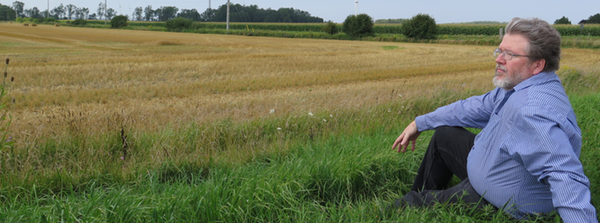
“What do you do when you realize that many of the things you love most deeply are the products of harm? What do you do when things you knew for certain turn out to have been wrong? How deep must one’s roots be before one truly belongs to a new place? There is a great deal written about the damage done to the Indigenous Peoples whose homelands were colonized by newcomer peoples like my family. That’s all true. What needs equally serious consideration, however, is the harm we more recently arrived people did, and continue to do, to ourselves. Reconciliation is a far more profound challenge than it might seem, because at its heart it demands that we abandon a culture of exploitation that just seems normal to most of us.”—Kevin Van Tighem
The Hubris Review
By William Ramp

Kevin Van Tighem, Understory: An Ecologist’s Memoir of Loss and Hope. Calgary, Alberta: Rocky Mountain Books, 2025. 303pp.
Note to reader: This review was written in Treaty 7 territory by a non-Indigenous person supportive of the resurgence of Indigenous ways of knowing and being, but from outside them. Correctives to his representation of Siksikaitsitapi or Iyarhe Nakoda peoples in this review are welcome. Treaty 7, signed before a colonial jurisdiction called Alberta existed, covers ancestral lands of the Niitsitapi. Non-Indigenous, other Indigenous, and Métis people also live here now, and the land is much changed. But it is continuous with its geophysical and tectonic substrate; water still courses through it; its soil still gives life; the wind still runs across its face and through its grasses, and it is answering again to its recovered ancient names.
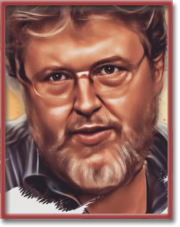 LETHBRIDGE, ALBERTA Canada—(Hubris)—January/February 2026—Let me first assure you that this did begin as a book review, and that the book concerned isn’t the Bible. But please bear with my opening riff on two topics Kevin Van Tighem treats rather briefly: the Biblical origin story of our species, and the first word in his book’s title. Beware of treating his spare references to them as merely incidental or as unrelated to each other.
 The first part of the Book of Genesis is a set of interwoven stories. The most important of these to the formation of Christian and post-Christian cultures are those which address three basic narrative themes:
- The creation of the world.
- The creation of the first man and woman.
- The expulsion of that man and that woman from Eden for eating from the Tree of the Knowledge of Good and Evil.
Let’s start with 1) and 2). In the first chapter of Genesis, God creates “the heavens and the earth” and all that is in them, and then humans, who are given “dominion” (Heb. radah) over all the creatures of the earth, and are enjoined to “[b]e fruitful and multiply and to fill the earth and subdue it [Heb. kabash].” In the second chapter, another narrative strand recapitulates the creation story in terms of God’s provision of a garden, in a region called Eden into which the first man and first woman are placed, as well as two trees: the Tree of Life, and the Tree of the Knowledge of Good and Evil, from which the man and woman are not to eat.
The third chapter of Genesis adds a serpent to the Garden. It tricks the first woman, Eve, into eating from the Tree of the Knowledge of Good and Evil, which knowledge, it assures her, will make her like God. Eve gives of the fruit to Adam, the first man, who also eats. Then, “the eyes of both were opened, and they knew that they were naked, and they sewed fig leaves together and made loincloths for themselves.” God, strolling in Eden in the evening, notices that the man and woman are absent, and calls out, “Where are you?” The man and woman come out of hiding; the man admits to being afraid and knowing that he and the woman are naked. Under questioning (“Who told you that you were naked? Have you eaten from the tree of which I commanded you not to eat?”), he quickly admits his disobedience, and just as quickly puts the blame on Eve, who in turn blames the serpent.
In three condemnatory passages, God deals first with the serpent, to be “cursed among all animals;” next with Eve, who will bear her children in pain and sorrow, and finally, Adam: he will win food from the ground with difficulty, “by the sweat of [his] face.” The earth will be his antagonist.
Here, “subduing the earth” takes on a specific meaning. The name “Adam” itself comes from the Hebrew adamah, for “earth” or “red mud,” while the Hebrew word for Eve (Chavah) means to breathe, live, or give life. Adam, outside the Garden, will become earth at war with earth, living in struggle with the ground from which he was made. Eve will give life to children but will suffer for it. She will desire her husband, but he will rule over her, curbing her independence of will in eating the fruit. God then makes clothes out of skins for the pair and turns them out of the Garden with these words.
[H]umans have become like one of us, knowing good and evil, and now they might reach out their hands and take also from the tree of life and eat and live forever. (Genesis 3:22, NRSVue)
Symbolically, the skins give this first couple power to cloak themselves and dissemble; using second skins of fabric, or of words, to make of themselves something other than what they are, and to convince themselves that they are that something else. So, to be human, exiled from Eden, is to struggle both with the ground and also with the truth of being human, whatever that might be, and with a proclivity to forget, lie about, or fall into confusion about that truth.
Of course, that’s not the end of the story. God and humanity, having become other each to each, nonetheless enter into an ongoing relationship, called “covenant” (Heb. beriyth), the ceremony for which involved both a sacrificial cutting of an animal in two (a kind of foretext), and an act of connection. Subsequently, that covenant would be inflected by gift, mercy, care and sacrifice, and also anger, rebellion, disappointment, and departure. And by repentance—on both sides. It was particularized (a chosen patriarch and his people) and later (in Christianity) universalized (through a woman chosen to bear God in flesh, savior of all).
Over subsequent millennia, much was variously made of Adam’s mandate to struggle with, have dominion over and subdue the earth. Today, liberal Jews and Christians read radah and kabash in environmental and stewardship terms. Adam and Eve’s expulsion from Eden was interpreted, in a Western Christianity influenced by a certain reading of St. Augustine, as a fall into sin that is recapitulated in the life of every human person. In 19th-century religious popular culture it became a widespread morality tale with God in the role of a wrathful, all-seeing father-figure, spying out sin, especially sexual sin, and demanding that his wayward children, doomed to disobedience by their ancestor Adam, say “Sorry, sorry!” before staying his punitive hand. That narrative was replicated in human terms and reproduced by those designated as god-representatives with earthly powers to mete out punishment to children they regarded as little embodiments of Original Sin. Today, many churches repent of such powers.
But these ancient stories, first oral, and later written, combined and redacted, also recount a version of the dawn of human self-consciousness. Adam and Eve come to know themselves as naked, and in that moment, become aware of themselves as not-earth, not-water, not-plants, not-other-creatures, and also not-God. God became an Other, remote, and feared. While Adam and Eve didn’t lie in answer to his questions, their fig leaves presaged an ability to lie, as did their initial hesitation in giving the whole story of what went on with the Tree. God pulls it out of them, even if that’s easily done.
So, they are no longer in the sublime innocence of Eden as water in water. And the God they now encounter in this new position, becomes to them “a” being, a discrete Other intervening in the same cosmos they inhabit as discrete beings and agents; a god to whom they can lie (or not), avoid (or not), ignore or rebel against (or not). So also do the earth and its creatures now appear as other to humans, variously as lesser companions, as objects of or threats to human purposes, or as things to be examined, classified, manipulated, monetized, cared for, or killed. By extension, Adam can objectify, manipulate and betray Eve, and she, him. All humans henceforth will be able to objectify God (as an object of philosophical inquiry, of manipulation, or of denial); to respond to, inquire into, objectify, and manipulate each other, to grant or deny others a shared humanity.
Finally, humans are condemned to struggle not only with their physicality, but with the knowledge that they will die, but that they cannot know beforehand what that death means, save that they “are dust” and to dust they will return. At this point, no promise of eternal life softens the blow. Even over a lifetime, while we may die to the self we once thought we were, we cannot foresee with any certainty what we will become. Though to be self-conscious does grant the ability to see oneself as an object in a field of objects, wherein lies the germ of what Michel Foucault identified as a certainty/uncertainty duality in the “human sciences.”
In Understory, Kevin Van Tighem tells of his own origins and transformation over a lifetime. The Genesis narrative is never far from his mind in doing so. He doesn’t subscribe to it, but he mentions it as part of the understory of his life. But he doesn’t say too much about the narrative meaning he gives to the word understory in the book title. You could dig for it, but I think he’d prefer you not to. This isn’t a book to be mined. Its meaning emerges gradually. It reminds me a little of the teaching role of story in Indigenous cultures. The meaning of the tale may not be immediately evident and often isn’t explained (lest that trivialize its meaning or insult the hearer). It may manifest only later when the time is right; sometimes much later. That emergence isn’t policed or subject to a deadline. It’s not a “learning outcome” in the administrative sense of that term.
However, I’ll give away one reason why I think Van Tighem chose “Understory” as the titular key to the book. According to a quick Google search, Oxford Languages defines understory as a layer of vegetation beneath the main canopy of a forest—as good a place to start as any. It’s often equated to underbrush: saplings, stunted trees, vines, bushes and the like, that unlike taller trees have no majesty, no charisma. They are akin to scrub; stuff slashed away with a machete to get a glimpse ahead, or of the sky above. An understory contains things that scratch, puncture, sting, abrade, or burn our skin; shoots and branches that whip back to smack our arms and faces; insects that bite or harass; even predator animals in hiding.
In one unobtrusive paragraph on Page 2, Van Tighem writes that an understory resists our attempts to force our way into or through it. When we do, assuming we don’t turn back, we may emerge on the other side a little disoriented and not where we thought or intended to be. But if we were to pay better attention to it, we might begin to see how canopy, understory, root systems, soils with their invertebrates and microbes, bedrock geology, and sky, are not separate things nor even separate systems, but animate parts of a larger, constantly mutating whole. We might even begin to ask what that whole might make of us; what story might it tell of us—or to us. It might in the end teach us a thing or two.
The word “under” in understory also signals that though it might appear from outside or above as a wall of jumbled greens, browns, and yellows, close in that undifferentiated mass resolves into a host of specifics. These are hidden from us by our tendency not to see them before we try—often sideways—to push through their domain, or to take a brush hog or D-6 Cat to it.
Here’s a small piece of the little that Van Tighem says directly about the understory.
One never walks out of the same woods one walks into. Or, perhaps more accurately, it is still the same woods but one’s illusions about it are gone. You can’t really know the forest until you’ve forced your way into its understory, and back out again. (p. 2)
Note that verb, forced. He uses it for a reason. You should pay attention to it. You should be very careful of it. There are reasons for suggesting such caution. See (again) the first sentence of the quote.
Something else to consider about the understory: when canopy trees are logged, burn, die in a fungal pandemic, or are levelled in an avalanche, a flood, or by a regiment of machinery mobilized for “development,” the understory may or may not disappear. It can regrow a forest, or something else, in unexpected ways. Some of its constituent elements may exploit a cleared landscape, and newcomers may join them. Some of these we call “weeds” or “invasives,” and we spend endless hours of effort, and gallons of herbicides, on their eradication. Understory creatures such as raccoons, cottontail rabbits, skunks and mice may migrate to become habituated urban or suburban dwellers, occasional vectors of disease, destroyers of wiring and vegetable gardens, and the basis for wildlife rescue and relocation businesses. The important thing is that, through all the changes that can beset a forest, the understory is never still; it never stays One Thing. Its components may evolve differently, too.
We could think of understory metaphorically as a story or stories below the commanding heights of narrative; as elements that may persist in getting in the way of a good, tight account; stuff that might make readers long for “the point” or that editors might excise. Or it might provide background elements that add discomfiture to the story. Sometimes, these are edited out a priori by writers—or readers. A narrator may be personally unconscious to the understory of the narrative they tell; a civilization may be collectively unconscious to it, even if, without it, story would be diminished. Without an understanding of its less evident elements, the story can dissemble in how it is received, becoming re-clothed in a skein of untruth or diversion. When humans enter the woods, it’s generally through the understory out of necessity even when we curse it and drop it from memory after. It is the present context of our being there. Similarly, we write—or read—in places, and in/with our bodies. We bring to these activities our past and present loves, losses, joys and traumas; our comforts and discomforts; our baggage. We write and are written about, read and are read to, speak and are spoken to in and from the lived understory of personal and shared narratives even when unaware of them. It would behoove us to attend to that contextualizing thicket, past and present.
Kevin Van Tighem retired from a career with Parks Canada, a federal organization that oversees all of Canada’s national parks, having reached the height of Superintendent of Banff National Park, Canada’s first, oldest, and most storied natural reserve, and an international tourist destination. Above him lay another couple or three layers of regional and national management, and above them, a deputy minister, cabinet minister, and the Privy Council. Van Tighem chose to exit at a level at which he was still able to put his boots on the ground for which he was responsible. He could have chosen to write this memoir from the point of view of his own career canopy, or of Parks Canada’s managerial elites more generally. There are reams of such books, mostly unread: autobiographical just-so accounts by entrepreneurs and CEOs, ex-politicians and officeholders, consultants, university presidents, and bishops. Historians are glad to mine them, but most don’t resonate or give us a landscape from which to learn.
Thankfully, Understory is not such a book.
The story that Van Tighem tells is, like Genesis, composed of multiple entwined narratives. These appear, retreat to the background, and reappear, sometimes unexpectedly and often imbued with new meaning. Sometimes, they are gentle, and subtle. At others, they can have the unexpected force of a bent alder branch whipping back in the face. The sun may poke through their part of the canopy, but they can also present the narrative equivalent of a confusion of thickets, treacherous rock, wind, snow and ice, cold, or a disorientation of storms, natural or human.
Van Tighem has a couple of years on me, but I recognized much of myself in his account of his early years, his career experience, and what he now makes of them. He was born into a devoutly religious family rooted deep in Alberta soil: a great-uncle, a Roman Catholic priest, came from Belgium to western Canada before there was an Alberta here; before railways, roads, and settlement, to establish Catholic education in the province. Several generations of Van Tighems have left their mark on the province and the country since, and Kevin isn’t the only author among them.

His childhood as he represents it resembles the 1950s middle-class idyll: there was never much money, but his family owned a home in an older Calgary neighborhood; his father worked hard in the educational field, rising to become a superintendent of schools, while his mother tended to a growing brood of children. Van Tighem’s introduction to the natural world began with a slope that rose behind the family home, draining the land above, most visibly perhaps in spring and fall. It formed a microclimate hospitable to a diversity of insects, birds, and small animals. Eventually, urban development put paid to all that.
As Van Tighem grew older, his father would take him and his brothers hunting on farms owned by relatives, which had willow and buckbrush draws hospitable to grouse and pheasant, and through one of which flowed a small and seemingly insignificant creek. It did at least seem to have merited naming, and it was given the name of an Indigenous leader, Crowfoot, who looms larger over Alberta history than the creek does over its geography. He was central to the Treaty process preceding the later jurisdictional creation of Alberta as a province of Canada. These treaties still govern Alberta’s very existence. The Van Tighems, father and sons, also took fishing trips to prairie and foothills streams west of Calgary for cutthroat and bull trout; again, these were bordered by cottonwoods and saskatoons (aka serviceberries), along with prairie grasses that made excellent habitat for birds. Soon enough, young Kevin was keeping a master list of birds he had seen and eagerly anticipating outings to find more.
In adolescence and young adulthood, he began, like many children of the 60s, to chafe against the narrow strictures of home and a Catholic education, and his grades began to slip. He grew more distant from his father (and his father from him), and eventually, when he should have been at work at a summer job, he hitchhiked to the British Columbia coast in a brief excursion to the edges of hippiedom—and to eye-opening risks attending young men and women hitching rides along major highways alone. He had trouble getting—and keeping—a job, though the summer before university he landed one that placed him in a soil analysis lab, introducing him to a dimension of the landscape that would bear fruit in his mind over the years. He told off an uncle, a priest, at a family dinner (with good reason: the priest was casually humiliating his sister at table), and then went out to drop a tab of acid for the last time in his life. Eventually, he made it into university—barely— but once there, floundered, not knowing quite why he was there or what to study, nor what kind of career he could or should aspire to, in an era when it was increasingly expected that university and a career should form a young middle-class person’s goals.
I remember that dilemma: I was more obedient and conformist than Kevin and probably got better grades initially. But university found me frozen by writer’s block and feeling like an imposter. When I imagined my future, all I could see was a series of not-thats: I wasn’t cut out to be a farmer like my father; I was too clumsy and without the physical stamina for a trade, or even for laboring. I wanted to be an archaeologist at one point, but a brief, hot summer spent excavating a midden cooled that jet. I dreaded trying to appear competent handling a classroom of high school toughs. Doctor, lawyer, business manager; to all these prospects and more, I brought a mix of abstract ambition and concrete fear. My employment bottom line was merely a job that wouldn’t utterly humiliate me, would keep me from ending up on the street, and would give me a small extra for books and records. But unexpected scholarships and a fear of doing anything else—and to be fair, a growing love for the life of the mind despite writer’s block—kept me going through graduate school, and I ended up, more or less by default, teaching at the university level. Here I had a revelation: I liked teaching. I also found eventual disillusionment there, with university management and politics, and with myself.
Kevin’s path took him in a different direction; actually in several directions.
The summer following his first year, he got a job—briefly—with a hunting and fishing supplier, but he then ran into a former birding acquaintance who had a friend planning a road trip with two others—all of them Alberta Parks employees—to the Sonoran desert to go “birding, botanizing, and exploring.” They needed a fourth to buy the final tire needed to make their car roadworthy. Kevin came up with the money and came back from the trip with an avocation. His newfound friends got him hired into the Alberta provincial parks system to help conduct ecological surveys.
It was, he recalls, the chance of a lifetime: “we were being paid to explore some of the best remaining examples of Alberta’s exceptional natural diversity.” He returned to university with a new passion for landscape ecosystems, and four years later, “the one-time probationary truant graduated with distinction.”
By the 1970s, the province of Alberta was booming, awash in newfound oil wealth, the generation of which was encouraged by relatively (and over the years, increasingly) lax government oversight. One consequence of the boom was massive and continuing geographical expansion of the city of Calgary and its surrounding urban settlements. Square miles of the prairie countryside Van Tighem and his father had fished and hunted over were being scraped clean for housing and commercial development. Besides oil, gas, minerals, forestry products, and agricultural commodities, Alberta offered vast amounts of mountain and prairie space. To cabinet and deputy ministers, senior regulatory officials and developers, this abundance of space took the appearance of real estate at attractive prices. No one paid much notice to the precipitous decline in prairie bird populations that began in about 1970. Droughts, and initial signs of decline in the mountain snowpack, were waved aside by politicians with a confidence that water issues could be geoengineered away by dams. (The area in which I live, south of Calgary, is known as the Palliser Triangle, named after a 19th-century explorer who explored this native grassland area and identified it as semidesert. It became, and for now remains, an agricultural breadbasket, fed by massive irrigation from a rapidly-disappearing feedstock.).
But Alberta was still part of Canada, and Canada the world, and the decade of the 1970s saw global concerns over environmental issues—and a nascent awareness of a clash between Indigenous rights and “resource development”—enter public discourse. A side-benefit of such concern was that governments began to provide money for ecological surveys—often as means to kick environmental issues down the road and to make it look as if they were doing something. But like any change to habitat, human or otherwise, this injection of a new resource into a fast-changing human-ecological setting had consequences; some negative, but for Kevin positive. He found work at Kootenay National Park, talked a supervisor into allowing him time to do a bird survey for the park’s upcoming biophysical assessment, and got a contract, with poet David (Dale) Zieroth, to write brochure and signage text for two locations in Banff National Park.
He also went hunting. One September day, he spotted a very large moose, an hour’s walk from the nearest road. He took two shots and got the moose with the second. But then it began to dawn on him how unprepared he was to field-dress and pack out a moose, lacking even a decent knife. Nevertheless, he tried. The attempt ended with the dull knife buried in his leg. He was lucky to make it to the road, and then the hospital, on his own, without fainting. But far harder than the injury, which laid him up for a mercifully short period, was a lesson:
Hunting is hunting, but when one makes a kill it becomes, in essence, a sacrificial event. The animal is an unwilling participant in that sacrifice; it wants to keep on living the only life it will ever have. To end another’s existence is a profound and somber act, one that can be very hard to reconcile with respect for life and love of nature. Some people go so far as to eschew meat altogether. I honor that choice but have never made it myself; I still eat the meat of animals I have hunted.
But losing that moose was deeply disturbing, because I hadn’t just wasted the meat; I had wasted a life that wasn’t mine to take. I had done it by failing fully to respect the sacrificial—I would say today, after a lifetime of reflection, the sacramental—nature of the hunt. The least of my responsibilities was to have been fully prepared so I could ensure its death would not be in vain. In the years that followed, the preparations for each hunt took on an elevated importance because I was preparing to accept, as humbly and honorably as possible, a sacrifice given unwillingly by another living creature. (p. 88)
That lesson was brilliantly timed by the cosmos. It led inadvertently to a dinner invitation from Liz Holroyd, who had engaged him and Dale Zieroth to write interpretive material for Banff. The dinner turned into an informal job interview with her husband, Geoff, then employed by the Canadian Wildlife Service (CWS) to work as project biologist in charge of ecosystem-based wildlife assessments in both Banff and Jasper National Parks. Geoff warned him that the job, based in Jasper to the north, would involve days at a time alone in remote back country with no means of communication. “The more he cautioned me,” Kevin writes, “the more I wanted that job.”
Being a park naturalist had been about dealing more with people than nature. I wanted to be far away from people. Jasper, to my Calgary mind, was the wilderness north: better than Banff! (p. 90)
He got the job, but not quite as he had wished. Another lesson lay in store, and it involved dealing with people: he would be expected to liaise with the Jasper park warden service. At the time, this didn’t seem a problem. The Jasper wardens were,
. . . the kind of people I felt comfortable with. Theirs was what Jane Jacobs, in her book Systems of Survival, would have described as a guardian culture: one of strong internal loyalties, pride in technical competence, and fierce dedication to the places they were hired to care for. . . . They were hired for their practical skills and then, once in the job, trained in the more specialized realms of mountain climbing, law enforcement, and firefighting that comprised some of their core responsibilities. It was practical, hands-on work. Warden recruiters looked to technical schools, not universities, for their intake. (p. 90-91)
But by the 1970s, old-school wardens were being put on the defensive by the hiring of women and a demand for specialized science skills with which to produce hard data rather than anecdotal accounts. In addition, a changing corporate culture meant a shift from an area-based to a function-based organizational structure, with senior specialists heading up each function. Kevin was a double outsider: technically employed by the Canadian Wildlife service, and a university-trained specialist working on a scientific data-gathering project. He was lucky enough to find wardens willing to help him navigate collegially, but other challenges arose.
One was that the “wild world” he was to survey was a moving target, in flux: climate change, still widely unacknowledged, was starting to modify the ecoregions he was to cover. Another was that the maps he was to use were laid out in a new way, in terms of soil types and climate zones; not simply in terms of types of vegetation. Gradually, he came to appreciate the thinking behind this: vegetation has a context and is itself an effect of multiple intersecting factors, climate and soil being among the most important, but also the lay of the land; its slope aspect and elevation. But that knowledge was, eventually, still found limiting. The maps still assumed a “normal” state for each ecoregion, but so-called “abnormal” events were part of their formation and their fate, both in geological and in (accelerating) climatic time.
What was also important to the surveyors, practically and immediately, was an ability to learn how not to be a fool in the wilderness, and, when those lessons didn’t come fast enough, a store of sheer luck. Kevin describes the surveyors’ “whole approach to fieldwork” in those early years as “amateurish and dangerous”—and he tells the stories to back up that claim. But “learning to see landscape through the ecological processes that shape it and the patterns that result” turned out to be a gift he has valued ever since. “Unlike so much science that deals with bits of the natural world in isolation from one another, this work was about integrating them.”
By 1982, Kevin was also starting to engage in journalistic activism opposing the proposed Three Rivers Dam, aka the Oldman Dam. It was litigated against, successfully, all the way to the Supreme Court, but the Alberta government of the day ignored the judicial decisions and went ahead with it anyway. Its basin is now often half-empty or less and silted. It is a monstrous but largely unacknowledged failure. Kevin’s work with dam opponents had the benefit of bringing him into contact not only with the naturalist community in far-southern Alberta, but also with members of the Blood and Piikani First Nations whose reserves lay along the soon-to-be bisected Oldman. These contacts would be fortuitous to his learning, especially when he moved south a decade later to work in Waterton National Park.

Subsequently, he went on to placements of ever more influence and respect in the National Parks system, though I’m quite sure it often didn’t feel like it. But his most life-saving decision in the early 1980s was likely to marry Gail Baker. She, and their children, are mentioned sparingly and briefly in this memoir out of respect for their privacy, but it’s clear that she became an essential outdoors companion and source of strength and wisdom, both to her husband and her children, while developing her own interests as a naturalist and craftsperson.
In 1985, the Federal government shut down the entire Parks Canada/CWS research unit. This closed the door on the future of the bioregional survey work and forced Kevin and Gail to sell their Edmonton house at a loss, and Kevin to withdraw from the graduate program he had enrolled in at the University of Alberta. He was lucky enough, after a brief period of sharp uncertainty to land another job with Parks Canada, back in Jasper and in management this time, as interpretation supervisor for the park. But to get it, he had to do penance, on the Jasper post office stairs, to a gruff ex-military engineer, a master of colorful language, whose actions he’d once criticized in a letter cc.’d to the Edmonton Journal. This crusty Scot also happened to be Superintendent of Jasper National Park and had declared that over his dead body would that goddam Van Tighem ever work in his park.
At my approach, he looked up and glared at me.
“Mr. Van Tighem,” he said.
My heart was pounding, but I tried not to let my emotions show.
“Rory, I think I owe you an apology.”
“I think you do too.”
“Well . . . I’m sorry.
Rory waited a few beats before responding. I was thinking about my pregnant wife at home with our toddler, waiting to learn if we had any kind of a future at all. I was thinking how tall Rory was, how stern—and I was thinking about cockiness and consequences.
“You should be,” he said at length. “So when are you going to be able to start work?” (p. 172)
There was room in the positions Van Tighem took in Jasper, as the park’s interpretation supervisor and then ecosystem secretariat manager, for him to take up some high-profile tasks. He participated in an ultimately doomed effort to save caribou herds in Alberta, including the critically endangered mountain caribou, the world’s most southernmost representative of the species. During his participation in the fight against the Oldman Dam, he had also come in contact with a new set of actors, Alberta government officials, and now he got to see them up close as they and forestry industry representatives bullied and fulminated over how to define and develop a sensible forestry plan for Alberta. He also became familiar with provincial government newspeak: “Monitoring,” “More Study,” and the dissembling “Adaptive Management,” which (in my own interpretation) meant selling out to forestry industries and accepting ecosystem destruction. The Alberta government was spending wildly in pursuit of economic diversification; not in itself a bad thing, but there was little time, patience, or funding left over for species conservation or environmental matters, especially as the provincial Conservatives turned ever harder to the right.
And Alberta Conservative poobahs could be brutal in their harassment of biologists who dared cross them. In the end, they successfully exploited a desperate proposal to save the caribou by culling the wolf population, using it to divide the pro-caribou forces. (Fire and forestry roads, and other resource-extractive pathways through the mountain forest understory were giving wolves new opportunities to predate caribou.) Under that government’s watch, some 700 wolves eventually were killed, and the caribou were not saved.
But Van Tighem writes that the government of the day was not the ultimate culprit in this disaster. That culprit was a culture it shared with the wider population; a
. . . sense of entitlement so deeply entrenched in Western society that most of us don’t even recognize it in ourselves or question its validity. We too readily see other animals as mere objects or resources and feel entitled to dismiss them when their needs don’t align with ours. It’s always about us—an “us” we invented when we allowed Western science and old religions to delude us into believing that humankind is somehow separate from, and above, the rest of Creation.
The decisions being made in caribou country are cold, pragmatic ones. Pragmatism is the repression of the spirit. (p. 157)
But that realization wasn’t sufficient to make him feel at home in bureaucratic settings; not enough to become accustomed to moving household and family as he took on new positions and dealt with unexpected circumstances, however much they led—crabwise—along an upward incline. He didn’t stay long in Jasper, nor in the mountain-shadowed little town of Field, British Columbia, where he was chief of heritage interpretation for Yoho National Park. After two years, he applied for and got a job as senior interpretation specialist in the Parks Canada head office in Calgary. That elevated position, too, didn’t compensate for the experience of working under a Regional Director whose MBA released her from any need to respect or even to know the organization’s history or culture, because “she had learned how to do ‘strategic planning.’”
So that’s what we did . . . I found myself tasked with helping to tear down the park interpretation function and replace it with a corporate communications unit. In the modern new world of managing the nation’s great parks, we would no longer pursue a mandate of teaching visitors about the nature of their country but would instead concentrate on public relations and issue management for our corporate leaders. Park visits would no longer be about connecting to heritage. They would be about having experiences and growing the tourism industry.
It was horrible work, from which Parks Canada has never recovered. (pp. 180-181)
This passage inspired a fierce empathy in me. My experience of administration was a short and lowly stint as a university department chair; just long enough for me to realize how it was that people quite different from me might get an adrenaline rush from constant flirting with bureaucratic or political disaster and nimbly finding a way to avert or offload it. I never got over my revulsion at the corporatization of the university, my difficulty in saying “no” to colleagues, nor my horror at discovering the chimera that strategic plans and corporate-style branding could be. Strategic planning and other exercises in so-called creative disruption are all too often exercises in faddism and in the destruction of organizational ecosystems, collective integrity, and persons who don’t fit the new order. They are organizational understory-clearance campaigns driven by a profound delusion that things which get “in the way” of Strategic Objectives are mere obstacles, not teaching moments.
Finding and losing and re-finding paths through the National Parks organizational understory had given Van Tighem, over time, a sense of future direction, if ab initio temporary and project-based. Still, the “deeper way of belonging” he sought, seemed little closer following cancellation of the Parks Canada research unit in 1985, and the defeats of the later 1980s and early 1990s. Van Tighem’s increasing commitment to high-profile fights over dams, forestry policy, and caribou conservation, and his own emerging profile in Parks Canada management, increased his exposure to conflict, bureaucratic conundrums, and zero-sum decisions, and his dislike for the kind of person he felt himself becoming in the process.
Thus, it was with a sense of homecoming and gratitude that he took leave of the Parks Canada Calgary office for the position of professional biologist for Waterton Lakes National Park in 1993. The years there were good for him and his family, despite their becoming acquainted with chinook winds that have hit a record 186 km/h (115+ mph) across a tight and dramatic convergence of different geologies, landscapes, biomes, and climatic phenomena called the Crown of the Continent. For millennia before stories were first told of the dealings of Noah or Abraham with their God, this area has been a spiritual epicenter for Indigenous people, and it draws out some of the most lyrical of Van Tighem’s writing in the book. In 2017, Waterton was subject to the disastrous Kenow forest fire, which cooked the very soil on which both trees and understory relied, But one unexpected benefit was that the fire laid bare the surface of the land, stripped of its vegetation and its duff bed of decaying flora, and pine and spruce needles. Park archaeologists sprinted into action, and mapped hundreds of Indigenous sites:
Nearly all of its mountain summits have lichen-splattered Vision Quest sites. Campsites, cairns, weapon fragments, and other artifacts in the valleys below record a continuous history of more than 12,000 years of human presence. Many of the medicine plants that are found here and nowhere else in Alberta—like blue camas lily and biscuitroot—were almost certainly brought here by the Ktunaxa and Siksikaitsitapi Peoples who at various times occupied those valleys and traded back and forth across the mountain passes. (p. 189)
This land is called, properly, Paahtómahksikimi. Kainai Elder Ninna Piiksii (aka Mike Bruised Head), the first person to receive a PhD from the University of Lethbridge for a dissertation written in Blackfoot, has a life’s mission to find and reclaim the Indigenous names of its mountains and other significant features. In English translation, he writes,
There seems to be sort of an atheist presence when people attain higher learning; and as a Niitsítapi, I come along and express to a certain degree my spirituality. That is why I am talking about getting the names of the mountains back so the younger generation will have that experience, that pure absolute experience of fasting in the mountains with those mountains that have a name. In the process of being gifted, at some point in time, of that knowledge, through spiritual transfer of knowledge, on survival, on health, on medicine, on songs. (Bruised Head, 2022, in Van Tighem 2025, p. 209)

Amid these mountains, with a young Kainai naturalist named Elliot Fox, US Fish and Wildlife biologist Joe Fontaine, and the Waterton Biosphere Reserve Association, Kevin helped develop a co-operative plan to monitor the migration of Montana wolves into southwestern Alberta. This entailed meetings with the area’s ranching community and developing a compensation scheme for livestock verifiably killed by wolves, to replace one that had been cancelled by the Alberta government. Sadly, the meetings helped defeat the project. The ranchers presented Van Tighem and Fontaine with a silent wall of conspiracy-theory obduracy: it had been alleged among them that this was a scheme to “stock” the Alberta foothills with flown-in wolves, to the ruination of the ranching class (and probably the forfeiture of their extensive lands). Eventually, a compensation scheme was set up, but only one rancher ever made a claim—and he never cashed his check, being persuaded by others that to do so would be taken as a kind of “consent” placing him under the government’s thumb. It was Van Tighem’s first encounter with conspiracy theories; it would not be his last.
Waterton was about as close to an idyll as Kevin and his family would find during his working life. But such belonging as he had there opened space for new and disconcerting questions; one of them posed by Kainai Elder Narcisse Blood, whose people had lived there for 8,000 years at least before the first creation stories, later to be woven into the Biblical book of Genesis, were told. “It’s not enough to recognize the landscape; does the landscape recognize you?” [my emphasis]
In retrospect, Kevin observed, “I still wonder if those landscapes recognize me. I suspect not . . . I can’t help feeling I took much of my knowledge. It was not given.” Like his quixotic first taking of a moose, it involved hard work over some time for him to develop a sense of how real the issues and consequences of such unaware taking could be.
His sensitivity to these and related issues of awareness was jolted early in the 1980s by landscapes in the process of becoming unrecognizable to him. In search of solitude one day, he escaped his rented room and forced-draft work on the bioregion project writeup to hike up the paradisial lower slopes of the Fairholm Range near the town of Canmore, only to discover survey stakes indicating the location of future roads and lots. Calgary had won its bid for the 1988 Winter Olympics, and Canmore, between Calgary and Banff and still weathering the end of local coal mining in 1979, wanted in on the action. I’m not sure if Kevin felt as I would in such a moment today, but I think he’d be forgiven for feeling that to be a naturalist in Alberta was becoming a bit like being Alberta’s wildlife: picturesque if contained, but otherwise an impediment to “progress,” or even a set of pests to be hunted out with the acquiescence of government.
“Solastagia is the darkness that floods the soul when one’s home ceases to be. The solution to homesickness might be to go home, but that option doesn’t exist if one has never left home in the first place, yet it’s gone.” (p.6)
Van Tighem’s sense of displacement was not merely a consequence of his adolescent distancing from his parents and the world of his childhood; nor did it result only from the disappearance of native prairie and foothills landscapes in which he and his father had hunted and fished. He also felt nostalgia for the quarter-section farmsteads that had replaced them in the settlement era, and the rural life to which they had been home. Those too were fast disappearing then and are mostly gone now. But he came to realize that even this bucolic landscape of his childhood had left a legacy that included introduced and invasive species, the eradication of the bison, the designation of so-called weeds, and the monetizing of land and food. It had also erased an earlier landscape that had endured for thousands of years, and the presence of the people who had lived in and sustained it, penning them in a system of reserves/reservations and subjecting their children to residential “schools” that suppressed their languages and cultures, at times by force—unless they gave up the legal status that had come to form the remaining official protection of their identities and treaty rights. Even if he had once wanted it to, the settler landscape, let alone the landscaping carved out by developers to carry nostalgic suburban dreams, could no longer give him the sense of home he had craved all his adult life.
“I wish we had lived the life I thought I remembered,” Van Tighem writes, “but it turns out we were all lonelier than we knew or should have been.” It also turns out that despite this embedded loneliness, members of settler society, as of all societies, cannot fully realize the individual, independent, self-ordained, and self-generative egos, or the abstract, possibility-oriented agency that Western economic nostrums and popular culture hold out as standards of successful adulthood. We are made and sustained by many presences and forces. This making isn’t always pretty: such presences and forces are often enough conflicting, contradictory, silencing, inhibiting, duplicitous, abusive, and traumatizing. Where this is so, they reproduce a stunted and diversionary sociability, one-dimensional thinking, exploitation, and negative competition, and also the fruits of disappointment and misapprehended betrayal: paranoia, rage, and scapegoating.
His sense of displacement and loss may have helped motivate Kevin Van Tighem not only to become a naturalist but also a key figure in defence of the integrity of wilderness in western Canada. There is certainly no end to place- and context-ignorant pressures to defend against, exerted knowingly or not by politicians, businesses, bureaucrats, and park visitors, on creatures and lands that don’t vote, don’t spend money or pay taxes, and don’t yet generate “enough” revenue by conversion into brands, entertainment spectacles, or symbolic, material, and recreational commodities. National and provincial parks along major transportation routes or near population centers are constantly circled by businesses looking to expand their provision to tourist and recreational activities, and by governments seeking to have parks “pay” more of their own way.”
But Van Tighem refuses a Manichean distinction between the parks and those who put pressure on them. He notes that Canada’s national parks, starting with Banff in 1888, were themselves offshoots of the same colonial project that involved the building of the transcontinental railway (which Banff National Park was intended to benefit financially), the defeat of the Métis and their allies at Batoche, and the opening of the west to settlement. The national parks were intended partly to be reserves, set apart from at least the most egregious kinds of exploitation, but they left wildlife outside their borders much less protected. To this day, the parks, by their mere existence, perpetuate notions that nature outside their gates can be written off in the name of development and land “use.” Plus, only two herds of bison found homes in national parks; one in Elk Island, and another in Wood Buffalo Park. And for much of their history the parks erased the presence of Indigenous peoples on their lands. It took the Kenow fire in Waterton National Park to finally reveal to archaeologists how central its land had been to First Peoples for upwards of twelve millennia.
The parks are worth saving, and the error of their historical ways worth correcting—and Van Tighem had a hand in that—but they cannot complete a longed-for reconciliation with a bruised natural world and its landscapes. Rather, by the end of the 20th century,
. . . there was a dark side to the whole approach of preserving pockets of nature rather than learning to cherish and conserve it everywhere. Those protected places became sanctified in the minds of their promoters and visitors . . . nature in protected areas came to be valued more highly than nature outside of them. But it’s all the same nature. . . .
In a national park one is not allowed to pick a flower. One is discouraged from—and could be fined for—eating a berry. One must stay on the trail. The many shalt-nots are understandable because of the popularity of parks and protected areas. Parks staff speak of the dangers of loving a park to death. Five hundred people a day can trample a mountain meadow to mud in a week.
But the unfortunate corollary of these restrictions is that they perpetuate the myth that humans and nature are not the same thing. (p. 111)
After some years in Waterton and seeking wider horizons than that glorious but small park could offer, Kevin and family headed back to Jasper, where he became ecosystem secretariat manager until he successfully did himself out of that job in a reorganization he helped plan. He then became Jasper National Park’s manager of resource conservation for a short time. But there was still that nagging discomfort:
I had spent most of my life distrusting people in authority. On more than one occasion I’d had to live with what seemed like wrong-headed decisions made by managers. And now I was one of them. It was a weird and conflicting position to find myself in; it was as if I was no longer seeing the same me in the mirror. I wasn’t sure who I saw there, but I was pretty sure he was getting out of his depth. (p. 217)
It didn’t help that in Jasper he had to deal with debilitating organizational changes and public controversy, all driven, as in public health, education, and other service-oriented arms of government, by a relative decline in funding, an erosion of social license, and over-subscription of services and facilities. These were accompanied by rapid social and political change, and a sharpening of economic, social, ideological, and political contradiction, as settler politics, institutions, and collective dreams began to come apart from each other and from present realities (with political patch-ups often, ironically, being implemented in the name of “common sense”), starting a long and spreading disintegration, and generating a fear-based targeting of scapegoats (shadowy “elites”—said to be composed variously of financiers, politicians, scientists, and public educators), plus an imagined “flood” of resource-takers and identity-destroyers (often said to be in the form of “illegal aliens”), in the name of a utopian imaginary to be made “great” or “proud” again. Some of these fear-stories eerily resemble what settler-colonial societies themselves did to Indigenous residents of the continent over five centuries, though that resemblance is largely suppressed by those who promote such stories in terms of a neoliberal individualism that excludes historical (and ongoing) social responsibility from consideration.
Van Tighem’s lot included conflicts between backpackers, horse-riders, and mountain-bike cyclists on park paths, a Jasper townsite subculture that saw the park as its own playground and Parks Canada merely as an “annoying landlord,” a spasmodically-changing organizational structure, and a tendency to deal with sticky problems by kicking the can down the road or hiring another level of management. There were redundant managers who couldn’t be fired without backfire. There was also an imperative from the top to develop “sustainable” business plans. The mountain parks were overspending their budgets. Their managers were often canny budgetary game-players, but these same managers were now tasked with finding solutions to disproportionate allocations and overruns. Van Tighem, by contrast, took the task of bringing budgets into order seriously—and made enemies. Just as difficult in a different way was a controversy over arming park wardens and turning them into law enforcement officers in the parks. This period also signaled the end of the old Park Warden service.
Here, he puts his finger on some wider contemporary issues, not limited to the parks system. Tone-deafness on the part of politicians, strategic planners, managers, employee factions, park users, and tourism businesses can allow needless harm to be inflicted on established organizational ecosystems. Management can turn toxic in response to tectonic shifts in the political-economic landscape. But so can those human ecosystems and solidarities that compose a “guardian culture” within an organization. Even when motivated by fierce dedication to preserve knowledge, traditions, and resources from the “creative destruction” so beloved of management consultants, employee and professional groups trying to save what’s of value in bewildering times can also go off-course. It doesn’t help when some mandated reorganization also creates waste or is driven by context-free revenue-seeking, or context-blind austerity. It’s also never easy to parse waste from necessity in a crisis or on polarized ground. Van Tighem likely did his best with what landed on his plate. He did manage one win-win; turning the cyclist lobby into partners in building more appropriately designed and sited offroad trails, replacing unauthorized ones that had to be closed.
Soon enough, though, he was ready to jump at a position on offer as superintendent of Waterton National Park. There was a second superintendent position open, for the small Prince Albert National Park in Saskatchewan. Kevin was assured he would be a shoo-in for Waterton. He wasn’t. He got Prince Albert. But he wasn’t there long.
In 2005, he was promoted to superintendent of Parks Canada’s Northern Prairies Field Unit, which had him driving back and forth, as needed, between Elk Island National Park in Alberta and Prince Albert in Saskatchewan, plus a number of smaller national historical sites. It was on one such drive in 2007 that he pulled over to take a phone call offering him the position of superintendent of Banff National Park. He hesitated, disconcerting the caller. After all, Banff was a plum. But it was also the first, oldest, and most complicated national park in Canada, and one of the most heavily developed and busiest parks in the world, with five million visitors a year. And as “the man holding the lightning rod,” Kevin would have a powerful tourism industry breathing down his neck.
Eventually, he said yes.
In 2007, despite a recent period of wrenching austerity, the Alberta government was again awash in oil money, and as part of a resurrected diversification policy, was handing out grants and loans to tourism business operators. These saw a chance to push the national parks into further concessions on zoning and construction. The Banff tourism operators’ lobby, disingenuously named the Association for Mountain Parks Protection and Employment, clashed with Banff National Park, and with Van Tighem as its new representative, over the park’s aggressive plan to develop a fire guard, using a prescribed burn to protect the town of Banff. West of Banff, all the way to Lake Louise was “a continuous blanket of densely crowded, aging lodgepole pine” which posed a huge fire risk to the town of Banff. In addition, pressure to provide more housing on the Banff townsite for retail, restaurant, hotel, and other employees threatened a wildlife corridor that took animals safely around the town.
The park responded to this pressure with a proposal to free up more land for the townsite by developing a new wildlife corridor in the only place it really could go; straight through a significant historical site which had as a centrepiece a structure called the Wheeler Cabin. The cabin was not only in the way of the proposed corridor; it was dilapidated and would be hard to restore. Van Tighem made the tough decision to have it pulled down. Once again, he became the enemy: “I was now confirmed as the devil incarnate in the eyes of some good people who were completely correct on the historical value of what was now gone forever.” (p. 241) But the corridor was in the end used by the wildlife it was intended to benefit. For Van Tighem, though,
[I]f there was any lingering bad taste in my mouth from the whole episode, it was the silence of the environmental groups who were always more than ready to challenge Parks Canada in the media over what they saw as failure to stand up firmly enough for ecological integrity. I’ve rarely felt so alone and unsupported as I did during the darkest hours of that debate, because friends and allies were nowhere to be found. Once I became a park superintendent, environmental organizations I’d long supported chose to treat me as an adversary.
He ruefully notes in hindsight that such adversarial non-engagement did bear a certain similarity to his own initial treatment of the redoubtable Rory Flanagan.
Van Tighem treats as his crowning achievement in Banff National Park the righting of an historical wrong. It was not only Indigenous place-names that had been erased from national parks. A century earlier, in 1906, one of his predecessors, Howard Douglas, chose to blame “the Indians” for the disappearance or attenuation of charismatic animal species in the park, and evicted them. Indigenous visitors subsequently were turned away—at the gate. The ostensible reason for this removal contradicted the fact that the previous abundance of wildlife in the park was actually the result of traditional prescribed burns carried out by the Stoney (Lyarhe) Nakoda people.

Van Tighem backed a new management plan under which Indigenous people would be welcomed back to the park—and eventually, too, the bison on which they had relied.
But that crowning achievement wasn’t something he himself felt when he attended the celebration that welcomed the return of the Stoney Nakoda people to their traditional territory within a park that had excluded them for over a century:
I felt out of my depth; I couldn’t share the emotion I could feel around me because I had never fully belonged to, nor been excluded from, this place. Or any place, really. . . . I could never really know these mountains in the same way as these Elders did. I could only hope at least that the kids playing under the trees would some day know it in the same way. They belonged here, after all. These mountains had formed their bones, their language, and their people’s songs. (p. 246)
Eight years after the ceremony welcoming home the Stoney people to the park (and seven years after Van Tighem retired), “the bison came home too. Old wounds are healing. The spirits of the place are returning.”

I have noted in this review how being lost, experiencing loss, or feeling homeless, are themes that recur throughout this book. So also does Kevin’s antipathy to conflict, direct confrontation, or performative rage. I noted, the one time we met in person, his caution about these, and about participation in electoral politics, which was already exhibiting more extreme polarization here, as elsewhere in North America, and indeed the world.
But some years following that meeting, Kevin did become involved in electoral politics, spurred by the Alberta government’s backtracking on protection of the foothills from coal mining (a protection instituted by a previous, relatively centrist Progressive Conservative administration), and its inaction on anything resembling conservation of the mountain headwaters essential to the economy and population of southwestern Alberta. He joined the Alberta New Democrats (NDP), a progressive, mildly left-of-center party with roots in Prairie agrarianism, and home to many of Alberta’s naturalists and environmentalists. He campaigned as an NDP candidate for the Livingstone-Macleod riding in the 2023 provincial election. Livingstone-Macleod covers a foothills region significantly populated by ranchers and others who make their living out-of-doors. They are the kind of people around whom Van Tighem is reasonably comfortable. When he went canvassing for support, he was greeted at the door politely by most, and often with friendliness. The NDP leader at the time, a former premier of the province, was a woman of integrity though her policy stances often resembled those of the early, centrist Progressive Conservative Party, rather than the “socialism” many accused her of promoting. (Alberta’s political leanings and oil wealth have earned it the label “Texas of Canada,” and it certainly fits the definition of a petrostate.)
The night of the election, Kevin lost, getting approximately 26 percent of the vote to the 67 percent gained by a candidate for the far-right United Conservative Party (UCP) who supports the return of coal mining to the Crowsnest Pass and shows little knowledge of or interest in water issues, wildlife, or other conservation matters. The NDP leader stepped down at the end of 2024 and was replaced by the popular former Mayor of Calgary, who previously had been aligned with the centrist Liberals. Kevin stuck with the NDP, and the amount of sharp political commentary in his social media posts notably increased as he registered the antidemocratic actions, misinformation and untruths, conflicts of interest, and destructive social, health, and environmental policies engaged in or pushed through by the present UCP government.
In November of 2025, the Liberal Prime Minister of Canada, Mark Carney, announced that he had come to an agreement with the UCP Premier of Alberta, Danielle Smith, to push for a “nation-building” infrastructure project: a pipeline for Alberta tar sands bitumen to be pushed through British Columbia (and through un-ceded Indigenous lands) to the Pacific coast. Part of the deal was that the pipeline, and by extension Alberta, would be exempted from a number of pieces of federal environmental legislation. This was met with outrage by environmentalists, climatologists, naturalists, coast-defenders, and several Indigenous nations, but with public delight (and likely private political calculation) by provincial NDP leader, Naheed Nenshi. I tell this story to suggest that it is not only Van Tighem’s own character, background, and growing historical awareness that have contributed to his sense of displacement. Many Albertan politicians, and their favorites in the business class, have done their share in setting a tone that dampens voices like his. But Kevin is an Albertan, and a stubborn one. He hasn’t given up the fight for Alberta’s non-voting entities: rivers, aquifers, wildlife, soils, and native plants.
Kevin notes that the distance between him and his father lessened considerably with age. He recalls going to fish in the latter’s favorite creek after his death, and sensing that he wasn’t gone: “This place was a part of him and it was still here” (pp. 262-3). That claim fits with his description of Mistahimaskwa (Big Bear), a Plains Cree leader during the Northwest Rebellion by Métis and some Indigenous people against the Canadian government, which resulted in the last pitched military battles on Canadian soil (in 1885), though Mistahimaskwa himself sought peace. He died in jail of tuberculosis.
The bit about Mistahimaskwa’s death is part of the official, so-called “objective” tale. But Van Tighem writes that Mistahimaskwa was not simply the broken individual captured by the North West Mounted Police. He was the Prairie that had fed him, and the landscapes in which he (physically and in spirit) had been at home, and its bison, prairie grasses, birds, and wind. While now shorn of the bison, reduced to small patches transected by roads and railways, plied with herbicides, and made to support alien grains and cattle, that prairie is nonetheless still here, and as long as it is, so is the spirit of Mistahimaskwa. And along the creek where Kevin went one more time to fish, he met his father again. “Perhaps one can only truly know a place through the spirits that linger there,” he writes, “and the stories they inhabit.” (p. 263)
Kevin’s references to spirit and stories make sense and rest comfortably together in this book. His more critical reckonings with the “old stories” of the Bible, including Genesis, are not novel; others have done a similar job, but his own take shows he has read seriously in that literature. He has also read the words of Ninna Piiksii:
With other institutionalized religions, they steam-rolled our spirituality, and now we’re fighting back, young people and those who have been disconnected from their Indigenous ways. Because we have not found ourselves, a lot of us, in other European religious institutions. It is lacking that connectivity to the land. A lot of these institutions of prayer do not even mention land. They don’t even mention water, animals, birds. (Bruised Head, 2022, quoted in Van Tighem, p. 266)
He also noted the words of Harley Bastien, who has gone out every year to rescue the Oldman River’s fish from Southern Alberta’s irrigation canals, not because this will ultimately “save” the fish, or the river, but because they are there, they are his kin, and he is able to take them back to their home.
And this is the thing: in the Blackfoot way, everything has a spirit. Not only human being have spirits. Some human beings, I don’t even believe they have a spirit. Science has no spirit. Why? Because science can’t measure what they can’t see. So that’s the downfall and that’s the problem with science. It’s got no spirit. Something that doesn’t have a spirit is a dead thing. (p. 269)
So, Van Tighem doesn’t turn away from the Bible to Science. He himself is a scientist, but critical of the extent to which science has given a home to Eurocentric and positivist epistemologies and their attendant moral and methodological failings: objectifying research subjects, neglecting (or outright banishing) context, and repurposing methodological atheism as an ad-hoc ontology. By the same token, he sees in the words of Jesus in the Gospels an ethical model to follow, and he flags a mention, in one of the narrative strands of Genesis, that God had called Creation “very good.” His main point is that the stories told in the Bible were time-, place-, and culture-bound; attempts by a “desert, agrarian, pastoral people” to put into words their own ontic situation and the majesty of the cosmos as they inhabited it. That context is no longer the context in which Christians (and non-Christians) read the Bible, and thus what it has been said to tell us merits a critical second—or rather, a third—look.
Many of the historical Christian bodies we tend to lump together collectively as “the church,” began in the 16th century to read the Bible, as a record of the past, of human and divine nature, and of the cosmos, in a manner similar to the way in which the new sciences were reading nature; that is, as a direct (and in the case of the Bible, a literal) record of what was, is, and will be, neglecting the fact that much of this “record” is composed of story with its own narrative rules, poetry, and prophetic calls to return to the Covenant (not predictive fortune-telling or factual description). Even that 4th-century proponent of the concept of original sin, St. Augustine himself, would have been appalled at such interpretive reductionism.
Their second mistake was then to treat this record as true for all people in the same way, and to force it on the peoples that Europeans met in their colonial ventures. And as part of this universal truth, also to treat a punitive version of the story of the expulsion of Adam and Eve from the Garden as a literal basis for the theological assertion that human beings are “born in sin,” and are to be saved from it not by love but by punishment. (That flies in the face of the Gospels and many of “the Church’s” own foundational theological voices. The concept of sin itself has been popularly interpreted by Christians and post-Christians alike in a way that departs from how Jesus and, yes, even Paul spoke of it.) To be fair, while the Roman Catholic Church took its share in preaching literal hellfire, Biblical literalism couched in terms of the “plain truth” of its words became more of a besetting sin in Protestantism, and a cause of its many divisions.
Those who ran many of the Indian Residential Schools all too often came to read sin, and human nature, through the institutional requirements of erasing a culture. As Van Tighem writes, Europeans encountering them in the colonies largely saw Indigenous people as incomplete humans, and land as a bundle of resources with economic value. And he asserts that they had no equivalent to an Indigenous love of place. Settlers did love their places (we have Wendell Berry and R. Alexander Sim, among others, to thank for that insight), but it was the places, and the landscapes they made to which they were most loyal. At the same time, the early efforts of settler Albertans and their government to preserve the watersheds of the Oldman and other southern Alberta rivers, though effective and laudable, was not an act of love but, as Van Tighem says, “hard-headed” policy to save a resource. And those who view the earth and its denizens as a bundle of resources, whether from a sacred or a secular perspective, will over time continually be tempted to fret against limits to their exploitation, however practical or scientific they might be, and however well-intentioned. The forces now pushing for a revival of coal mining in Alberta’s Crowsnest Pass are a case in point.
At the beginning of this book, Van Tighem poses a set of questions and then makes a statement. Together, they shape its understory and recur throughout it.
What do you do when you realize that many of the things you love most deeply are the products of harm? What do you do when things you knew for certain turn out to have been wrong? How deep must one’s roots be before one truly belongs to a new place? There is a great deal written about the damage done to the Indigenous Peoples whose homelands were colonized by newcomer peoples like my family. That’s all true. What needs equally serious consideration, however, is the harm we more recently arrived people did, and continue to do, to ourselves. Reconciliation is a far more profound challenge than it might seem, because at its heart it demands that we abandon a culture of exploitation that just seems normal to most of us. (p. 7)
In the final chapters of Understory, he names this culture as one of abuse.
I had only one persistent difficulty with something touched on throughout this book, and it hit in Chapter 14, “Spirits and Stories.” As I’ve noted, Van Tighem’s references to “spirit” and “spirits” fit well with his representation of Indigenous ways of understanding and living in the land. North American Indigenous teachings and ways of knowing treat many elements of the natural world—humans, animals, birds, plants, trees, rocks, and landscape features like rivers and mountains, as animate, having agency, and embodying spirits. Some non-Indigenous naturalists, such as Robert Macfarlane, have come round to taking seriously this view (philosophically speaking, an ontology), as has the Brazilian anthropologist Eduardo Viveiros de Castro, and (with varying accuracy) a proportion of non-Indigenous new-age thinking.
My difficulty is with this Indigenous ontology, not with Van Tighem’s use of it. And it’s a difficulty, not a criticism. I take seriously the idea that nonhuman and even so-called inanimate beings could have spirits and sentience in terms of an ontological matrix very different from that common to European thought and settler culture. But as someone steeped in European intellectual culture I find it difficult to know how to take it on board given my Western philosophical and scientific training, or even the way I live my daily life, surrounded as I am by objects of use in the form of industrially-produced consumer goods, within an economy that denominates and mathematizes their value (though they are often advertised as if sentient and beneficent). I agree with Eduardo Vivieros de Castro that Indigenous ontologies, if taken seriously, fundamentally upend European ones, and represent both a cosmos and an everyday world profoundly at odds with any taken-for-granted Western form of habitation in them. My sense is that any genuine reconciliation of Indigenous and European worldviews, if possible, will involve some difficult, long-term linguistic, philosophical and practical work, perhaps measured in decades if not centuries. I wonder if learning to code-switch might be the best we can do for some time into the future.
I catch occasional glimpses into how understanding so-called inanimate “objects” as spiritual and sentient beings makes sense. Some of those glimpses came in reading Van Tighem’s book: for example, Narcisse Blood’s assertion that a landscape can look at and recognize me. But I also wonder what “spirit” might mean within a Blackfoot cosmology—and in a web of Blackfoot words. ‘Spirit” is a European word, translatable, depending on context, by at least five different Blackfoot words, according to the Blackfoot Online Dictionary. It comes from the Latin spirare (“to breathe”) and is akin to words like “inspiration” and “respiration.”
To further complicate things, the Latin spiritus is not original to the Bible, but was used to translate Hebrew and Greek terms like neshamah, ruach, and pneuma. On one hand, “spirit” seems an apt word to approximate Greek and Hebrew usages given that in all these examples the root meaning is an embodied one. If you stop breathing for five minutes or so, you die, physically. When Van Tighem writes about how humans and other living beings are made by the combination of features given in their landscapes; whether geological, climatic, and living, I find it easy to read this in material terms. But “spirit” and its cognates in Western vocabularies have taken on a whole freight of additional meaning, including an idealist/materialist dichotomy that may not be appropriate to its Indigenous cognates. The same goes for the Latin phrase, genius loci, which originally referred to the resident spirit or breath of a place, but has since come to name what is appropriate about its fitness to human purposes. That brings me back to Narcisse Blood’s question: “How does the landscape look at you?” and to ways in which we Westerners have reversed the looking, adding a particular notion of fitness to it.
For now, I will have to leave questions about such matters open.
In the penultimate chapter of Understory, entitled “Home,” Van Tighem deals with the spiritual home he has left—and once again, the Genesis story comes up. No accident, because the narrative it contains about coming into self-consciousness lies close to the root of his own struggle to see himself and be himself in a way that will fit with and respect the land that sustains him, and that also might, in some way, be respected by the landscape that sees him and to some degree bears his imprint. He also reckons here in a more concentrated way with two centuries of European presence in the lands now referred to as “Alberta.”
The chapter opens with the story of his learning of and dealing with the fact that a family member—his uncle, a priest—had engaged in the sexual abuse of young women. From this specific and gut-wrenching story, he moves to give abuse a wider significance; not by turning it into a metaphor, but by showing how it names a pattern in the settlement of Alberta; how it manifested in the renaming, objectifying, and monetizing of its land, its animals, and its peoples; how it has led to the loss of sounds (and songs), the loss of names, and (here’s that word again) the loss of spirit. And, finally, he reflects on how bringing all of this into his conscious awareness has nonetheless helped him come to terms with the debility and loss of his father, and eventually also his mother, despite their leaving unfinished business, and their end-of-life circumstances not being ideal.
And then there follows a final section of observations and storylets under these headings.
Humility
Respect
Kinship
Reciprocity
Gratitude
Love
Fierce determination
I recognize this list: it is near-identical to a list of essential features of Indigenous ways of knowing that a graduate student of mine, a member of the Blood Tribe of the Blackfoot Confederacy, discussed in her Master’s thesis. She wrote about her own homecoming; a decolonial coming into awareness as Indigenous. Despite having official Indigenous status already, that homecoming was far from easy for her, much as Kevin’s coming to terms with not being at home was and is hard for him.
I would add to the above list two more terms: Context and Place. Context, to flag the ways in which no event, no “thing,” no landscape, and no person is ultimately isolable; they are not what they are only of their individuated being or will. And place, to acknowledge that we come from, are shaped by and are located in terms of particular familial, social, economic, cultural, spiritual, and geographical places. Even if some of those past places cease to be, we who live beyond them do not; we are still emplaced within and by our present real relations; those we recognize and those we don’t. Our placement locates us, even when that locale also makes us feel unhoused or unhomed. Our placement gives or denies us power and privilege. It makes us familiar, or strange, at ease or uneasy. It is never permanent in all its dimensions.
These key words—Kevin’s, plus my two additions—name what makes us; less by being incorporated into us as a particular set of features (a noun), than as a continual forming (a verb) of us. In Genesis, Adam—Adamah, Earth or “Red Clay” was formed from the living soil. How today should we come to understand how we were and are being formed into membership in the living world; by its natural, social, institutional, political, and technological places and contexts, good or ill? This understanding is practical and material; none of us would be here without water to drink, food to eat, places to live or survive, clothes to wear, and so on. All of these come to us in specific places from other places and are formed and made in particular ways by the lives or labor of particular people, animals, or plants. We are the given effects of natural and human ecologies. When those ecologies are disturbed, we emerge from (and within) them in disturbed, disturbing, grieving, angered, or lost ways.
No individual self-help formula can erase this fact. We may imagine that we make ourselves of our own accord, but we unconsciously repeat patterns, losses, and punishments as individuals, members of cultures, and products of histories. We can become more conscious of this understory to our making and gain some level of ability to shift, steer, or compensate for it, but that’s a life’s work and more. It’s work best not done alone, but with and for others; children, friends, co-workers, and yes, even enemies and those we despise—if in careful, guarded ways.
This is less self-sacrifice than a different form of self-love; a love, even when cautiously undertaken, of all our relations past and present, who live through us; all those who made and keep making us and who gave or continue to give us life. Because the whole point of this coming into a wider consciousness of self is not “the” self; not even an improved version of it. Rather, it is to reconsider and to repair selfhood as our kinship with and within the various and at times discordant places where we live and have our being; that is, in what we do and how we do it, where, and with whom.
This book is Kevin’s hard-won and unfinished origin story: how he has come into self-consciousness in ways he couldn’t have imagined in his childhood and youth. It’s also a record of a dawning consciousness of what extends beyond self as conceived in liberal individualism, outward to becoming kin (the title of a worthwhile 2022 book by Patty Krawec).
I should make a disclosure here. I follow Kevin Van Tighem on social media, and I know he has a look at my own online activity from time to time. Occasionally, we comment on each other’s interventions. I also met him in person, just once, at a Lethbridge coffee shop. He instantly struck me as a certain kind of person for which my closest linguistic approximation would be the Yiddish term Mensch—a man of integrity and kindness, alive to, and present to those with whom he engages. His is an open, guileless way of attending and he wears honesty lightly but well. As so often happens when I meet such people, I barely remember anything of what we discussed, or even why we met. The content and purpose of the meeting faded away; what was left to me after was the quality of his presence and attention. This is a roundabout way of saying that the better part of me liked him and was drawn to him.
During that meeting, I recall him becoming somewhat guarded only when we touched on a matter about which we agreed, but which I had couched in rather partisan terms. A bit of a veil descended; he responded with caution, and I felt the faintest whisper of an admonition that angry confrontation might not always win ground or establish integrity. It would be easy to read into that caution the voice of a seasoned administrator and public figure who had learned over time to navigate carefully amongst pitfalls defined by others’ interests, allies, and commitments; by group sensitivities, and by controversies that had landed on his desk. (Perhaps he also had in mind an axe once buried in a certain park camper’s loudspeaker. That tale’s in the book, too.)
But reading this book gives me a sense of a man with a natural sensitivity to others, who has learned, not always easily and not to perfection, how not to be abusive; how to look for a mutual win; how to avoid hardening into a performative righteousness; how to be someone who has learned to see and hear those he might have hurt, intentionally or not. I get a sense that he has been able to reflect on his learning process with less shame and more wit than me on mine. Certainly, his narrative understory sprouts a wry humor that assuages the sting of a branch or two taken in the face.
Finally, let me say that I am sorry for having misled you, if you’ve read this far. This isn’t really a standard book review: it delivers far more detail and less review that promised, expected, or perhaps desired. I have re-told a fair bit of the narrative—if maybe only a tenth or so. You see, I was seized by this book. I wrote as I did because I see Kevin’s observations in it as vitally important. He tells many stories well, and all are worthy of attention. But several are told in a way akin to an Indigenous mode of telling, without an exhaustive rendition of their point. He leaves these to you to decide whether to give them room until you are attuned to what more they might say. I’m sure he himself hasn’t stopped learning from many of his own stories. He doesn’t want to harangue, nor to insult your intelligence, nor to sum up his career accomplishments. He doesn’t want to give bullet points about issues. He wants the truth of his tale, to the extent to which you might be open to it, to seep into your bones, like the hidden plains aquifers—not widely known to exist until recently—that have for eons quietly filled the visible Alberta river called the Oldman.
I violated this gently non-exhaustive approach to story because I’m an academic and exhaustive (at times exhausting) explanation is what I was trained to do. I also responded to ideas and issues that I see in the in the book, which I urgently don’t want you to miss or to take a readerly stroll past. But it is still up to you whether you see my giving away the store as much as I have as helpful, or not. Be aware that there is much, much more in the store to justify the price of the book. I haven’t given it all away.
So here is my review, and it is short.
Were you to ask me for the name of a book that might serve the present with as much grace to its writing and significance to its content as a classic by Aldo Leopold, I might give you two titles. One would be Robin Wall Kimmerer’s Braiding Sweetgrass (Milkweed Editions, 2015).
The other? This book.

William Ramp
William Ramp is (semi-)retired from the University of Lethbridge, Alberta, Canada where he taught social and cultural theory. He’s disconcerted to find himself in his eighth decade, nursing a long, idiosyncratic memory and driven ever faster forward in time by winds that also chase ahead of him massive drifts of never-to-be-finished writing and neglected documentation. He is definitely NOT at peace with old age nor ill health but is kept in line and enlivened by adult children, friends, extended family, and fortuitous encounters, online and off. He rages at the persistence of various of his garden-variety demons, but suspects he should calm down and have them in for coffee and a chat while there’s time. Though a dyed-in-the-tweed academic, he has resumed a love for incidental writing left off in high school. It’s how he keeps his footing now in perilous times and in free-range conversations (too few now, alas!). He harbours more faults than Cascadia and concomitant regrets but tries to turn them to such redeeming uses as remain possible. His interests are largely intellectual and cultural but he also delights in old books, obsolete tools and machinery, and the spring chorus of frogs. And in grafting strange sprigs to unsuspecting trees, and making dangerous use of hammers, knives, stepladders, a machete, and (in the near future) a scythe. He persists in watching thunderstorms outside in bare feet, and in talking to corvids. He gravitates to things kicked to the curb of modern life, bumbling waywardly around the dimming porch-lights of past cultures with Walter Pater and his 19th-century ilk. He tries not to let frustration with the passionate intensity of the misled or the whirling gyre of bad politics and worse news eclipse an affection for strayed and refugee things and people of this world. Banner photo used by permission of Bradley Rawlings; headshot image augment by René Laanen, Sr.
2 Comments
Daniel Dodson
“Exhaustive” … and “vitally important.”
It was difficult for me to get past the exegesis of the Creation stories. (I always taught Genesis as the Fifth or Zeroeth Gospel.)
__But I see now why you needed to show how that Fall narrative shaped the settler colonial mind.
Regardless, the meat and potatoes of your text is worth every attention. What strikes me most is Van Tighem’s demonstration that reconciliation “demands that we abandon a culture of exploitation that just seems normal to most of us.”
__As you and Van Tighem note, this isn’t abstract philosophy but grinding, daily work–budget battles, lonely decisions, bureaucratic tangles.
Van Tighem’s work and writings demonstrates and inspires that every person can do something about preserving our lands and cultures.
___He didn’t start as superintendent; he started counting birds. His willingness to enter electoral politics despite losing badly shows that the fight takes many forms.
__Every person can find their creek, their corridor, their stand—even their campaign.
As you make clear, the complexities of the work must not discourage the fight in each person.
I’ll be ordering a copy from a local indie bookstore. Thanks.
William Ramp
Thank you Daniel. I knew I was way overlimit on this review, and I can see how the long Genesis bit at the beginning would be daunting; indeed off-putting for some. I wanted to identify an internal logic in part of the Genesis story, but I then let its purpose marinate until near the end; much as Kevin does with some of the book’s central themes. But you saw the core intent of the review and summarized it here accurately and beautifully. Thank you for taking the time to do so. If I was able to add any insight to the tale Kevin tells, you’ve now added helpful insight to this review.