No Kings . . . Or Corsets
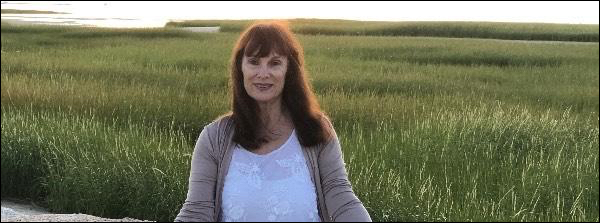
“When I was a child, I was intrigued by a dainty vial of smelling salts which my mother kept in her ‘pocketbook’ and brought with her everywhere. On a hot summer day, when we’d be driving with my dad (Mom did not drive until her later years when Dad faced serious medical issues) she’d suddenly feel faint and call for her mysterious salts. My father would pull the lumbering, finned Chrysler over to the side of the road, rummage frantically in Mom’s bag, waft the vial under her nose, and she would ‘come around.’”—Kathryn E. Livingston
Words & Wonder
By Kathryn E. Livingston

 BOGOTA New Jersey—(Hubris)—December 2025—Lately, in my imagination, I’ve taken to fainting and calling for my smelling salts. No, not because of any actual illness (though I did faint into a plate of French fries due to low blood sugar some 20 years ago). My current fascination with fainting comes from my obsession with a naughty, new delight I’m engaging in; the romance novels of one Georgette Heyer, a British writer born in 1902 (her first book was published in 1921, and she wrote nearly until her death in 1974). It’s our daily news cycle that has led to my fervent and frequent need to escape—preferably into the pages of fiction, particularly the Regency era in England which began in 1811 with the swearing in of George, Prince of Wales, as Regent, until 1820, when he was crowned King George IV.
How did this happen? Having run out of Jane Austen books (three or more times each is enough, I reckon) by divine intervention I came across a book by Heyer. The cover looked rather benign (not a “bodice ripper” and in truth there is no sex in Heyer’s romances save a chaste kiss or two) and the endorsement blurbs were promising. Esteemed British novelist Margaret Drabble wrote that Heyer was her favorite historical novelist, and the venerable Publishers Weekly (for which, ahem, I used to review) wrote that she is the next best thing to reading Austen (arguably she is more comical). But my favorite cover blurb was from one Kate Fenton of The Daily Telegraph: “I’ve read her books to ragged shreds.” Say no more.
Maybe y’all know about Heyer, but she was new to me and discovering an author as a seasoned reader is rewarding (alas, where have you been all my life?). The existence of Heyer has been especially good news for me because of the actual news itself which I try every day to escape at least for a little while (classical music or nature walks may work better for some). Thanks to inter-library loan I’ve read 27 of Heyer’s 28 Regency novels plus four more from the Georgian era, so at this point I’m starting to panic a bit (though she did write six historical novels and some mysteries I could tap into). I know there are any number of tomes I could tackle (all of the Russian authors, perhaps?). But this is not a time (for me at least) for anything dense or grim; that’s what real life is these days and I’m terrified enough. Perhaps I should feel guilty about reading such literary frippery when there is so much pain, but laughter and light are inexorably intertwined and following the light is the only way out of a dark and seemingly endless tunnel.
But back to the fainting. When I was a child, I was intrigued by a dainty vial of smelling salts which my mother kept in her “pocketbook” and brought with her everywhere. On a hot summer day, when we’d be driving with my dad (Mom did not drive until her later years when Dad faced serious medical issues) she’d suddenly feel faint and call for her mysterious salts. My father would pull the lumbering, finned Chrysler over to the side of the road, rummage frantically in Mom’s bag, waft the vial under her nose, and she would “come around.”

She was always fine afterwards, and it wasn’t until years later that I made the connection between my attractively zaftig mother’s near-fainting attacks and her occasional wearing of a girdle (no doubt, car sickness was also a factor). Back in the kingly 1800s, of course, women routinely wore corsets that squeezed their internal organs and interfered with their digestion. (The one and only time I tried wearing “shapewear,” I deeply empathized with those constricted ladies.) There’s also speculation that the toxic substances in their environment made them feel weak—arsenic in the wallpaper and lead in their drinks, for instance. In any case, fainting was definitely a thing.
According to Georgette Heyer’s Regency World, by Jennifer Kloester, “Also known as sal volatile, smelling-salts were an aromatic infusion made from ammonium carbonate and alcohol and scented with lemon or lavender oil.” The author notes that women carried their salts in “a vinaigrette, a small decorative box or bottle with a perforated top which held smelling salts or a piece of gauze soaked with lavender water or vinegar.” Mom had a tiny, glass vial just like those Regency ladies!
In Heyer’s charming romances, the occasional character calls for her “vinaigrette,” especially when vexed (or when striving to get out of a situation with some young man). I’m tempted to simulate a fainting spell when watching CNN or listening to NPR or when sitting in a waiting room where FOX is on. But although these are dramatic and frightening times, I admit that it would be a bit absurd as well as pointless to make a scene. So instead, I’m rummaging through my long-neglected collection of essential oils in search of lavender, patchouli, or some other magic potion said to calm anxiety.
I’ll dab some on my wrists and rev up my diffuser. After all, today will likely be another day of ICE raids (one octogenarian friend calls it “the sadistic snatching of humans”), comedy cancellations, shootings, vaccine rants and such. Is singing and dancing still tolerated by those who delight in banning happiness? I forget. (Yes, I will protest and donate and call my senators.) But I will also read Regency romances by Georgette Heyer, dammit. Unless something changes drastically and soon, every last one will be read to beyond ragged shreds.
Pray excuse me now, I’ve just opened my laptop to the morning news, and I feel a severe “fit of the vapors” coming on. Damn my eyes!


Kathryn Livingston
Kathryn E. Livingston was born in Schenectady, New York and lived there in a stick-style Victorian house until she left for Kirkland College (the short-lived women’s coordinate college of Hamilton College in small-town Clinton, New York). In l975, with her BA in English/Creative Writing, she moved to New Paltz to become first a waitress at an Italian restaurant, and then a community newspaper reporter. A few years later, she married a classical clarinetist she had met in high school and moved to Manhattan (Washington Heights), beginning a job as a trade magazine editor the day after their wedding. A few years later, after picking up an MA in English/Education at Hunter College, she became an editor at the visually stunning American Photographer. Motherhood (three sons) eventually brought her to suburban New Jersey, close enough for her husband to moped home for dinner between rehearsal and performance at the New York City Opera. Between baby diaper changes and boys’ homework assignments, Livingston toiled as a freelance writer on the topic of motherhood for numerous mainstream magazines. She also co-authored several parenting books, several photography books, and eventually wrote a memoir of her anxiety-ridden but charmed life and her path to Yoga: Yin, Yang, Yogini: A Woman’s Quest for Balance, Strength and Inner Peace (Open Road Media, 2014). With the kids now grown, and the husband still playing notes, Kathryn enjoys fiddling with words, writing her blog, puttering in her garden, and teaching the occasional Yoga class. (Author Photo: John Isaac/Author Head Shot Augment: René Laanen.)
2 Comments
Janet Kenny
Delightfully witty. I read novels by Georgette Heyer for about six years of my life, I think I started borrowing them from the public library when I was eleven. My mother read them, too. We both had quite a bit to escape from.
I laughed out loud several times while reading your marvellous essay.
Kathryn
Thank you, Janet. I’m so thrilled to hear that you are a Heyer fan! I love that you read her (at such an early age!) along with your mom. My mother and I shared a lot of books, too, and I regret that we didn’t know of this fabulous author.