Stilling a Beating Mind
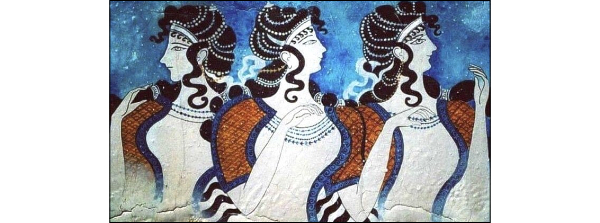 “Reading, for me, is not always an escape, but rather a dissection undertaken to find some meaning in the deleterious repetition of the world’s dark history. At times, I find it futile, this effort to understand that part of human nature which cannot learn from the terrors of the past. I turn to Shakespeare’s The Tempest and Prospero’s line that I accept as a suggestion: ‘[A] turn or two I’ll walk/To still my beating mind.’ And in that stillness find a salient truth. There is no explaining what we are, we can only accept the fact that we have a choice as to who and what we become.”—Helen Noakes
Waking Point
By Helen Noakes

 SAN FRANCISCO California—(March/April 2026)—In times of crisis or anxiety, I find myself turning to books, immersing myself in words and ideas to crowd out my own dark thoughts and fears.
It’s not by chance that, once again, I’ve reread Alexis de Tocqueville’s Democracy in America, to remind myself of what America once was and could be, to wonder at de Tocqueville’s accurate assessment of the mindset of so many in this nation at this time: “There is not, I think, a single country in the civilized world where less attention is paid to philosophy than in the United States.” Americans, de Tocqueville points out, “are universally preoccupied with meeting the body’s every need and attending to life’s little comforts.”
I pick up a book of poems by Seamus Heaney, whose work I’ve only recently discovered, and find cold truth in these lines from “The Mud Vision”:
As cameras raked
The site from every angle, experts
Began their post factum jabber and all of us
Crowded in tight for the big explanations.
Just like that, we forgot that the vision was ours,
Our one chance to know the incomparable
And dive to a future. What might have been origin
We dissipated in news. The clarified place
Had retrieved neither us nor itself—except
You could say we survived.
And from Heaney’s poem, “Digging,” and come upon a line that speaks to me, perhaps to you as well: “But I’ve no spade to follow men like them./Between my finger and my thumb/The squat pen rests./I’ll dig with it.” (Hear the poet read this poem here.)
In my attempt to veer towards the pragmatic, I pick up James Wood’s How Fiction Works, and am astonished by the timeliness of a passage which was meant to describe the evolution of novel writing, but which encapsulates, precisely, the rhetoric of a certain faction in these United States:
Words no longer seem to connect to their referents, because the surety of meaning has been exploded; words have become like an inflated currency—empty , insultingly worthless.
Reading, for me, is not always an escape, but rather a dissection undertaken to find some meaning in the deleterious repetition of the world’s dark history. At times, I find it futile, this effort to understand that part of human nature which cannot learn from the terrors of the past.
I turn to Shakespeare’s The Tempest and Prospero’s line that I accept as a suggestion:
[A] turn or two I’ll walk,
To still my beating mind.
And in that stillness find a salient truth. There is no explaining what we are, we can only accept the fact that we have a choice as to who and what we become


The Mud Vision
By Seamus Heaney
Statues with exposed hearts and barbed-wire crowns
Still stood in alcoves, hares flitted beneath
The dozing bellies of jets, our menu-writers
And punks with aerosol sprays held their own
With the best of them. Satellite link-ups
Wafted over us the blessings of popes, heliports
Maintained a charmed circle for idols on tour
And casualties on their stretchers. We sleepwalked
The line between panic and formulae, screentested
Our first native models and the last of the mummers,
Watching ourselves at a distance, advantaged
And airy as a man on a springboard
Who keeps limbering up because the man cannot dive.
And then in the foggy midlands it appeared,
Our mud vision, as if a rose window of mud
Had invented itself out of the glittery damp,
A gossamer wheel, concentric with its own hub
Of nebulous dirt, sullied yet lucent.
We had heard of the sun standing still and the sun
That changed colour, but we were vouchsafed
Original clay, transfigured and spinning.
And then the sunsets ran murky, the wiper
Could never entirely clean off the windscreen,
Reservoirs tasted of silt, a light fuzz
Accrued in the hair and the eyebrows, and some
Took to wearing a smudge on their foreheads
To be prepared for whatever. Vigils
Began to be kept around pudddled gaps,
On altars bulrushes ousted the lilies
And a rota of invalids came and went
On beds they could lease placed in range of the shower.
A generation who had seen a sign!
Those nights when we stood in an umber dew and smelled
Mould in the verbena, or woke to a light
Furrow-breath on the pillow, when the talk
Was all about who had seen it and our fear
Was touched with a secret pride, only ourselves
Could be adequate then to our lives. When the rainbow
Curved flood-brown and ran like a water-rat’s back
So that drivers on the hard shoulder switched off to watch,
We wished it away, and yet we presumed it a test
That would prove us beyond expectation.
We lived, of course, to learn the folly of that.
One day it was gone and the east gable
Where its trembling corolla had balanced
Was starkly a ruin again, with dandelions
Blowing high up on the ledges, and moss
That slumbered on through its increase. As cameras raked
The site from every angle, experts
Began their post factum jabber and all of us
Crowded in tight for the big explanations.
Just like that, we forgot that the vision was ours,
Our one chance to know the incomparable
And dive to a future. What might have been origin
We dissipated in news. The clarified place
Had retrieved neither us nor itself — except
You could say we survived. So say that, and watch us
Who had our chance to be mud-men, convinced and estranged,
Figure in our own eyes for the eyes of the world.
Digging
By Seamus Heaney
Between my finger and my thumb
The squat pen rests; snug as a gun.
Under my window, a clean rasping sound
When the spade sinks into gravelly ground:
My father, digging. I look down
Till his straining rump among the flowerbeds
Bends low, comes up twenty years away
Stooping in rhythm through potato drills
Where he was digging.
The coarse boot nestled on the lug, the shaft
Against the inside knee was levered firmly.
He rooted out tall tops, buried the bright edge deep
To scatter new potatoes that we picked,
Loving their cool hardness in our hands.
By God, the old man could handle a spade.
Just like his old man.
My grandfather cut more turf in a day
Than any other man on Toner’s bog.
Once I carried him milk in a bottle
Corked sloppily with paper. He straightened up
To drink it, then fell to right away
Nicking and slicing neatly, heaving sods
Over his shoulder, going down and down
For the good turf. Digging.
The cold smell of potato mould, the squelch and slap
Of soggy peat, the curt cuts of an edge
Through living roots awaken in my head.
But I’ve no spade to follow men like them.
Between my finger and my thumb
The squat pen rests.
I’ll dig with it.

Helen Noakes
Helen Noakes is a playwright, novelist, writer, art historian, linguist, and Traditional Reiki Master, who was brought up in and derives richness from several of the world’s great traditions and philosophies. She believes that writing should engage and entertain, but also inform and inspire. She also believes that because the human race expresses itself in words, it is words, in the end, that will show us how very similar we are and how foolish it is to think otherwise. (Author Head Shot Augment: René Laanen.)
2 Comments
John Flanagan
Lots to think about, Helen. Heaney and Shakespeare together…that’ll work! Nice article. Also, really love “Digging”. It’s all of us, isn’t it?
Robin Bradford
Great column! Insightful and inspirational….the squat pen…too bad more people don’t pick it up instead of weapons. Thank you!