The Fire This Time
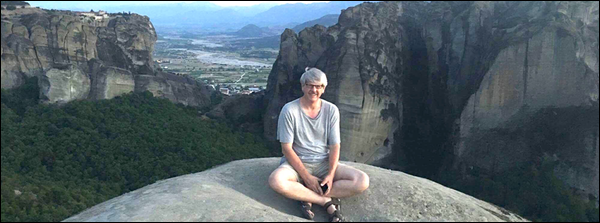
“Designed-to-fail when it was created during the Ronald Reagan administration, the IPCC has concluded that the end-Permian Mass Extinction Event was minor compared to the current one. It’s not even close. In fact, no previous Mass Extinction Event comes close to the ongoing event. Consider the language used in the IPCC’s Global Warming of 1.5°, a report published on 8 October 2018: ‘These global-level rates of human-driven change far exceed the rates of change that have altered the Earth System trajectory in the past . . . ; even abrupt geophysical events do not approach current rates of human-driven change.’”—Dr. Guy McPherson
Planetary Hospice
By Dr. Guy McPherson

“God gave Noah the rainbow sign, no more water the fire next time.”―from, “O Mary Don’t You Weep.”
 BELLOWS FALLS Vermont—(Hubris)—The Mass Extinction Event of about 252 million years ago has been described as The Great Dying. This end-Permian event caused the extinction of about 90 percent of species on Earth. For many years, paleoecologists and climate scientists have believed that this event would not be eclipsed: it would go down in history at the worst of the Mass Extinction Events, never to be outdone.
Along comes the Intergovernmental Panel on Climate Change, the IPCC.
Designed-to-fail when it was created during the Ronald Reagan administration, the IPCC has concluded that the end-Permian Mass Extinction Event was minor compared to the current one. It’s not even close. In fact, no previous Mass Extinction Event comes close to the ongoing event. Consider the language used in the IPCC’s Global Warming of 1.5°, a report published on 8 October 2018: “These global-level rates of human-driven change far exceed the rates of change that have altered the Earth System trajectory in the past . . . ; even abrupt geophysical events do not approach current rates of human-driven change.” As with all reports published by the IPCC, Global Warming of 1.5° relies on peer-reviewed publications to reach this conclusion.
The IPCC is scientifically conservative, as is pointed out in the scientifically conservative peer-reviewed literature. Consider this title, which refers to the IPCC, for the March 2019 issue of BioScience: “Statistical Language Backs Conservatism in Climate-Change Assessments.” This peer-reviewed paper includes this language in the Abstract: “We found that the tone of the IPCC’s probabilistic language is remarkably conservative . . . , and emanates from the IPCC recommendations themselves, complexity of climate research, and exposure to politically motivated debates.”
Politically motivated debates?
I suspect those are just getting started as the Trump administration 2.0 pushes its anti-science agenda into the public sphere. President Trump has distanced himself from science and scientists by claiming anthropogenic climate change is a hoax. Coupled with many other equally bizarre statements, the idea that anthropogenic climate change is a hoax borders on insanity. It is rooted in belief, not science. Rational thought seems stunningly absent from the Trump administration. The rabid pursuit of personal wealth is among the defining characteristics of Trump and his ilk. Justifying this behavior and the belief system which undergirds it is characteristic of cults, not rationalists. This time round, rationalists appear to be absent from Trump’s cabinet and his advisers.
A peer-reviewed, open-access paper published in the renowned Nature series of publications addresses the end-Permian Mass Extinction Event. Published on 2 July 2025, the paper was penned by 17 scholars and titled Early Triassic super-greenhouse climate driven by vegetation collapse. Referring to the end-Permian Mass Extinction Event as the Permian-Triassic Mass Extinction, the Abstract includes this information: “The Permian–Triassic Mass Extinction . . . , the most severe crisis of the Phanerozoic, has been attributed to intense global warming triggered by Siberian Traps volcanism. However, it remains unclear why super-greenhouse conditions persisted for around five million years after the volcanic episode, with one possibility being that the slow recovery of plants limited carbon sequestration. Here we use fossil occurrences and lithological indicators of climate to reconstruct spatio-temporal maps of plant productivity changes through the . . . [Permian-Triassic Mass Extinction] and employ climate-biogeochemical modelling to investigate the Early Triassic super-greenhouse. Our reconstructions show that terrestrial vegetation loss during the . . . [Permian-Triassic Mass Extinction], especially in tropical regions, resulted in an Earth system with low levels of organic carbon sequestration and restricted chemical weathering, resulting in prolonged high CO2 levels. These results support the idea that thresholds exist in the climate-carbon system whereby warming can be amplified by vegetation collapse.”
“[T]he idea that thresholds exist in the climate-carbon system” has long been understood. The notion that “warming can be amplified by vegetation collapse” is not surprising.

Beneath a section titled Discussions, we find this information: “[T]he reduction in continental silicate weathering intensity caused by decreased plant productivity had a greater impact on increasing atmospheric CO2 than the direct effect of a decline in organic carbon burial . . . . This is because while the large reduction in terrestrially derived organic carbon burial acts to increase CO2 levels, it also decreases atmospheric oxygen levels and redistributes nutrients to the ocean, meaning that more marine organic carbon is produced and preserved, and less fossil organic carbon is weathered.”
Surprisingly, the paper then describes under-predictions of the magnitude of temperature rise: “The negative feedback on the organic carbon cycle may be too strong, which may be why SCION fails to replicate more rapid variation in Phanerozoic atmospheric O2.”
SCION is a widely used global climate-biogeochemical model that links steady-state 3D climate and surface processes to a biogeochemical box model. As explained in the peer-reviewed paper, which relies upon many other peer-reviewed papers, “the weathering of sedimentary organic carbon likely increases with temperature, which is not accounted for in the model, and may nullify these negative feedbacks further. A further uncertainty in our modeling is the degree to which plants amplify continental weathering . . . with the ‘best guess’ values from Phanerozoic-scale models of plant weathering strength . . . producing different magnitudes of warming. Previously suggested mechanisms for Early Triassic warmth, such as limited erosion rates or amplified reverse weathering, also potentially played a part in the extreme warmth. They are not included in our model due to the difficulty in quantifying their magnitudes and their timeframes of operation, but they could feasibly raise CO2 and surface temperature further.”
In other words, this peer-reviewed paper relies on additional evidence and the current findings to conclude that, as with many other peer-reviewed papers, the results are probably scientifically conservative. The conservative language continues: “[W]e show that the large and prolonged decrease in tropical plant productivity in the Early Triassic likely resulted in a world that was lethally hot by Phanerozoic standards, a consequence of substantially weakened terrestrial carbon sequestration rates. These conditions persisted for nearly five million years and cooling was only achieved as plant productivity began to increase in the Middle Triassic. We believe this case study indicates that beyond a certain global temperature, vegetation die-back will occur, and can result in further warming through removal of vegetation carbon sinks. Our study demonstrates that thresholds exist in the Earth system that can accelerate climate change and have the potential to maintain adverse climate states for millions of years, with dramatic implications for global ecosystem behavior.”
The idea that “thresholds exist in the Earth system that can accelerate climate change and have the potential to maintain adverse climate states for millions of years” is an understatement. As demonstrated by earlier peer-reviewed research, the “adverse climate states” may well carry over to the extinction of all life on Earth.
I understand the propensity for understatement in peer-reviewed papers. In addition to the process of peer review leading to scientific conservatism, I doubt any ecologist desires the extinction of all life on Earth. These are people who chose careers based on their interest in, and love for, life. I cannot imagine other ecologists desiring the loss of complex life. It’s what I live for, and I doubt I’m alone in that thought.

Guy McPherson
Dr. Guy McPherson is an internationally recognized speaker, award-winning scientist, and one of the world’s leading authorities on abrupt climate change leading to near-term human extinction. He is professor emeritus at the University of Arizona, where he taught and conducted research for 20 years. His published works include 16 books and hundreds of scholarly articles. Dr. McPherson has been featured on television and radio and in several documentary films. He is a blogger and social critic who co-hosts his own radio show, “Nature Bats Last.” Dr. McPherson speaks to general audiences across the globe, and to scientists, students, educators, and not-for-profit and business leaders who seek their best available options when confronting Earth’s cataclysmic changes. Visit McPherson’s Author Page at amazon.com. (Author Head Shot Augment: René Laanen.)
2 Comments
Cottrell
I have followed U 4 many years now and am still Inspired by
your Diligence and Dedication to the forthwith of what has
been under our stewardship.
I must confess that one of the reasons I still listen is to
wait to hear U say………ONLY LOVE REMAINS
Sigh
& much Blessings 2 U Guy
Guy R. McPherson
Thank you for the wonderful comment, COTTRELL. Also, thank you for following my work.