Tutti Frutti: Fruits
“Unlike his Greek neighbors, the author of Genesis took a different approach to the subject of man’s mortality: humans were created, He/She said, from the dust and bones found in God’s own orchard, but the ungrateful couple soon decided ignorance was not bliss and opted for the fruit which allowed them to discern right from wrong. Some call this choice sinful; I call it courageous.”—Skip Eisiminger
Skip the B.S.
Skip Eisiminger

I. “In my 80 years I have not missed a meal—/just being late upsets the commonweal.”—The Wordspinner
 CLEMSON South Carolina—(Hubris)—August 2025—During, and for several years after World War II, my wife Ingrid’s family owed their survival to an intensely cultivated half-acre garden and orchard behind their home in the German village of Wolsdorf.
While millions of Germans were dying of war wounds and starvation in the 40s (some say more died after the war than during), nine Barmwaters, Rautmanns, and Bethges survived largely unscathed thanks to their diligent efforts with spade and pruning hook, for there were no gas-powered garden tillers. Indeed, local trucks were running on steam. It helped that three of the nine in the family were children, and two were elderly, who may not have weighed two-hundred pounds between them.
Tragically, Opa Rautmann died at age 70 just six months after the war ended still secretly listening to newscasts from London, hoarding food, and trying to teach himself Latin, which he hoped would give him access to the social echelon he’d once occupied as a tailor-shop owner in the cosmopolitan city of Magdeburg. Fearing repercussions if the Allies discovered his son-in-law’s pistol, he wrapped it in axle grease, sealed it in a tin can, and planted it in the garden. By some miracle, it has not germinated in the blood-soaked soil of my Teutonic ancestors, for it has never been found.
The closest anyone in the three families came to being wounded was Uncle Willy who, while defying an air-raid warning, continued to weed the garden and was strafed by an unidentified bomber escort. Late in the war, a P-51 Mustang crashed on the farm in a barley field just 50 meters from the Barmwaters’ front door. A few days later, the villagers were still finding parts of the pilot’s body. Given that Wolsdorf lay on a line directly connecting London and Berlin, it was common to see hundreds or even a thousand Allied bombers flying overhead. After these flyovers and German attempts to shoot them down, Ingrid and Rolf collected any flak and shrapnel they could find and took it to the village recycling center.

Given my theme here of fruits, I’ll skip the vegetable portion of the garden and focus on the orchard. Beside the garden walls were gooseberry, raspberry, and currant bushes. Here and there were strawberry patches which came and went depending on the family’s needs. In other words, potatoes trumped those luscious berries that have a more intense flavor than any I’ve tasted stateside. Near the house, the chicken coops, the rabbit warren, and the garden gate were a hazelnut and Damson plum tree. Toward the back of the garden were two greengage plum and six apple trees. The oldest of these was Ingrid’s favorite, for it was here that she often imagined she was an on-board mechanic like her often-absent father in the first decade of her life.
Next to Ingrid’s “pilot tree” was a plum tree whose branches were low enough that it could serve as the children’s “hospital” for “wounded pilots.” It was in the orchard that she often tried to imagine bananas, an exotic fruit her grandmother described as “like cucumbers only yellow.” The hunger for fruit that one has only heard one’s elders rave about is perhaps best illustrated by the story of the British girl who grabbed four bananas off the first shipment to arrive in her country after the war, devoured them on the docks, and choked to death.
Each of the three families had a third of the garden for the vegetables they grew. The fruits, however, were harvested together at one time and divided equally. Like Marcel Proust’s memory of jam-covered sponge cake and lime tea, the scent of apples 80 years after the fact carries Ingrid back to the basement/bomb shelter where the family’s apples were stored alongside the coal and kindling.
The cherries and plums, being more perishable, were canned and carefully rationed. If anyone ran low on potatoes or sugar beets, there were several large farms nearby to work on during planting and harvest seasons where physical labor was repaid in precious spuds. By law, Ingrid’s mother, Ilse, had to serve 600 hours a year working in some capacity for the state. During the harvest, she often came home covered in chaff after working 15 hours on a grain-harvester. A 70-hour week was not uncommon. If someone’s farm tab ran low, there was always the “midnight requisition.” Ingrid’s brother Rolf was an accomplished thief aided as he was by the blind eyes of the farmers which insured that no one from Wolsdorf, including hundreds of refugees who’d fled the Russians, ever starved. Once when Ilse asked her go-to farmer for a few sugar beets, Farmer Schultze said, “You know, Frau Barmwater, I can’t sell or give you any, but there’s nothing to stop you from stealing some.”

II. “After the first taste/of Eden’s mango,/the mango’s taste/was only mango.”—The Wordspinner
Salty snacks and fruit have long been my Achilles’ tooth. My earliest realization of this was at a backyard fish-fry at my grandparents’ home in South Georgia shortly after Dad returned from the war. Papa had caught a “mess of fish,” and my grandmother Dear’s Black cook was frying them up in a two-fisted, cast-iron skillet under their pecan tree. I remember liking the taste of the fish, but when I gagged on a bone, I went for the hushpuppies and cracked myself some nuts. When Mother saw what I was doing, she told me to use lots of lemon on the fish because “that would dissolve the bones.” Swallowing helped, I learned, if you ignore the bones and just “chow down,” as we said in the army with ten minutes to eat a mess of C-rations.
Dessert that memorable afternoon arrived in the back of Papa’s pickup truck. He’d bought several watermelons, “three for a quarter,” he said, and while most of the guests were loosening their belts, he rolled a couple of melons off the tailgate onto the driveway. Ripe as they were, they cracked wide open, and I soon found myself fighting with my sisters and cousins for pieces of those sweet, seedless hearts. We all needed a bath after that happy feeding frenzy.
Sunday school raised another red flag at the dinner table: in Genesis, Jehovah tells Adam, “I’ve given you fruits and vegetables which are your meats.” That strongly suggested I should not be eating catfish at the next fish-fry regardless of the lemon juice I baptized it with. A few weeks later, our Presbyterian Sunday School teacher read us a passage from Acts in which Jehovah tells Peter, “Kill and eat . . . nothing I’ve given you is unclean.”
As Papa used to say, “Should I fish or cut bait?” I was that starved but paralyzed ass between two bales of hay, but when I read that Jesus probably ate lamb and fish sauce at the Last Supper, I became a committed omnivore with a bias like Eve toward fruits.
The bias arose in part when I discovered my parents’ bottle of maraschino cherries in the back of the refrigerator. Once, I ate half a bottle at one sitting and was told never to eat them again. “They are for our guests,” Dad said. But after the next cocktail party they hosted, I noticed that many of the guests had left their cherries marinading in the heel taps. So, I drank these right up and was soon seeking a lime to put in a coconut to allay my crapulence. The Vatican once banned chocolate because it was believed to be an aphrodisiac, but for many RCs, that just made chocolate irresistible. It was the same with me and the bourbon-soaked cherries.

I believe it was Johnny Carson who disparaged fruitcake in a joke that still circulates more than five decades after it was first told. According to Carson, there’s one fruitcake in the world that orbits Earth like a fruity satellite. A poll taken in 1992 found that 45 percent of the people who buy or are given a fruitcake enjoy it as I do. But the majority either add some bourbon and regift it, send it to a landfill, or use it as a doorstop. Personally, I love the stuff lovingly made by Trappist monks. Ingrid, who won’t touch it, buys me one every Advent season but, like Miss Piggy, I don’t eat more than I can lift.
Once Ingrid ran across Giuseppe Arcimboldo’s Counter-Reformation portrait of Vertumnus, the Roman god of fruits and vegetables. She copied it and sent it to me saying it reminded her of me at my tutti-frutti breakfasts. If you’re not familiar with the portrait, Vertumnus’s facial features include apple cheeks, a raspberry tongue, and several bunches of grapes for hair. I responded by sending her a picture of a 10-watt frog that had gorged on fireflies, saying the frog reminded me of her pink hue after she’d eaten a pound of Bing cherries.
Speaking of my tutti-frutti breakfasts, here’s what I ate to break my most recent fast:
- 6 plump blackberries,
- 15 tart blueberries,
- 5 seedless grapes
- 2 Cutie tangerines,
- 5 dried plums, not prunes,
- ½ banana with a hint of green on the peel,
- ½ cup of Cheerios,
- 2 tbsp. of wheat bran,
- and 1.5 cups of 2 percent milk.
I preface each breakfast saying grace to my Vertumnus, “Thanks for the fruit.” When I’ve finished, I tell her, “Mahalo.”
Later in the season, I’ll add strawberries, raspberries, cherries, and peaches while deleting the blue and blackberries. I’ve never been a fan of “peach flannel,” so I give mine a vigorous washing with a soft brush. Of course, one must be conscious of the season, but these days, fruits from the southern hemisphere are available in the north almost year-round.
Vaclav Smil raises an interesting point in his book How to Feed the World: “It is hard to imagine how an existence centered on fig-picking would eventually lead to writing, the Parthenon, and antibiotics.” After the breakfast I inventoried above, I had a glass of orange juice as I answered a few emails, contemplated the tragedy of Fruitlands (more on that later), and decided, “Civilization owes omnivores a debt of gratitude.”


III. “Watermelons/Green Buddhas/On the fruit stand./We eat the smile/And spit out the teeth.”—Charles Simic
A vegan teaching assistant once lectured a class I attended on the short-lived, utopian experiment at Fruitlands, Massachusetts. To live there, he said, one had to subscribe to the belief that the best fruits and vegetables “aspire upward.” Carrots and peanuts, therefore, were forbidden because “they showed a lower nature by growing downward.” It seems the Greek gods had been right all along, for they dined on ambrosia, a fruit cocktail, and washed it down with nectar, a fruit juice. I find it interesting that the root of both “ambrosia” and “nectar” is “immortality.” It seems the Indo-European gods were hinting at what the human diet should be.
Unlike his Greek neighbors, the author of Genesis took a different approach to the subject of man’s mortality: humans were created, he/she said, from the dust and bones found in God’s own orchard, but the ungrateful couple soon decided ignorance was not bliss and opted for the fruit which allowed them to discern right from wrong. Some call this choice sinful; I call it courageous.
The fruit Adam and Eve tasted has never been identified, but the apple, grape, pomegranate, fig, carob, citron, pear, quince, banana, and the sea coconut have all been nominated. Mushrooms have also been nominated, but they are fungi. My money’s on the fig because fig leaves hid the couple’s shame once they realized they were naked; the fig is the only fruit specifically mentioned in Genesis 1-5, and fig seeds have been discovered at Jericho that are 11,000 years old. Many Bible readers assume the source of human discord was the apple because the Latin for “apple” is malus, a word, depending on the context, that can mean “fruit” or “evil.” But the apple, as we know it, existed only in Central Asia in Moses’ day, some 1,300 miles from the confluence of Eden’s four rivers, which satellite photography shows is now under the Gulf of Persia.
Apples, not honey, are the probable source of humanity’s sweet tooth because honey is just too hard to harvest. But over the last century, chocolate has made serious inroads in apples’ domain: in 1910, Americans ate 54 pounds of apples annually; today it’s only 16 thanks in part to the 11 pounds of “chocolate satori” we consume. Apparently, this decline is true for other fruits as well because annually, one college-age student contracts scurvy, and many rural folks won’t touch an orange. Growers are doing their best to cope with the decline: coconuts now come with glued-on tabs to make them easier to open, pineapples and watermelon often come in pre-packaged, bite-size morsels, and prunes at great expense have been renamed “dried plums” to make them more appealing.


IV. “Return to Eden/—For women everywhere/Quince, who never gave a fig in the first place,/drove his lemon back to the grapefruit league/when peachy Ms. Hazel Cherry/landed the plum job as MLB’s top banana./Raspberries from the boo-birds were stifled,/and the apple-pie order of the universe/returned to the strawberry fields forever.”—The Wordspinner
As the “pome” above suggests, there are many extremes in the fruitarian universe; here’s a short list:
- Raisins dropped in champagne will bounce up and down. Try that with an English pea!
- Hussam Saraf holds the record for grafting five fruits on one tree: plum, apricot, almond, peach, and cherry.
- Some regard lime Jello as a fruit though, on one menu, it was listed as a vegetable.
- The Pioneer Heritage Museum in Hurricane, Utah has a 118-year-old fruitcake on display.
- One Japanese Oisha strawberry retailed in 2024 for $6.
- The cannibal Idi Amin became a fruitarian when he realized human flesh was “too salty.”
- Mohandas Gandhi was a fruitarian for five years.
- Anton Chekhov liked to cram 20 cherries in his mouth at one time; my record is half that.
- Celebrity fruitarian Jackie Alnes eats 30 bananas a day and drinks two liters of OJ.
- Mait Lepik ate ten bananas including their skins in three minutes flat.
- Patrick Bertoletti holds the Guiness record for the most bananas peeled and eaten in one minute: eight.
- Nutarians won’t eat a ripe peach.
- Some Jains won’t eat fruit seeds because they contain “future plants.”
As they say in Tibet, “Laugh triple, walk double, and eat half,” unless, I would add, you’re eating fruit, and you’re getting some protein elsewhere.


Appendix
By my count, apples are the most popular fruit on Earth. “Apple” once referred to any edible thing plucked from a tree or dug from the Earth, but I base my opinion on the fact that “apple” shows up more often than any other fruit in proverbial literature. A deep dive into that body of work reveals what I call the “wisdom of the apple.” Does anyone seriously think Newton would have formed his Theory of Universal Gravitation if a ripe plum or grape had awakened him from his famous slumber? Just kidding, of course. Here’s what I mean by “apple wisdom”:
- A stolen apple is better than your own. (US)
- The apple given is better than eaten. (UK)
- The apple doesn’t fall far from the stem. (German)
- Next to the rotten apple, the good one also spoils. (Russian)
- The apple that ripens late keeps longer. (Serbo-Croat)
- Sour apples make a good pie. (US)
- An onion is an apple if you’re hungry enough. (Hebrew]
- Adam ate an apple, and our teeth still ache. (US)
- Eat an apple on going to bed, and you’ll keep the doctor from earning his bread. (Welsh)
Perhaps “wisdom” is not the right word for the observation that stolen apples are the most flavorful, but the Welsh proverb above, though its medical advice is questionable, is probably the best known and has inspired several by-products:
- An apple a day keeps the doctor away, especially if your aim is good.
- Eat an apple a day because doctors don’t make house calls anymore.
- An apple a day keeps the doctor away, but an onion keeps everyone away.
The wisdom of fruit should not be confused with its humor:
- What’s an apple with its girdle off? A pear
- What’s a pubescent plum? A peach
- What’s a tomato smoothie? Ketchup
- What’s a sunburnt grape? A raisin
- What’s a hairy lime? A kiwi
- What’s a plum with a kick in the pants? A prune
- What are the grapes of wrath? Any cheap wine
- What’s a mix of peach brandy and orange juice? A fuzzy navel
- What’s a grilled pineapple wrapped in bacon? A swine apple
- What’s a blend of Burgundy and holy water? Amazing grapes
Finally, here are three hybrids I’ve never eaten but would love to sample: a limequat is a blend of limes and kumquats; a pineberry is a blend of pineapples and strawberries, and a pluot is a blend of plums and apricots. Yum!

Sterling Eisiminger
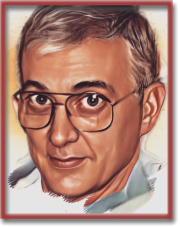
Dr. Sterling (“Skip”) Eisiminger was born in Washington DC in 1941. The son of an Army officer, he traveled widely but often reluctantly with his family in the United States and Europe. After finishing a master’s degree at Auburn and taking a job at Clemson University in 1968, he promised himself that he would put down some deep roots. These roots now reach back through fifty years of Carolina clay. In 1974, Eisiminger received a Ph.D. from the University of South Carolina, where poet James Dickey “guided” his creative dissertation. His publications include Non-Prescription Medicine (poems), The Pleasures of Language: From Acropox to Word Clay (essays), Omi and the Christmas Candles (a children’s book), and Wordspinner (word games). He is married to the former Ingrid (“Omi”) Barmwater, a native of Germany, and is the proud father of a son, Shane, a daughter, Anja, and grandfather to four grandchildren, Edgar, Sterling, Spencer, and Lena. (Author Head Shot Augment: René Laanen.)
3 Comments
Kristen J Holder
A masterpiece indeed! So prolific and now I know why; htat breakfast!
I just saw my first pluot at Whole Foods last week! Make a quick dash, you might get lucky. But what you really need to do is spend some time in Miami. There are so many delicious options you have failed to mention.
Skip
Thanks, Kris–you are too kind.
Help me with “htat”– is that an acronym?
Skip
Skip Eisiminger
I must be going blind, htat is just a typo, sorry.