Tell Me What You Ate (Best of Hubris)
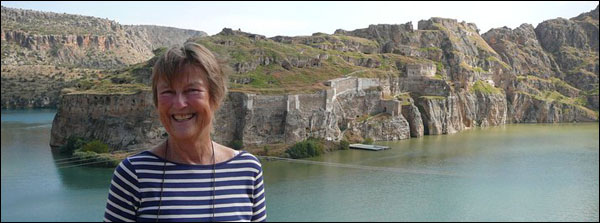
“One day, though, I had an epiphany. I must have been about twelve or 13, and my classmate Doris had asked me over for Sunday lunch. They had no servants and her mother was the cook. I can’t remember whether we ate in the kitchen or not, but I do remember watching her take a roast pork out of the oven and I have never forgotten the sumptuous crunchiness of that first bite of crackling. It made me swoon.”—Diana Farr Louis
Eating Well Is The Best Revenge
By Diana Farr Louis

Editor’s Note: This column originally ran in February 2018.
ATHENS Greece—(Hubris)—September/October 2025—This Epiphany, instead of watching young men all over Greece plunge into icy waters all over Greece to fetch the crosses thrown by priests, I found myself riveted by a paragraph from an article in The Guardian excerpted from the introduction to an intriguing book by Laura Shapiro: What She Ate: Six Remarkable Women and the Food That Tells Their Stories. The questions Shaipiro poses challenged me and sent the memory wheels spinning in all directions.
“Tell me what you ate when you were a child,” writes Shapiro, “and whether the memory cheers you up or not. Tell me if you cook, and who taught you, and why you don’t cook more often, or less often, or better. Please, keep talking. Show me a recipe you prepared once and will never make again. Tell me about the people you cook for, and the people you eat with, and what you think about them. And what you feel about them. And if you wish somebody else were there instead. Keep talking, and pretty soon, unlike Brillat-Savarin, I won’t have to tell you what you are. You’ll be telling me.”
But I’ll start here with the author’s first question, about food and childhood.
Picture this. It’s one o’clock on Sunday on Long Island in the 1950s and the large Farr family is gathered around the mahogany table, to which leaves have been added for this weekly meal. We have all been to St John’s Episcopal Church, either to Sunday school or the service, where my father was often one of the ushers passing the plate. With my parents at either end, the vicar, and five children (one in a highchair) plus the occasional guest, there were always at least eight of us.
It’s a ritual and Sunday is sacred. We may invite a friend, but we are only rarely allowed to go to someone else’s house. And we are never allowed to go to the movies on God’s day. Saturday is set aside for that. We plead, we whine, but the rule stands. And we actually manage to have fun because friends descend after lunch and we play frisbee or touch football and, in the evening, the older ones gather round the piano and sing old songs like “Aura Lee”(made famous by Elvis as “Love Me Tender”). Both my father and my brother Tom have glorious tenor voices and Tom has musical friends. I am the only girl and loving it.
But back to lunch. The table is set with our best china, monogrammed silver cutlery, linen napkins, and cut-glass goblets for water. Wine is absent, though my parents probably had a martini before the meal. I usually sit on my father’s left, next to the minister, Herbert H. Hill, of Liverpool. Being rather high church, he likes to be called Father Hill but, in private, Tom calls him Old Heaven. His color is sepulchral, but he is kind and not dogmatic. He comes without either Boy, his terrier, or Walter, his faithful acolyte. After he’s left us, Tom is also fond of joking, “How do you put out an acolyte?”
Dad asks the reverend to say grace; he says it himself before every other meal. “For what we are about to receive, may the Lord make us truly thankful.” This can have variations, as per a New Yorker cartoon of the day, which concluded “with the possible exception of these instant mashed potatoes.” Just invented, they did leave something to be desired.
Or Dad could quote, as he often did, the official US Navy grace, which was short and to the point. He’d thump the end of his knife on the table and say, “Thank God.” On one occasion, he asked my mother’s brother-in-law, Uncle Giampi, visiting with her sister from Italy, whether he’d like to say grace. And Giampi, trying to replicate the Navy prayer, thumped his knife and exclaimed, “For God’s sake!” This became part of Dad’s repertoire, too.
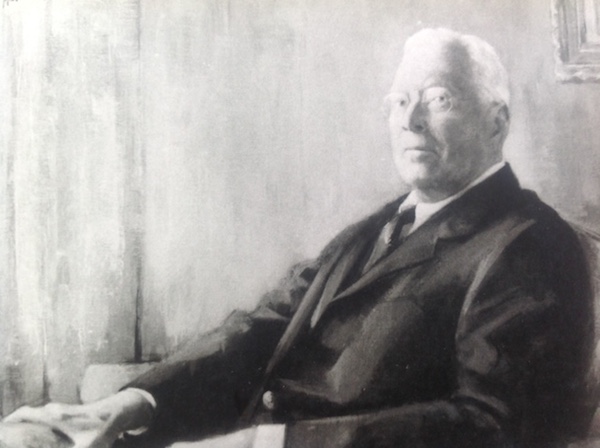
By this time, the maid, Vivian, a sweet shy woman from Sweden, had brought in the roast. For it was always a roast, either beef or lamb; sometimes a capon, but never ever pork or veal. Dad had a disdain for veal, as namby-pamby with no taste, but I could never divine the source of his abhorrence of pork, unless it was the fear of trichinosis, which lingered back then.
Then he would stand up and start to carve meticulous, expert, thin slices of rare meat, perfectly cooked to the taste of most of us, though my younger siblings, Woody and Nancy, would only eat well done and without much relish. During this performance, a guest would often say, “Shelton, are you sure you have enough?” And Dad would reply, “Never worry about the dealer or the carver,” a maxim that embedded itself in the memories of us all.
In fact, he made sure that he and I had the best tidbits, the crispy fat, the pope’s nose, slices well moistened by the bloody juices.
Meanwhile, Vivian would be passing the vegetables: roast potatoes or real mashed, Brussels sprouts, string beans, peas, broccoli—always boiled, and with butter on top.
I do not remember ever having anything different, sauced or spiced or stewed; of course there were no onions or garlic.
Dessert was either apple pie, ice-cream, or strawberries, in spring. And here I can still see my little sister Nancy, hamster cheeks swollen with chewed but not swallowed meat, trying to filter some ice-cream or fruit down her throat. She was not allowed to have dessert until she’d cleaned her plate, and she’d developed all sorts of subterfuges, like sticking unwanted bites in a hollow under the table.
A bowl of strawberries would inevitably elicit another maxim from Dad: “Doubtless, God could have made a better berry; doubtless, God never did.” We would groan every time, but now we find ourselves quoting him.
Our meat and two veg regime dominated every other meal as well as Sunday lunch. On school evenings, we four kids (Tom was either away at college or ate with the grown-ups) had supper at 5:30. The week’s menu was unvaried: lamb chops, roast chicken, hamburgers, steak, liver, and fish on Fridays.
At one of those meals, my younger brother Woody erupted: “Steak again!?” he moaned. Tom happened to be passing though the dining room. “What did I hear you say, you little pipsqueak? If I ever hear you say that again, I’ll beat the hell out of you! You have no idea how lucky you are. I grew up during the war and we never saw meat. Be grateful.”
No doubt we were spoiled and privileged. But, looking back, I’m surprised at my stepmother’s lack of cravings for the food of her youth, for she had grown up in Italy where her father was a consul in Turin and in Florence. Did she never long for eggplant parmigiana or pollo alla cacciatore? Something with a little sauce, infiltrated by an herb or spice? She had only to ask the cook, Helen, also from Sweden, who must have been bored turning out the same dishes week after week. (Though she consoled herself with making double orders over the phone to the butcher and grocer: one for us, one for her family, until my father wondered why the bills were so high.)
Or maybe it was Dad’s innate American resistance to things “foreign.” Mom wouldn’t have tried too hard to convert as she took little interest in food, whether cooking or eating. She also had only one dish to her name, spaghetti with meat sauce, which she made on Saturday nights, when Helen was off.
One day, though, I had an epiphany. I must have been about twelve or 13, and my classmate Doris had asked me over for Sunday lunch. They had no servants and her mother was the cook. I can’t remember whether we ate in the kitchen or not, but I do remember watching her take a roast pork out of the oven and I have never forgotten the sumptuous crunchiness of that first bite of crackling. It made me swoon. I also remember lapping up some sort of vegetable stew, something with tomatoes and onion.
It was my first glimpse into a beautiful, exotic world of more complex tastes. And, years later, after trips to Spain, Italy, France and, of course Greece, I came to view the protein-rich, sauce-less diet of my youth as monotonous and dull. In some ways, I think I grew up deprived.
But I’ve made up for it.

Recipe
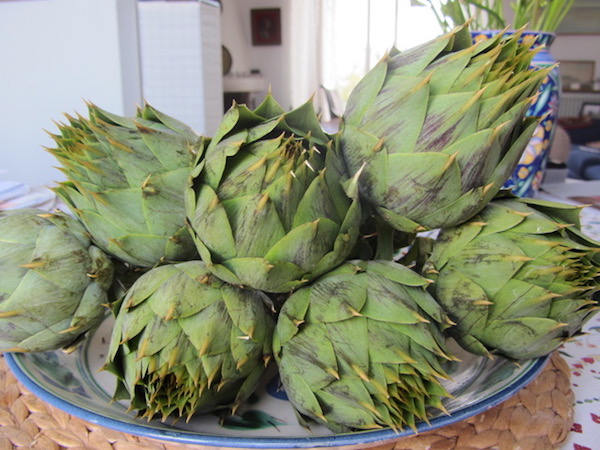
Kid with Artichokes in Egg-Lemon Sauce
(Katsikaki avgolemono me anginares)
Here is a dish I could never have conceived of until I moved to Greece. First of all, what American would consider eating baby goat even if she could find one, and how could we have dreamed of a dish that required six artichokes, when that vegetable was so expensive in New York that we only indulged a few times a year, taking one each and peeling off a leaf at a time before dipping it into a vinaigrette. Even today, I find it a sacrilege to throw away the outer leaves and cook only the heart and the most tender inner leaves, as Greek recipes prescribe. As for binding the veg and meat in a sauce made of eggs and lemon? What a preposterous notion!
1 kg (2 lbs) boneless kid (or baby lamb), cut in large cubes
120 ml (½ cup) olive oil
1 large onion, coarsely chopped
60 ml (¼ cup) lemon juice
6 artichokes, cleaned (and halved or quartered, depending on size and left to soak in acidulated water)
½ cup chopped fresh dill
1 bunch green onions, chopped
salt and freshly ground pepper, to taste
For the Egg-Lemon Sauce:
60 ml (¼ cup) lemon juice to taste
2-3 eggs, at room temperature
Heat the oil in a large stew pot and brown the meat on all sides, a few pieces at a time. Remove it to a platter, lower the heat and sauté the onion gently until very soft, stirring from time to time with a wooden spoon so it doesn’t burn. Add 240 ml (1 cup) water and the lemon juice, scraping up any bits stuck on the bottom, and return the meat to the pot. Bring to the boil and simmer, covered, until the meat is half-cooked, about 30 minutes. Add the artichokes, dill, spring onions, and seasonings, and simmer till tender. Pour in a little more water if necessary.
Make the Egg-Lemon Sauce at the last minute. Beat the eggs and lemon together until frothy. Slowly add several tablespoonfuls of broth from the stew to the mixture, whisking while you pour to prevent the eggs from curdling. Stir the contents back into the stew pot, off the heat. Mix thoroughly, reheat very gently to avoid scrambling, and serve at once. Serves 4-6.
This recipe is taken from my book, Feasting and Fasting in Crete, published in 2001 by Kedros (Athens) and is still available in Greek and English. Hint: The English edition is greatly discounted.
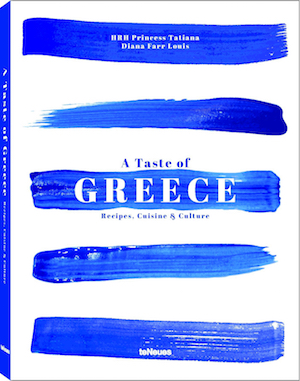
To order copies of Diana’s Farr Louis’ newest book, A Taste of Greece: Recipes, Cuisine & Culture, from Amazon, click on the book cover below.

Diana Farr Louis
Diana Farr Louis was born in the Big Apple but has lived in the Big Olive (Athens, Greece) far longer than she ever lived in the US. She was a member of the first Radcliffe class to receive a degree (in English) from Harvard . . . and went to Greece right after graduation, where she lost her heart to the people and the landscape. She spent the next year in Paris, where she learned to eat and cook at Cordon Bleu and earned her first $15. for writing—a travel piece for The International Herald Tribune. Ever since, travel and food have been among her favorite occupations and preoccupations. She moved to Greece in 1972, found just the right man, and has since contributed to almost every English-language publication in Athens, particularly The Athens News. That ten-year collaboration resulted in two books, Athens and Beyond, 30 Day Trips and Weekends, and Travels in Northern Greece. Wearing her food hat, by no means a toque, she has written for Greek Gourmet Traveler, The Art of Eating, Sabor, Kathimerini’s Greece Is, and such websites as Elizabeth Boleman-Herring’s www.greecetraveler.com. A regular contributor to www.culinarybackstreets.com, she is the author of two cookbooks, Prospero’s Kitchen, Mediterranean Cooking of the Ionian Islands from Corfu to Kythera (with June Marinos), and Feasting and Fasting in Crete. Most recently she co-edited A Taste of Greece, a collection of recipes, memories, and photographs from well-known personalities united by their love of Greece, in aid of the anti-food waste charity, Boroume. Her latest book, co-authored with Alexia Amvrazi and Diane Shugart, is 111 Places in Athens that you shouldn’t miss. (See Louis’ amazon.com Author Page for links to her her titles.) (Author Photos: Petros Ladas. Author Head Shot Augment: René Laanen.)
One Comment
di
As always – you are able to describe food – all food – in such a mouth-watering way. Loved this piece Diana. It took me back to my own childhood Sunday dinners – always a roast with Yorkshire pudding – in the UK it was either beef or lamb. Post war Britain was not easy – we were still on rations and I guess mum did her best – though she never claimed to be a cook. Indeed, she grew up as the youngest of four. Her own mother died when she was only 4 yrs old so it was her father who was the ‘cook’ and from what I can gather they grew up on stews and soups – and rice pudding!!
Pork was a rarity and Chicken in those days was expensive and special (eg for Easter or Christmas). And it was dad who made Sunday dinner….. the rest of the week would be humble meals such as liver, stewing steak slow cooked as a casserole in the oven, ox tail or neck of mutton stews with dumplings in winter, meat and potato pie, cottage pie – and always steamed fish once a week (usually cod or haddock filet) – and all our dinners were accompanied by potatoes (boiled or mashed – except for Sunday when they were roasted – and carrots, or turnips, or cabbage, or peas, or cauliflower. Onions were never used because mum couldn’t tolerate them. We usually finished off with a milk pudding – usually rice but sometimes sago. Mum was a good pastry cook so apple pie and custard was also a favourite. In summer we might indulge in strawberries picked from our garden with tinned cream or evaporated milk. Whatever was available I guess….
Coming to Greece was a revelation and I learned much of my cooking from my husband who somehow had absorbed how to cook from watching his mother….!!! Not that I’m an enthusiastic cook even now but at least I learned about other wonderful ingredients and mixes. I refer to my own cooking as ‘Grenglish’ – though I do cook some traditional Greek dishes. Garlic is one thing I am unable to tolerate so when we eat out I always have to check if garlic has been used…. I’m proud to say both my daughter and son have become excellent cooks – often having picked up ideas and tips and recipes from their Greek relatives….