The Silences of Paula Goff
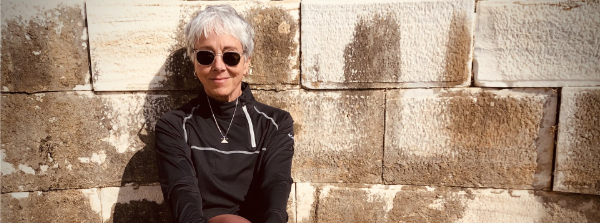
“Quiet, unassuming, and marginalized—a country-woman from the mill village of Olympia, where she began and ended her life, Goff was only one of several women I knew there whose worlds were upended, whose florescence as writers was pinched off, and who barely survived their entanglements with James Dickey. To Hart, Goff finally admitted she wished she’d never met the man she credited with her emergence as a poet. Lovers from the moment they met, in 1969, till 1976, the year Dickey’s first wife, Maxine, died, Goff was considered Dickey’s soul mate in our USC circle. In retrospect, while the acclaimed author did, at first, nurture her talents, increasingly, over the decades, he sucked the life right out of her.”—Elizabeth Boleman-Herring
Hapax Legomenon
By Elizabeth Boleman-Herring, Publishing-Editor

“Some women get erased a little at a time, some all at once. Some reappear. Every woman who appears wrestles with the forces that would have her disappear. She struggles with the forces that would tell her story for her, or write her out of the story, the genealogy, the rights of man, the rule of law. The ability to tell your own story, in words or images, is already a victory, already a revolt.”―Rebecca Solnit, Men Explain Things to Me
“Remember women’s silence of centuries; the silences of most of the rest of humanity. Not until several centuries ago do women writers appear. Sons of working people, a little more than a century ago. Then black writers (1950 was the watershed year). The last decades, more and more writer-mothers. Last of all, women writers, including women of color, of working class origin, perhaps one generation removed; rarest of all, the worker-mother-writer.”―Tillie Olsen, Silences
“Pity the biographer of James Dickey. If this biographer . . . gets all of the far-flung outrageous stories on paper, then the life of James Dickey will make Ernest Hemingway look like a florist from the Midwest.”―Pat Conroy, at Dickey’s Memorial Service
 PENDLETON South Carolina—(Hubris)—September/October 2025—I found no photograph online of Paula Culclasure Goff (1938-2003), my fellow poetry student and instructor at USC, in Columbia SC. Nor can I, or you, now find her poems. There is a bare bones notation stating that, in 1988, The South Carolina Academy of Authors, “with the mandate of assisting emerging writers” voted to award Columbia poet Paula Goff a fellowship and an unrestricted cash award of $1,600. But Paula Goff, the writer, emerged, only to slip back again into almost total silence.
Like Eurydice, she briefly followed a massively flawed Orpheus, her teacher and mentor and lover, James Dickey, out of that silence and, I believe because of him, reentered the realm of wordless shadow.
In Henry Hart’s biography of the poet, James Dickey: The World as a Lie (2000), Goff appears on 30 pages, but she is there as though in profile only, a minor character in the huge, sprawling, overpopulated life of the author of Deliverance.
Quiet, unassuming, and marginalized—a country-woman from the mill village of Olympia, where she began and ended her life, Goff was only one of several women I knew in Columbia whose worlds were upended, whose florescence as writers was pinched off, and who barely survived their entanglements with James Dickey.
To Hart, Goff finally admitted she wished she’d never met the man she credited with her emergence as a poet. Lovers from the moment they met, in 1969, till 1976, the year Dickey’s first wife, Maxine, died, Goff was considered to be Dickey’s soul mate and amanuensis in our USC circle. In retrospect, while the acclaimed author did, at first, nurture her talents, increasingly, over the decades, he sucked the life right out of her.
Ironically, when Hart was casting about for a subtitle for his biography, and suggested “A Rage to Live,” Dickey responded: “No. Henry, we’ve got to shake them up out there. We’ve got to call it: James Dickey: The World as a Lie” . . . a line he lifted directly, and without crediting her, from the title of one of Goff’s poems.
I have only recently read the Hart biography. After I earned my MA from USC in 1975, I had had quite enough of the predatory patriarchs in the English Department there. Dickey was only the worst behaved of the bunch, but, looking back from here, I’m amazed more women graduate students didn’t open their veins at South Carolina’s flagship university. The 1960s, 70s, and 80s were terrible decades to come through the gauntlet of that place.

My own existential encounter with Dickey occurred at his home on Lake Katherine, in the interval between completing my MA and leaving for Greece. I was, at the time, married, and had arranged, with his assistant Shaye Areheart, to meet Dickey in hopes of setting up a long-distance independent study. Areheart ushered me into the living room, Dickey entered, mightily drunk, and Areheart departed. Realizing I was in a vulnerable position, I sat as far from the man as possible and laid the verbal groundwork for an early departure from a fruitless meeting. Dickey had other ideas. He lunged for me, but I managed to stand and put the sofa between us as I circled, with him following me, towards the door.
In the course of this absurd circumnavigation, Dickey said he’d been considering me for the position of his next wife, but that, obviously, I was a stuck-up Vassar type who would just use him—his words, I’ll never forget them—as “a sperm rag”—and so he’d settle on Deborah (as opposed to, I now learn from reading about this period in Hart’s book, me and any number of other candidates).
But Dickey wasn’t too drunk to remember this half hour of opera buffa: when next we met, at Manuel’s Tavern in Atlanta, and, one last time, in Columbia, he quoted, verbatim, the proposal-cum-insult he’d hurled at me. Who knows? Perhaps it was a stock two-liner, used on women a bit too sophisticated to sit still for his abuse. (He said a lot of terrible things about and to Anne Sexton, and I feel honored to have been placed, by him, more in Sexton’s camp than the unfortunate Deborah’s . . . or Paula’s.)
At the end of his life, long after the two were no longer lovers, Goff was one of a very few people to tend to Dickey in his final, inevitable illness. Hart writes: “During the spring of 1996, usually at night, Goff brought Dickey food—often salads and stuffed bell peppers [and] also acted as his nurse, emptying his urine bottle, helping him into bed, and keeping him company as he watched Law and Order on TV from eleven o’clock till midnight. Dickey was oblivious as ever to the financial burden he put on Goff. Happy to be with Dickey again, she willingly used her food stamps to buy his groceries; he didn’t offer her money.”
Paula Goff was not simply snuffed, she was drained; overwritten. And the pentimento of her life and voice, gleaming faintly beneath Dickey’s, is now impossible to recover. In Dickey’s papers collected at Emory University in Atlanta, I believe researchers may one day find and read poems and letters by Paula Goff. Ironically, almost all that she wrote may be found there, and nowhere else, as though Goff, as a poet, as a writer, were buried under another’s tombstone; immured in another’s vault.
Dickey and Goff’s relationship I find emblematic of so, so many entanglements between men and women artists of the 20th century. I know that this drama of powerful man and powerless woman played out more times than it should have in my own life, but I had more tools (and weapons) at my disposal than did Goff; more avenues of escape.
“Pity the biographer of James Dickey,” Pat Conroy said at the poet’s memorial service in 1997. “If this biographer . . . gets all of the far-flung outrageous stories on paper, then the life of James Dickey will make Ernest Hemingway look like a florist from the Midwest.”
He was all that. And if, like me, and other writers I know who came through his classrooms, one was willing simply to sit, absorb, and take what one could from Dickey-the-teacher, Dickey-the-writer, Dickey-the-larger-than-life raconteur, one came away much the richer.

If, like Paula Goff, however, one fell in love with the man, one was pretty much doomed. He was a swimmer drowning in drink and delusion, from about 1970 on, and you reached out a hand, an arm, a body to him at your certain peril.
Paula Goff’s obituary—and that, at least, is accessible online—reads in part: “Published poet WEST COLUMBIA, SC—Services for Paula Culclasure Goff, 65, will be held at 2 p.m. Thursday at Southside Baptist Church, with burial in the Olympia Cemetery. Memorials may be made to Southside Baptist Church. Dunbar Funeral Home, Gervais Street Chapel, is in charge. Ms. Goff died Monday, August 25, 2003. Born in Columbia, she was a daughter of the late Rudolph Paul Culclasure and Lula Mae Kirkland Culclasure Goodwin. She grew up in the Olympia area of Columbia and was the winner of the first fellowship given by the South Carolina Academy of Authors. After the birth of her third child, she went back to school and graduated from USC cum laude and Phi Beta Kappa with a BA in English in 1970. She then received an MA in American Literature in 1974. She received prizes from the Academy of American Poets and won the 1983 Pegasus Prize from the Poetry Society of South Carolina. She also taught at USC, Columbia College, and Midlands Technical College and was a member of Southside Baptist Church.” No mention of James Dickey. In death, at least, her family claimed her for their own.
In a 1976 interview in The Gamecock, USC’s student newspaper, Dickey told a student reporter: “Paula Goff is one of the better poets I helped develop. I want to help my students become as good of [sic] writers as possible. I feel you can upgrade anyone’s performance from good to excellent or from mediocre to fair or from no talent to a little less untalented.”
Lord preserve women students from such mentors as James Dickey.
In attempting to find poems by Paula Goff for this brief remembrance, I was stunned to find so little evidence of her writing . . . anywhere at all.
When I last saw Goff, at her trailer home in West Columbia, all she could speak of was Dickey, and her immense sadness; her loss. She was gentle, kind, but a ghost of her former self. Behind her were row after row of filing cabinets where, she told me, she was compiling her dreams, the dreams she believed to be prophetic. As she saw me out, she handed me a mimeographed copy of one of her poems, dated 10/14/97.
At the top, in red ink, she has written: “For Elizabeth Boleman-Herring, a copy of the original sent to Henry Hart.”
It was this poem that led me to write of Paula Goff now, a milltown Eurydice returned to the shades. May others seek her there, in Emory University’s libraries, or wherever else she may still be found and heard.
And, though all indications support the patriarchy’s being still entrenched, and the powerful still preying upon the vulnerable in our universities, may the story of Paula Goff and James Dickey stand as a cautionary tale.
Goff’s was an extraordinary talent in need of no “upgrade.” She deserved far, far better. She deserved to be heard.

The World As A Lie, Coming True
By Paula Goff
Once upon a magical time, in New Orleans,
In the sun-polished darkwood Dining Room
Of the Pontchartrain Hotel, over breakfast
Bowls of Clabber, a great American poet,
A man with twilight’s last gleaming
Ashine in his eyes like sunrise
Promised me the world.
“I’m talking about the world!” he said,
Loud enough to turn heads
At nearby tables, but mostly mine,
Mostly mine. I was thirty-five
In a cotton-white suit and a silky-soft
Blouse the color of the everlasting slippery
Sea. I believed in love. And poetry.
The Mississippi River was at flood stage.
It was April Fool’s Day 1973.
“I’m talking about the world!” he said,
Smacking his lips after downing
A whole Bloody Mary in one heroic gulp. I
Sipped my own red Bloody with vodka
And something hot, stirred up my midlife
With a pale-green leafy stalk of celery,
Leveled my longing eyes at the poet
And his promise, and said nothing.
After all, I had left a husband and three
Children at home. Statement enough.
“I’m talking about the world!” he said,
Promising complicity with the sun, secret
Things, the power behind some occult
Throne, or endowed chair. I had visions
Of celebrity, money and fame, a dark thing
Hunched over with malice sideways,
A green mountain in the sunlight. London,
Paris, Rome. The moon. These men
Lie in wait for women with weak egos.
“Yes,” I am weak, but I am strong.
“I’m talking about the world,” I say.
When I write about a tree,
That tree, fool that I am, belongs to me.
When I write about a mountain,
I love it—wherever I want it to be.
I’ve learned to claim a certain central star.
All my connections I’ve paid for by going
Too far. I may be lost, but I am
Not a stranger among the weeds. I know
Mosquitos by name. I say
“Sting them, my Anopheles! Sting them!”
It all belongs to me.
Author’s Note: Regarding the Olympia Cemetery, Paula Goff’s last resting place: “The Olympia Cotton Mill owned everything in the community including the cemetery. The Mill Company gave a grave plot to a family according to its needs. Since this was a mill village with low income, many of the graves are unmarked. In 1944, Pacific Mills deeded property to the Olympia Cemetery Association, represented by a member from each of the eight churches in the community at that time. Several years ago, the community labeled the outside of the fence with sections and rows. However, the actual number or letters for the graves are unmarked.”

Elizabeth Boleman-Herring
Elizabeth Boleman-Herring, Publishing-Editor of Hubris, considers herself an Outsider Artist (of Ink). The most recent of her 15-odd books is The Visitors’ Book (or Silva Rerum): An Erotic Fable, now available in a third edition on Kindle. Her memoir, Greek Unorthodox: Bande à Part & A Farewell To Ikaros, is available through www.GreeceInPrint.com.). Thirty years an academic, she has also worked steadily as a founding-editor of journals, magazines, and newspapers in her two homelands, Greece, and America. Three other hats Boleman-Herring has at times worn are those of a Traditional Usui Reiki Master, an Iyengar-Style Yoga teacher, a HuffPost columnist and, as “Bebe Herring,” a jazz lyricist for the likes of Thelonious Monk, Kenny Dorham, and Bill Evans. Most recently, as MIDCENTURION, she has gone into the antiques (read: upscale picking) business at The Rock House Antiques, in Greenville SC. Boleman-Herring makes her home with the Rev. Robin White; jazz trumpeter Dean Pratt (leader of the eponymous Dean Pratt Big Band); and Scout . . . in her beloved Up-Country South Carolina, the state James Louis Petigru opined was “too small for a republic and too large for an insane asylum.” (Author Photos by Robin White. Author Head Shot Augment: René Laanen.)
3 Comments
Janet Kenny
Brava! This is so close to my own experiences and observations in a distant country where men patronise women just as James Dickey patronised and exploited Elizabeth Goff.
Chilling but beautiful reading for any upstart woman who dares to create art in any form.
That was very true for my generation. I wonder is it less true now?
I felt the pain Elizabeth. Thank you.
Eguru B-H
Dear Janet, thank you for writing in. Almost, I did not write about Paula. What remains of her is such a slender column of smoke (and ash). My own silences deepen now, and correspond to hers. I wish I had had the time and energy to know her better. I fell in love, later, with monsters similar to Dickey, though I was immune to him and baffled by the sway he held over so many women. To me, he was simply ridiculous; not dangerous. So much more to say on this topic. Perhaps I will have the time, and the courage now, in old age, truly to write . . . .
Ann M Hicks
Dear Ms. Boleman-Herring,
While searching for information about the poet Paula Goff, I came across your shocking and revelatory remembrance of Ms. Goff. My research concerns an epistolary memoir I am currently writing, based on my five decades of correspondence with my mother, titled “Letters To Budapest.” I came to the US as a political refugee in 1956 at age 18 and settled in Spartanburg, S.C.
In one of these letters, dated November 12, 1977, I report how well the Associated Women Students AWS of which I was a member, organized a one-day event filled with workshops and discussions to celebrate International Women’s Year at the University of South Carolina. In this reportage, I mention how much I enjoyed the poetry readings by three writers, including Paula Goff (I preferred her poetry to the keynote speaker, Eleanor Smeal’s speech). I copied in my letter to my mother, the first verse of each of the two poems she read: The Executioner and On Love (“Love is the name of the season…”). According to your essay, practically none of Goff’s poetry is available in print. I hasten to add that I knew nothing about her or her fated relationship with Dickey while I attended USC. I graduated in 1978 with a BA in Government and International Studies. My name at the time was Ann Peteri.
If you’re interested in what I have of her work, you may contact me via email. Sincerely, Ann Hicks