Our Autumn on Cyladic Sifnos
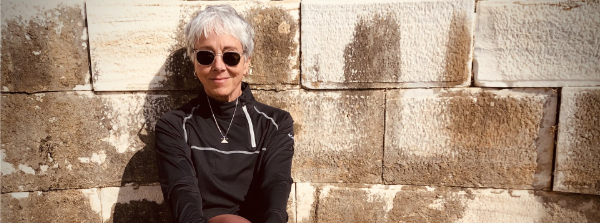
“Every autumn, given adequate funds and the probability of returning home, in late October, without incident—something very much not in the cards this year, given my birth country’s rapid descent into fascism—our family departs for a month and a half on an island in the Cyclades—every year, a new island, and always one I have not thoroughly explored; an island haunted by none of my personal Lares and Penates. And though, when I recite the names of the larger Cycladic islands, I always ‘hear’ that section (the “Gloria”) from Odysseas Elytis’s great poem, To Axion Esti—specifically as put to music by Mikis Theodorakis—more prosaic is the catalogue as parsed by Wikipedia.”—Elizabeth Boleman-Herring
Hapax Legomenon
By Elizabeth Boleman-Herring, Publishing-Editor

“If a separate personal paradise exists for each of us, mine must be irreparably planted with trees of words which the wind silvers like poplars, by people who see their confiscated justice given back, and by birds that even in the midst of the truth of death insist on singing in Greek and saying eros, eros, eros.”―Odysseas Elytis
PENDLETON South Carolina—(Hubris)—March/April 2026—Every autumn, given adequate funds and the probability of returning home, in late October, without incident—something very much not in the cards this year, given my birth country’s rapid descent into fascism—our family departs for a month and a half on an island in the Cyclades—every year, a new island, and always one I have not thoroughly explored; an island haunted by none of my personal Lares and Penates.
And though, when I recite the names of the larger Cycladic islands, I always “hear” that section (the “Gloria”) from Odysseas Elytis’s great poem, To Axion Esti—specifically as put to music by Mikis Theodorakis—more prosaic is the catalogue as parsed by Wikipedia:
The Cyclades include about 220 islands, the major ones being Amorgos, Anafi, Andros, Antiparos, Delos, Ios, Kea, Kimolos, Kythnos, Milos, Mykonos, Naxos, Paros, Folegandros, Serifos, Sifnos, Sikinos, Syros, Tinos, and Thira or Santoríni. There are also many minor islands (the Lesser Cyclades) including Donousa, Eschati, Gyaros, Irakleia, Koufonisia, Makronisos, Rineia, and Schoinousa. The name “Cyclades” refers to the islands forming a circle (their hands held in a ring dance) around the sacred island of Delos. Most of the smaller islands are uninhabited.
In earlier incarnations—theirs, and mine—I spent years on Mykonos, and fat chunks of many years on Santorini. Since the 1980s, however, those two formerly all-but-private retreats have morphed into destinations bearing no resemblance to the islands I once knew and loved, buried now under a barrage of late-20th/early-21st-century tourism. To those two Cycladic isles, I, and those like me, have no right of return.
In these virtual pages, I, myself, have written about Mykonos, Kythera, and Serifos, and Diana Farr Louis has written about Andros and Folegandros. (In the Archives of Hubris, as well, readers will find essays by barrister and Fellow of the Royal Geographical Society Michael House on Sikinos, Irakleia, Anafi, and Donoussa; on Mykonos, Syros, and Santorini by photographers Chiara Sophia Coyle and Doris Athanassakis; and by poet Don Schofield on Kythnos.) Among Hubris’s current Contributors, Greek travel maven Matt Barrett has written long and deep about Sifnos, and it was Matt’s memories of the island where he came of age that decided my own trio’s autumnal course in 2025.
After serial Septembers on Serifos and Tinos, and after hearing so, so many rhapsodic reports from Greek friends about what Sifnos had to offer, we booked six weeks at a palatial villa in Kamares, the main port town. Matt was horrified to hear we were staying at an Airbnb, but it (and its owner) proved to be godsends for travelers of a certain age: the ascents and descents were just about manageable, our host, a native Sifniote, was not in residence but, from Athens, generously shared her knowledge of the island, and we were just close enough to the port town so that we could advance, or retreat, as the spirit(s) moved us. Our nearest beach, also at Kamares, was pristine and the one place last fall where we encountered an octopus.
I find now, though, that I am no longer willing nor able to provide a travelogue or guide for prospective visitors. My career as a travel writer is in the distant past and, these days, I return to the Cyclades (one precious island per year, and I hope not to run out of them before time runs out for me) to “take pictures” and to spend as much time as possible in the Aegean. For those two pursuits, Sifnos proved ideal, but if you’re in search of guidance and recommendations, consult Matt Barrett’s Greece Guides. There follow here, simply, a selection of my vast trove of indelible memories of Sifnos.


The talkative silver leaves of autumn.


The panoramic view from Aghios Symeon.
Further Cycladic Reading, in Hubris
Elizabeth Boleman-Herring’s columns on Mykonos: Bleak House on Mykonos, Renewing My Greek Passport: The Unsung Extra-Credit Labor of Hercules, Pictures of Ano Mera, Mykonos, With Love, Oily Rat,“A Half-Century of Seeing with Luis Orozco; Kythera: Scent & Sensibility: The Passion Flower, A Farewell to Ikaros: For Kevin Andrews; and Serifos: Serifos Island: A Throw of the Autumn Dice, Parts I, and II.
Diana Farr Louis’s lyrical columns on her Andros home are too numerous to list here, but begin with the following): Homing in On Home, The Summer That Came & Went, Summer-House Blues (Pinks, Yellows & Mauves), Picking Our Andriot Olives, Unlocked Syndrome, Summer Memories for a Winter’s Day, A Summer to Remember). Her essay on Folegandros is here: By Ferry from Andros to Folegandros).
Find Michael House’s Cycladic essays here: Sikinos, Irakleia, Anafi, and Donoussa; and follow these links for photographic essays on Mykonos, Syros, and Santorini by Chiara Sophia Coyle and Doris Athanassakis; essays by Don Schofield on Kythnos; and by Matt Barretton Sifnos.

Elizabeth Boleman-Herring
Elizabeth Boleman-Herring, Publishing-Editor of Hubris, considers herself an Outsider Artist (of Ink). The most recent of her 15-odd books is The Visitors’ Book (or Silva Rerum): An Erotic Fable, now available in a third edition on Kindle. Her memoir, Greek Unorthodox: Bande à Part & A Farewell To Ikaros, is available through www.GreeceInPrint.com.). Thirty years an academic, she has also worked steadily as a founding-editor of journals, magazines, and newspapers in her two homelands, Greece, and America. Three other hats Boleman-Herring has at times worn are those of a Traditional Usui Reiki Master, an Iyengar-Style Yoga teacher, a HuffPost columnist and, as “Bebe Herring,” a jazz lyricist for the likes of Thelonious Monk, Kenny Dorham, and Bill Evans. Most recently, as MIDCENTURION, she has gone into the antiques (read: upscale picking) business at The Rock House Antiques, in Greenville SC. Boleman-Herring makes her home with the Rev. Robin White; jazz trumpeter Dean Pratt (leader of the eponymous Dean Pratt Big Band); and Scout . . . in her beloved Up-Country South Carolina, the state James Louis Petigru opined was “too small for a republic and too large for an insane asylum.” (Author Photos by Robin White. Author Head Shot Augment: René Laanen.)